
2026 Best Hydraulic Equipment Suppliers for Buyers?

Choosing a hydraulic supplier is not just a price comparison. The right partner can help prevent leaks, pressure loss, and costly downtime. For this guide, fluid-power author Anthony Esposito offers a useful buying principle: “Match the equipment to the duty cycle, operating pressure, and service conditions—not just the purchase price.” Treat that as a practical selection guide, not a substitute for checking a supplier’s specifications.

Hydraulic Equipment buyers should compare more than product catalogs. Ask for pressure and flow ratings, material details, test documentation, warranty terms, and realistic delivery dates. Check whether seals, filters, and replacement parts will remain available after installation. A clear technical answer matters. So does a clear service contact.

Picture a compact power unit running through a long shift in a dusty workshop. A marginally sized pump may overheat; an unsuitable seal may fail early. The supplier should ask about load, temperature, fluid, duty cycle, and maintenance access before recommending a model. If they skip those questions, pause.

This 2026 guide examines suppliers through practical criteria: product range, engineering support, quality controls, customization, and after-sales service. It also considers which buyers each supplier may suit, from maintenance teams to equipment manufacturers. No ranking fits every operation. That is worth admitting. Verify claims against current datasheets, request references where appropriate, and confirm that quoted specifications match your application before ordering.
2026 Best Hydraulic Equipment Suppliers for Buyers?

What Hydraulic Equipment Suppliers Provide and How They Serve Buyers

Hydraulic equipment suppliers provide more than pumps, cylinders, valves, hoses, and power units. They help buyers match components to pressure, flow, duty cycle, and operating conditions. A cylinder used on a mobile machine, for example, may need different mounting dimensions and seal materials from one used indoors. Fit matters.

A capable supplier can review drawings, fluid specifications, connection sizes, and expected loads before recommending a configuration. Some offer assembly, hose preparation, testing, documentation, and replacement-part support. Buyers should ask what checks are performed, what test records are supplied, and how service requests are handled. Details matter. Clear answers reduce the risk of receiving equipment that fits on paper but fails to suit the application.

The service relationship also affects purchasing decisions. Reliable suppliers communicate lead times, identify substitute components carefully, and explain any limits in their recommendations. Availability can change, and a quotation alone does not guarantee compatibility. It is sensible to confirm dimensions and performance requirements before ordering, especially when replacing older equipment with incomplete records. Even experienced teams can overlook a small port or seal difference. That deserves a second check. Suppliers serve buyers best when technical advice is specific, documentation is traceable, and support continues after delivery.

Which Hydraulic Equipment Categories Do Buyers Need?

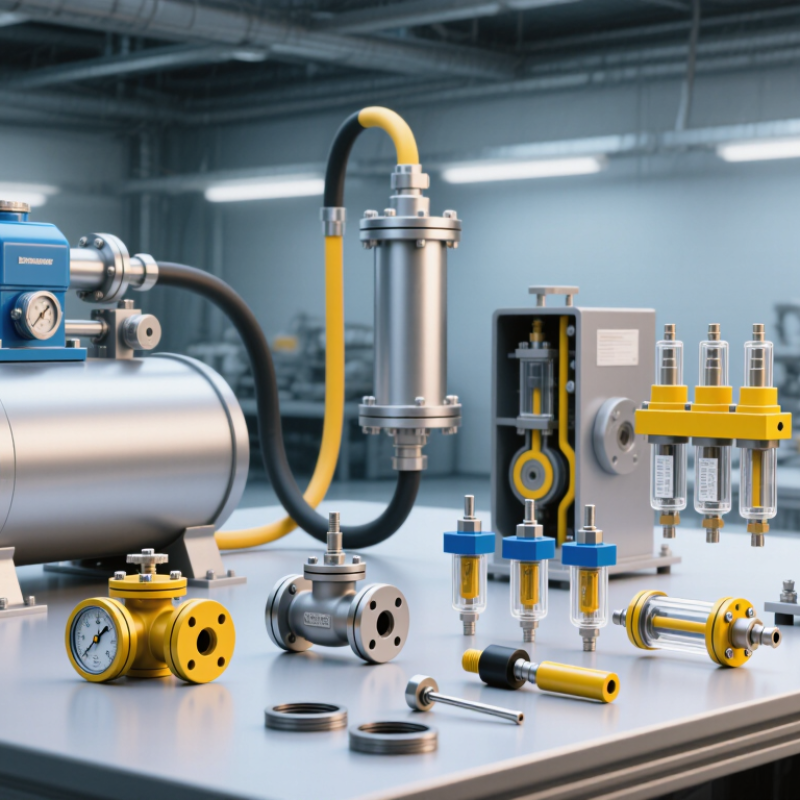
Hydraulic equipment needs depend on the machine’s task, operating pressure, flow rate, and duty cycle. Buyers commonly source pumps to create flow, motors to deliver rotation, and cylinders for linear force. Directional, pressure-control, and flow-control valves manage movement and system response. Power units combine a reservoir, pump, motor, and controls. Hoses, fittings, filters, and accumulators complete many circuits. Small details matter.

For mobile machinery, compact pumps, rugged cylinders, and flexible hose assemblies may be priorities. Factory systems often need steady-duty power units, precise valves, filtration, and compatible replacement components. Match each item to pressure, flow, fluid type, temperature range, mounting space, and connection size. Ask suppliers for performance curves, material details, test records, and clear maintenance guidance. Catalog descriptions can look complete, yet one overlooked port size can delay a repair. Even careful checklists miss things, so verify the equipment against actual site conditions.

Tips: Record the machine’s model, operating pressure, fluid, and connection measurements before requesting a quote. Compare specifications, not just price. Supplier advice helps, but confirm critical requirements with the machine manual or a qualified technician.

How to Evaluate Hydraulic Equipment Suppliers in 2026

When evaluating hydraulic equipment suppliers in 2026, begin with the machine, not the catalog. Record operating pressure, flow rate, duty cycle, ambient temperature, and fluid type. A pump sized for peak pressure may still perform poorly when flow demand changes during a shift. Small details matter. Ask suppliers to confirm compatibility for hoses, seals, valves, and fittings in writing.

Request dimensional drawings and component specifications before comparing quotations. Ask how assemblies are pressure-tested and whether records identify the tested unit. Ask for evidence. A test sheet is useful, but it cannot reveal every failure mode. Check spare-part availability, repair turnaround, and the technical support process. A fast reply before purchase means little if troubleshooting becomes difficult after installation.

Compare lead times, warranty terms, and service commitments alongside price. A low quotation is not proof of poor quality, just as a polished brochure does not prove consistent manufacturing. One judgment can be wrong. For critical equipment, discuss a sample component or review a recent inspection record with a qualified technician. Also ask what information the supplier needs to recommend a suitable configuration; vague answers may expose gaps in the evaluation, including your own.

How to Compare Supplier Quality, Pricing, and Support

When comparing hydraulic equipment suppliers, look beyond a polished catalog. Request pressure-rating details, material specifications, inspection records, and test documentation for the exact equipment you plan to buy. Check that parts and assemblies are clearly identified. Ask how defects are handled. Specific answers matter.

Compare the full cost, not just the quoted unit price. Include shipping, installation requirements, spare parts, and expected delivery time. Ask whether prices change with different configurations or order quantities. A low quote can be costly if essential fittings are missing. No scorecard is perfect; it is easy to overvalue price and overlook downtime.

Support quality becomes clear in practical details. Ask how quickly a technical question is answered, whether manuals are available, and how replacement parts are identified. A short sample exchange can reveal whether replies are useful or vague. Fast responses help, but they are not enough. Record each supplier’s answers in the same comparison sheet, then note any unclear claims. Recheck those points before committing.

How to Select a Supplier for Your Hydraulic Equipment Requirements

A capable hydraulic equipment supplier should ask about the machine’s real working conditions before recommending a pump, valve, or power unit. Share operating pressure, flow demand, duty cycle, ambient temperature, fluid type, and available space. A catalogue match alone is not enough.

The U.S. Department of Energy’s Improving Pumping System Performance sourcebook (2006) reports that pumping systems can account for 25–50% of energy use in some industrial plant operations. That range is not a prediction for every hydraulic installation, but it makes efficiency worth checking.

Ask suppliers for test conditions, rated performance, and service-life assumptions. A low purchase price may look convincing, yet reveal little about seal life in hot, dusty service.

Small details matter. Check whether the supplier documents fluid cleanliness, filtration, pressure limits, and compatibility with your existing components. ISO 4413:2010 sets safety requirements for hydraulic fluid power systems, while ISO 4406 provides a code for reporting fluid-particle contamination levels.

Ask for inspection records and a clear explanation of how proposed equipment meets the relevant requirements. Also confirm spare-part availability, technical support hours, and realistic delivery dates. Request a sample maintenance schedule.

One caveat: strong paperwork cannot replace a site-specific review, and published energy figures cannot predict your operating costs. A careful supplier should be willing to discuss those uncertainties, not hide them.

Share by: