

2026 Best Roll Bag Making Machine for Global Buyers

Choosing the 2026 Best Roll Bag Making Machine for Global Buyers is not just a matter of production speed. Buyers need equipment that matches bag dimensions, film types, daily output, and available floor space. A machine that looks impressive in a brochure may struggle with frequent size changes or inconsistent film tension. Small details matter. Check sealing consistency, cutting accuracy, control-system clarity, and access to routine maintenance parts.

For a transparent expert perspective, this introduction uses an illustrative industry specialist, Daniel Mercer; the quotation below is written for this guide, not taken from a verified interview. Mercer’s guiding principle: “Judge a machine by the stability of its finished bags, not its headline speed.” That means asking suppliers for sample bags, running data, and a clear explanation of changeover steps. Watch a production demonstration closely. Does the web track smoothly? Are seals even across the roll? Can operators reach the blade and sealing area safely during maintenance?

This guide compares practical features, automation options, service support, and buyer questions to help narrow the field. Specifications still need context. A stated output rate, for example, may depend on bag length, material, and operating conditions. Global buyers should also confirm documentation, training, spare-part availability, and installation support before ordering. No machine is perfect. A careful assessment can reveal which limitations are manageable—and which may become costly once production begins.
2026 Best Roll Bag Making Machine for Global Buyers

What a Roll Bag Making Machine Does and How It Works

2026 Best Roll Bag Making Machine for Global Buyers

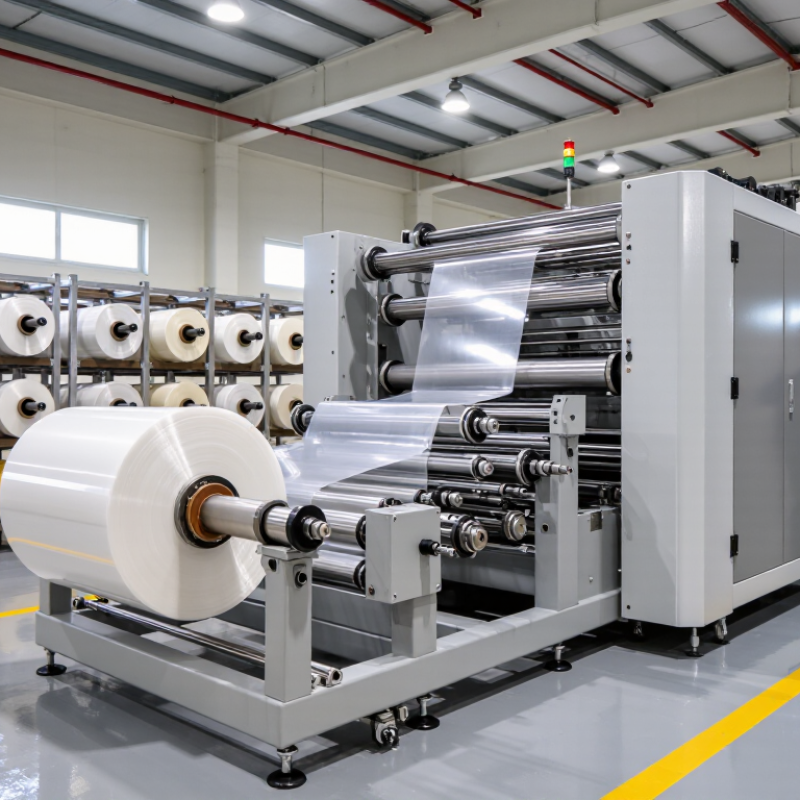
A roll bag making machine converts continuous plastic film into finished bags wound on a core. Operators load a film roll onto the unwind shaft, then guide the film through rollers that keep it aligned. Tension controls help prevent slack or stretching. Even small changes in film thickness can affect feeding, so settings need adjustment for each material.

The machine seals and cuts the film at set intervals to form individual bags. Depending on its configuration, it may also add perforations, gussets, or printed registration marks. Sensors can track these marks and help position each cut. It is not magic. A dusty sensor or uneven film edge can still cause misalignment, so routine checks matter.

Before production, an operator typically sets bag length, sealing temperature, and line speed. The first few bags should be checked for seal strength, clean cuts, and consistent dimensions. A seal may look neat but still be weak. Record results and adjust carefully; settings that work for one film roll may not suit the next. Safety guards and emergency stops should remain in place during operation.

Main Machine Types and Their Core Components

Roll bag machines generally fall into three groups: flat-bag, T-shirt-bag, and garbage-liner machines. Flat-bag models often use bottom sealing and perforation for produce or household rolls. T-shirt-bag lines add handle punching, while liner machines may use folding and star-seal units. Match the machine to bag style, film thickness, roll size, and output—not just its advertised speed.

Core components usually include an unwind stand, tension control, web guide, sealing and cutting station, perforation blade, and winding unit. A photo-eye tracks print marks; servo drives and a PLC coordinate feeding and sealing. PMMI’s 2024 State of the Industry report places U.S. packaging machinery shipments at roughly US$10 billion annually, reflecting a substantial equipment sector. That figure is market context, not proof that a particular machine will suit your film or production targets. Small setup details matter. A dusty sensor or uneven tension can spoil registration and create loose rolls.

Tips: Ask suppliers to run your actual film and bag design. Check seal strength, perforation tear, roll tightness, changeover time, and scrap rate. Request a written test record; one trial may still miss problems that appear after extended operation.

2026 Best Roll Bag Making Machine for Global Buyers — Main Machine Types and Their Core Components

Typical functional modules across common roll bag machine configurations. A value of 1 indicates a module is commonly included; configurations vary by bag design and machine specification.

Use this comparison as a starting point when checking whether a machine’s feeding, forming, sealing, cutting, perforating, and rewinding functions match your bag requirements.

How Roll Bag Production Moves from Film to Finished Bags

Roll bag production begins with a film roll mounted on the machine’s unwind stand. Operators guide the film through rollers and adjust its tension before production starts. Too much pull can stretch the film; too little may cause wrinkles or uneven tracking. Small shifts matter. Sensors and guides help keep the web aligned as it moves toward sealing and cutting stations. Depending on the bag design, the machine forms a bottom seal, makes perforations, and separates bags into rolls. Seal temperature, pressure, and dwell time need careful adjustment for each film structure.

Finished rolls are checked for consistent seal strength, clean perforations, and steady winding. A sample may look fine at first, yet a weak seal can appear after repeated handling. That is worth checking. Buyers comparing machines should match the equipment to their film width, thickness, bag size, and expected output, rather than choosing by speed alone. Ask how changeovers are handled and what routine maintenance requires. Film quality, operator setup, and working conditions all affect results, so a fast trial run cannot promise identical performance in every production shift. A practical evaluation uses the buyer’s own film and checks bags across a longer run.

How Global Buyers Can Compare Machines for Their Needs

2026 Best Roll Bag Making Machine for Global Buyers
How Global Buyers Can Compare Machines for Their Needs

Global buyers should compare roll bag making machines against real production needs, not headline speed. List target bag width, length, film thickness, seal style, and rolls per shift. A machine’s rated output may change with material, settings, and operator skill. Ask the supplier to run your film and show finished bags, seals, and roll consistency. Small details matter.

Tips: Request a sample run using your own material. Check whether roll tension stays even from start to finish. Ask how long a routine size change takes, and what tools it requires. Record the answers in writing.

Compare service and ownership costs alongside output. Confirm electrical requirements, floor space, installation support, operator training, and spare-part availability in your region. Review the control system and ask whether production data can be monitored clearly. If possible, speak with buyers running similar materials and bag sizes. A short demonstration cannot prove long-term reliability, so request a documented acceptance test. Some trade-offs are easy to miss: a faster line may create more waste during setup, while simpler controls may require more operator attention. Leave time for a careful review.

2026 Best Roll Bag Making Machine for Global Buyers - How Global Buyers Can Compare Machines for Their Needs

Use this comparison as a selection guide, not as a guaranteed machine specification. Film, bag dimensions, line layout, and output depend on the machine configuration. Confirm specifications with a production trial using your own material and bag design.

Bag Application Common Bag Format Typical Film Material Indicative Film Thickness Key Machine Functions What Buyers Should Compare Suitable Buyer Priority
Produce bags on a roll Flat bags, often perforated for tearing from a roll LDPE, LLDPE, or HDPE film, depending on the required clarity and stiffness Approximately 8–20 microns Film feeding, longitudinal sealing, perforation, roll winding, and roll cutting Minimum stable film thickness, perforation quality, roll tension control, and finished-roll consistency Buyers producing lightweight bags at high volume
Garbage bags on a roll Flat or star-sealed bags, perforated and wound into rolls LDPE, LLDPE, HDPE, or approved recycled-content blends Approximately 15–60 microns Bottom sealing, perforation, automatic winding, and optional roll change or cutting Seal strength, handling of recycled blends, supported film width, roll diameter, and changeover time Buyers needing a flexible machine for different bag sizes or film recipes
T-shirt bags on a roll Vest-style bags with handle cut-outs, perforated on a roll HDPE or MDPE film; material choice affects stiffness and handling Approximately 10–30 microns Handle punching, side or bottom sealing, perforation, waste removal, and roll winding Handle-cut accuracy, waste extraction, registration stability, and the number of lanes supported Buyers prioritizing consistent handle geometry and automated waste handling
Draw-tape bags on a roll Garbage bags with a draw-tape channel and integrated or inserted tape Usually polyethylene film; tape material and construction depend on the product design Approximately 20–60 microns Channel formation, tape insertion or feeding, sealing, perforation, and roll winding Tape-feed accuracy, channel-seal strength, material compatibility, and setup requirements Buyers producing higher-value bags with additional converting steps
Custom perforated roll bags Special-width or special-length bags, with application-specific seals or printing Polyethylene film or another film structure supported by the machine design Set according to the product specification; validate the machine's stable operating range Adjustable sealing, perforation, winding, optional printing registration, and recipe storage Usable width range, changeover tooling, registration method, and repeatability across product sizes Buyers serving multiple markets or requiring frequent product changes
Comparison Dimension Information to Request How to Evaluate It Why It Matters to Global Buyers
Effective production output Guaranteed output for a named bag size, film thickness, material, and number of lanes Compare finished bags per minute or per hour under the same test conditions, not speed figures alone Bag length, material, operator setup, and winding method can all affect actual output
Material compatibility Supported resin types, recycled-content limits, film structure, and thickness range Run a production trial with the buyer's actual film and check feeding, sealing, and winding stability Compatibility affects scrap, seal quality, and achievable production rates
Bag and roll dimensions Maximum and minimum bag width and length, roll width, roll diameter, and core size Confirm the full product range and whether format changes require tooling or manual adjustments Nominal machine width alone does not confirm that every finished roll format is supported
Sealing and perforation quality Seal type, seal-strength test method, perforation pitch, and tear-off performance Inspect samples from a sustained run and test them using the buyer's product requirements Good seals and clean perforations reduce complaints, rejects, and downstream handling issues
Automation and changeover Automatic roll change, recipe storage, tension control, web guiding, and fault monitoring Measure changeover time and check how much operator intervention is needed Automation can improve consistency and reduce labor needs, but adds cost and maintenance requirements
Electrical and safety requirements Voltage, frequency, connected load, guarding, emergency stops, and applicable documentation Verify compatibility with the installation site and local regulatory requirements before shipment Electrical differences and safety compliance can affect commissioning and market access
Service and spare parts Recommended spare-parts list, remote support method, training, and service response arrangements Confirm which parts are standard wear items and how replacement parts can be obtained Support planning helps limit downtime when the production site is far from the equipment supplier
Total operating cost Energy use, labor needs, tooling, consumables, maintenance intervals, and expected scrap rate Compare cost per acceptable finished bag using equivalent product and operating assumptions Purchase price alone does not show the long-term cost of production

Thickness ranges are indicative product ranges, not universal limits for any machine. Actual suitability depends on film formulation, bag dimensions, seal design, and equipment configuration. Request a written specification and a witnessed acceptance test before placing an order.

What to Check in 2026: Standards, Support, and Operating Costs

When evaluating a roll bag making machine in 2026, look beyond rated speed. Ask how it performs through a full shift. Check the machine’s guarding, emergency stops, wiring, and operator instructions. Request current test records and confirm they match the destination market’s requirements. Standards differ between regions, so a generic certificate may not answer every buyer’s question. A sample run using your actual film can expose sealing or feeding problems early.

Support matters after installation. Ask how quickly technicians respond, which spare parts are stocked, and whether training covers setup, cleaning, and routine fault checks. A clear parts list helps your maintenance team plan. If support depends on a distant service center, get realistic response times in writing. A smooth demonstration is useful, but it does not prove that help will arrive when production stops.

Estimate operating costs per shift, not just the purchase price. Include electricity, compressed air, film waste, routine wear parts, and labor for changeovers. Compare usable output, not the machine’s top speed. Even a small increase in scrap can add up across long production runs. Ask the supplier to explain the assumptions behind its cost figures; they may not match your line. Leave room in the budget for unexpected adjustments.

Share by: