2026 Top Fiberglass Profile Manufacturers for Global Buyers
Choosing the right Fiberglass Profile manufacturer in 2026 requires more than comparing prices on a supplier website. Global buyers need evidence of production capability, material consistency, and dependable export experience. A strong manufacturer should explain its pultrusion process, resin system, fiber content, and dimensional tolerances in clear technical language. It should also provide inspection records, sample results, and practical answers about packaging, lead times, and after-sales support.
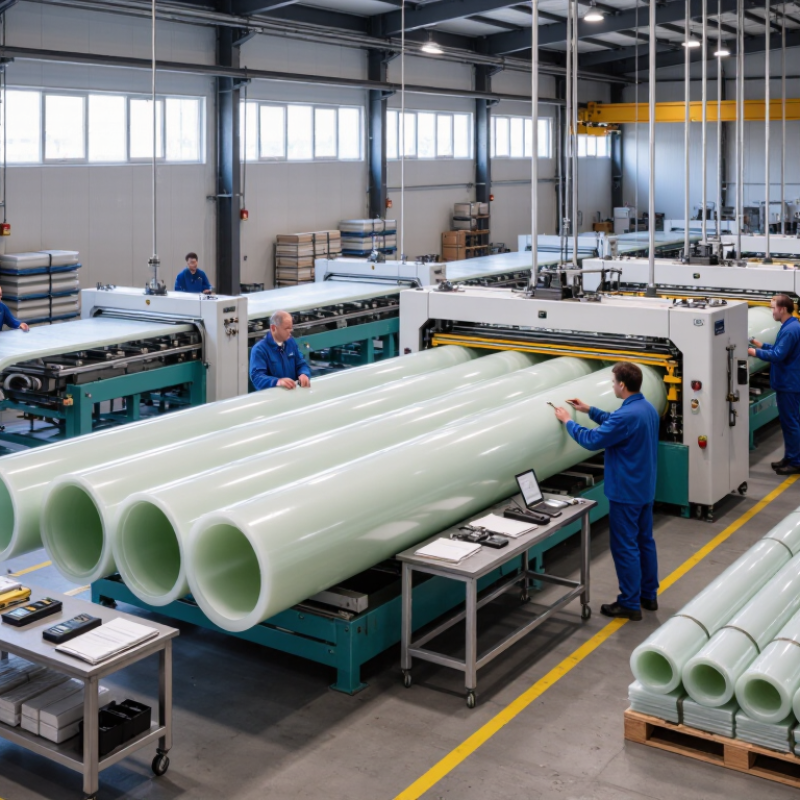
Details matter. A profile with a clean surface may still fail if its glass transition temperature is unsuitable. A shipment can look perfectly packed while hidden moisture affects long-term performance. Reliable manufacturers usually discuss load requirements, UV exposure, chemical contact, and installation conditions before offering a quotation. Their factories may show controlled cutting lines, labeled batches, and technicians checking profile dimensions with calipers. These visible details do not prove everything, but they build useful confidence.
This guide reviews leading fiberglass profile manufacturers for international buyers. It considers product range, customization, quality systems, communication, delivery performance, and application experience across construction, infrastructure, transportation, and industrial projects. The selection is not a permanent verdict. Market conditions change, certifications expire, and even experienced suppliers can make occasional mistakes. Buyers should still request current documents, independent samples, and written specifications before placing an order. That extra step can prevent costly misunderstandings.
No supplier fits every project. A manufacturer serving architectural panels may not understand demanding electrical insulation requirements. Likewise, a low-cost offer may conceal thicker tolerances, limited testing, or uncertain warranty terms. Careful comparison remains essential. This introduction sets the context for evaluating capable manufacturers with evidence, practical judgment, and a realistic view of international sourcing.
What Are Fiberglass Profiles and Why Do Global Buyers Need Them?
Fiberglass profiles are shaped structural components made from continuous glass fibers and a resin matrix. Common forms include angles, channels, tubes, rods, and custom sections. Manufacturers often produce them through pultrusion, pulling fiber bundles through heated molds to create consistent dimensions.
The result is a profile that is lighter than steel and resistant to moisture, salt spray, and many chemicals. It also provides useful electrical insulation. Global buyers use these profiles in walkways, cable supports, cooling towers, rail infrastructure, window systems, and industrial frames. A coastal platform, for example, may need a non-corrosive handrail that remains manageable during installation.
Performance depends on more than the material name. Fiber orientation, resin selection, wall thickness, surface finish, and production tolerances all affect service life. Buyers should request technical data, dimensional inspection records, fire information, and test results related to load, water absorption, and ultraviolet exposure. Local climate matters too.
A profile can look straight and still fail a tolerance check. Not always. Confirming cut lengths and hole positions before shipment can prevent expensive site adjustments. I have seen lightweight components reduce labor, yet poorly planned connections created delays. Stainless fasteners, drainage details, and compatible sealants deserve the same attention as the profile itself.
Fiberglass is not automatically the best answer for every load or temperature. Engineers should compare stiffness, impact resistance, maintenance needs, and installation methods against project conditions. A careful specification usually begins with real drawings, measured loads, and honest discussion of limitations.
Key Criteria for Evaluating Fiberglass Profile Manufacturers in 2026
Global buyers should evaluate fiberglass profile manufacturers through measurable evidence, not polished catalogs. Grand View Research’s 2024 Fiberglass Market Report forecasts a 4.4% compound annual growth rate through 2030. That growth increases supplier choices, but it can also hide uneven quality. Ask for tensile, flexural, water absorption, and dimensional test results. Require the relevant ISO or ASTM method for every result.
Production control matters on the factory floor. Review resin records, glass-fiber content, curing temperatures, and profile tolerances. ISO 527 supports tensile testing, while ISO 178 evaluates flexural performance. A reliable manufacturer should provide batch numbers, inspection dates, and retained samples. Demand proof. Test the corners.
Environmental performance deserves equal attention. The International Energy Agency reports that buildings account for roughly 30% of global energy demand. Insulating fiberglass profiles can support efficient envelopes, but only when thermal claims match tested assemblies. Check UV resistance, fire classification, moisture exposure, and service-temperature data. Ask whether recycled content affects strength. Sometimes, it does.
A capable supplier also explains limits clearly. Look for engineering support, tooling control, export packaging, and replacement procedures. Request a pilot batch before signing a large contract. Measure twist, surface finish, hole accuracy, and cutting behavior at your facility. No report replaces field verification. Even experienced buyers can overtrust laboratory samples.
Leading Fiberglass Profile Manufacturers for International Markets
Leading Fiberglass Profile Manufacturers for International Markets
International buyers need more than low prices. They need stable dimensions, traceable materials, and dependable export support. MarketsandMarkets estimates that the global pultrusion market may grow from about USD 3.1 billion in 2023 to USD 4.2 billion by 2028. This growth reflects demand from construction, transportation, electrical systems, and industrial equipment. Leading fiberglass profile manufacturers usually support this demand with continuous glass-fiber reinforcement, controlled resin ratios, and documented testing. Profiles should resist moisture, corrosion, and repeated loading. A smooth surface also matters when workers handle long sections on site.
Tips: Request batch records, tolerance data, and independent test results before approval. Check loading values at the temperatures used in your project. A profile tested only at room temperature may disappoint in a hot warehouse or cold coastal region.
Practical sourcing requires careful questions. Ask whether cutting, drilling, packaging, and labeling meet the destination market’s needs. Inspectors should compare actual dimensions with drawings, not rely only on certificates. ISO 9001-based quality systems can improve consistency, but certification alone proves little without recent records. Freight planning also deserves attention; poorly supported bundles can arrive bent or chipped. Many suppliers publish impressive technical tables. Some omit long-term fatigue results, which is a weakness worth challenging. A perfect specification rarely exists, and buyers sometimes overlook installation errors while blaming the material. Clear drawings, trial orders, and documented acceptance criteria create stronger international partnerships.
Product Standards, Customization, and Export Capabilities to Compare
For global buyers, fiberglass profile manufacturers should be compared beyond price. MarketsandMarkets reported that the glass fiber market could grow from about USD 10.2 billion in 2023 to USD 14.3 billion by 2028. This growth increases supplier choices, but also increases quality risks. Check compliance with EN 13706 for pultruded profiles, ISO 9001 quality systems, and relevant ASTM test methods. Ask for recent tensile, flexural, water absorption, and UV-resistance reports. A certificate alone is not enough.
Customization reveals technical capability. Reliable manufacturers should adjust profile dimensions, glass-fiber content, resin type, surface finish, drilling, and cutting tolerances. For outdoor projects, request accelerated weathering data and color-retention results. For electrical applications, confirm insulation performance and flame behavior. Grand View Research has identified construction and infrastructure as major fiberglass demand sectors, where inconsistent tolerances can create costly installation delays. Small details matter. Request a sample with the final production process, not a hand-finished prototype.
Tips: Compare three samples using the same measurement tools. Review batch traceability, packaging photos, and loading procedures. Confirm HS codes, Incoterms, lead times, and export documents before signing. A low quotation may exclude testing or protective packaging. That is easy to miss. Also, delivery records should be checked carefully; one successful shipment does not prove stable capacity. No checklist is perfect, but written evidence reduces avoidable surprises.
How to Select the Right Fiberglass Profile Supplier for Your Project
Selecting a fiberglass profile supplier starts with the load case, not the catalog. Ask for tensile, flexural, impact, water absorption, and thermal data for the exact profile. Published averages are not enough. The 2024 MarketsandMarkets fiberglass market report projects growth from USD 14.6 billion in 2023 to USD 20.8 billion by 2028. Rapid growth can widen quality differences between factories.
Request traceable batch records and production samples. A dependable supplier should show resin type, glass content, curing conditions, dimensional tolerances, and test methods. Check whether values follow ASTM D638, ASTM D790, or EN 13706, where applicable. Ask for independent testing. During sourcing, I compare a one-meter sample with the drawing, especially cut edges, drilled holes, surface veil, and connector fit. Small defects matter. A clean brochure cannot reveal poor alignment or brittle edges.
Production capability also needs practical verification. Request packaging photos, moisture protection details, lead-time records, and corrective-action reports. The 2024 Grand View Research analysis identifies construction as a major fiberglass-reinforced polymer application, where UV exposure, moisture, and repeated loads can determine service life. Do not accept vague claims such as “weather resistant.” Ask for test duration and failure criteria. I still allow room for doubt. A supplier may pass every document check and fail a simple fit test. A controlled pilot order can expose that weakness before full-volume purchasing.