
What Are the 2026 Top Fluid Power Hydraulics Suppliers?

What Are the 2026 Top Fluid Power Hydraulics Suppliers? This question requires more than a simple revenue ranking. Hydraulic suppliers now compete through efficiency, connected monitoring, compact designs, and dependable global service. A pump may look impressive on paper, yet fail commercially without responsive maintenance support.

Industry forecasts show why this market deserves careful review. MarketsandMarkets’ Hydraulic Equipment Market report identifies continued growth through the late 2020s, driven by construction, agriculture, material handling, and industrial automation. Grand View Research also links hydraulic equipment demand to infrastructure investment and the modernization of heavy machinery. These reports use different market definitions, so their figures should not be compared mechanically. That limitation matters.

This guide examines leading manufacturers, including Bosch Rexroth, Parker Hannifin, Eaton, Danfoss Power Solutions, Kawasaki Precision Machinery, Bucher Hydraulics, and HYDAC. The selection considers product breadth, operating reliability, regional support, engineering capability, digital diagnostics, and documented industry presence. ISO 4413 principles and published technical specifications provide useful reference points for safe hydraulic system design, although certification alone does not guarantee field performance.

Real-world details matter. A supplier serving a quarry may need filtration that survives dust, heat, and vibration. A mobile equipment maker may value lighter valves and faster electronic control. A factory may prioritize leak reduction and predictive maintenance. No ranking is perfect. Supplier performance can vary by country, application, distributor, and service team. Readers should verify current product availability, certifications, warranty terms, and lifecycle data before making a procurement decision. The strongest choice is rarely the loudest brand.
What Are the 2026 Top Fluid Power Hydraulics Suppliers?

What Fluid Power Hydraulics Suppliers Provide

What Are the 2026 Top Fluid Power Hydraulics Suppliers?

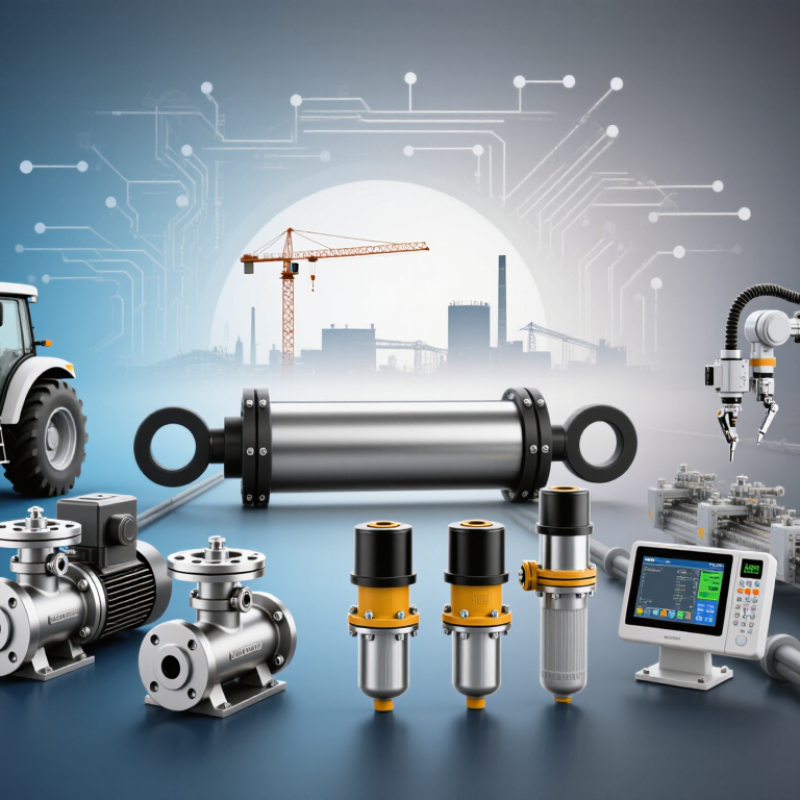
Top fluid power hydraulics suppliers provide more than pumps and cylinders. They deliver a working power system. Typical packages include hydraulic pumps, directional valves, actuators, hoses, filtration, reservoirs, and electronic controls. They also size components for pressure, flow, temperature, and duty cycle. A useful supplier explains these choices in plain language. That matters when a machine runs beside dust, vibration, or freezing air.

Market data supports continued demand. Grand View Research estimates the global hydraulic equipment market reached USD 49.2 billion in 2023. It forecasts a 4.5% compound annual growth rate from 2024 to 2030. MarketsandMarkets projects the fluid power market will grow from USD 48.4 billion in 2023 to USD 62.2 billion by 2028. These reports use different definitions, so the figures should not be compared blindly. Still, both indicate expanding requirements for efficient, connected equipment.

In 2026, stronger suppliers provide commissioning, leakage testing, filtration audits, spare-parts planning, and technician training. They may add sensors that track pressure, oil temperature, particle levels, and cycle time. Remote diagnostics can shorten downtime, but only when data is clean and interpreted correctly. This is where supplier claims deserve scrutiny. A dashboard is not reliability. Ask for test conditions, service response times, lifecycle costs, and documented performance. Smaller energy losses can become meaningful across thousands of operating hours. I would also question “maintenance-free” promises; seals age, contamination returns, and installation errors remain common.

How to Evaluate Hydraulic Suppliers in 2026

What Are the 2026 Top Fluid Power Hydraulics Suppliers?

How to Evaluate Hydraulic Suppliers in 2026

The strongest hydraulic suppliers in 2026 will offer more than pumps, valves, and cylinders. Buyers should examine verified field experience, engineering depth, and long-term service support. Ask for documented performance data from applications similar to yours. A supplier serving construction equipment may not understand food-processing requirements. Look for clear material specifications, pressure ratings, testing procedures, and traceable production records.

Evaluate technical support before signing a contract. Can engineers review your circuit design and identify pressure losses? Do they provide installation guidance, maintenance schedules, and emergency response times? Digital monitoring is becoming useful, but suppliers should explain data protection and system compatibility. Check quality certifications, inspection reports, warranty terms, and spare-parts availability. A low purchase price can become expensive after repeated seal failures or delayed deliveries. No scorecard is perfect. Your operating conditions may expose weaknesses that factory brochures hide.

Tips: Request a sample inspection report and one customer reference. Measure response time during the sales process. Ask how failures are investigated, not merely replaced. Compare total operating cost, including energy use, downtime, training, and maintenance. Visit the supplier’s facility when possible. Observe cleanliness, testing equipment, and how technicians document defects. Trust evidence, but keep questioning your assumptions.

Leading Global Fluid Power Hydraulics Suppliers

In 2026, leading global fluid power hydraulics suppliers are judged by more than sales volume. Their value appears in uptime, control accuracy, and support quality. Experienced engineers examine pumps, valves, cylinders, filtration units, and electronic controls as one working system. A supplier that understands the full circuit can prevent costly mismatches. Small details matter, including oil cleanliness, hose routing, seal choice, and response time.

Strong suppliers provide tested components for manufacturing, mobile equipment, energy projects, and process facilities. They maintain regional service teams and reliable spare-parts networks. Clear technical documents also matter. Installation drawings, pressure ratings, maintenance intervals, and compatibility data help users make safer decisions. Field technicians often reveal practical weaknesses that product brochures omit. That experience deserves serious attention.

Still, selecting the top supplier is not simple. A global supplier may offer excellent engineering but slower local support. Another may deliver quickly but provide limited customization. I may also overvalue familiar technical features. Independent testing, reference projects, and transparent warranty terms can challenge that bias. Buyers should compare lifecycle cost, not only the purchase price. They should also inspect training quality and emergency response procedures. No ranking stays perfect. Supplier performance can change when markets, regulations, or production sites change.

Key Technologies Shaping the 2026 Hydraulic Market

What Are the 2026 Top Fluid Power Hydraulics Suppliers?

Key Technologies Shaping the 2026 Hydraulic Market

The 2026 hydraulic market is moving toward smarter electro-hydraulic systems. These systems combine pumps, valves, sensors, and software in one control loop. Pressure and temperature sensors now capture changes during every operating cycle. Edge controllers can analyze this data near the machine, reducing response delays.

Energy efficiency is becoming a practical purchasing requirement. Variable-speed drives adjust pump output instead of wasting energy through constant throttling. Load-sensing circuits also reduce heat and power consumption under changing demands. Some advanced systems recover energy when heavy loads descend. This matters in excavators, presses, and mobile lifting equipment.

Digital twins are improving commissioning and maintenance decisions. Engineers can compare real operating data with a virtual machine model. Predictive software may identify seal wear before a visible leak appears. However, not every dashboard provides useful insight. Some systems display attractive graphs but offer little guidance for technicians. That weakness deserves more attention.

Hydraulic suppliers for 2026 should demonstrate verified field performance, clear service procedures, and dependable component testing. Cybersecurity also matters as connected controllers become common. A practical supplier should explain update methods, access controls, and failure responses without hiding behind technical language. Biodegradable fluids and recyclable components are gaining interest, especially where environmental exposure is possible. Yet fluid compatibility still requires careful testing. A promising technology can fail when temperature, contamination, or operator habits are ignored.

What Are the 2026 Top Fluid Power Hydraulics Suppliers? — Key Technologies Shaping the 2026 Hydraulic Market
Capability Tier Supplier Segment Core Hydraulic Offering Key Technology Shaping 2026 Typical Performance or Design Focus Primary End-Use Markets Relevant Technical Standards
Tier 1 Integrated electro-hydraulic system suppliers Complete packages combining pumps, valves, actuators, sensors, controllers and software Closed-loop electro-hydraulic motion control and machine connectivity Improved positioning accuracy, coordinated multi-axis control and real-time diagnostics Mobile machinery, industrial automation, material handling and process equipment ISO 4413 for hydraulic systems; IEC 61131-3 for programmable controller programming
Tier 1 High-performance pump and motor manufacturers Axial-piston, radial-piston, gear and vane pumps; hydraulic motors and transmissions Variable-displacement technology, load sensing and electronic displacement control Lower throttling losses, higher power density and improved efficiency under variable loads Construction equipment, agriculture, mining, marine and industrial power units ISO 4413; ISO 10767 for hydraulic pump and motor pressure pulsation measurement
Tier 1 Advanced valve and motion-control suppliers Proportional valves, servo valves, directional control valves, cartridge valves and manifolds Electro-proportional control with integrated electronics and fieldbus communication Fast response, repeatable flow control and reduced installation complexity through compact manifolds Injection molding, metal forming, robotics, factory automation and mobile hydraulics ISO 4401 mounting interfaces; ISO 1219 graphical symbols and circuit diagrams
Tier 1 Hydraulic filtration and contamination-control specialists Pressure, return-line, offline and air-breathing filtration systems Condition monitoring based on particle counting, differential pressure and oil-quality sensing Contamination control aligned with cleanliness targets such as ISO 4406 codes Wind energy, mobile equipment, industrial production and high-duty power units ISO 4406 for fluid cleanliness coding; ISO 11171 for automatic particle-counter calibration
Tier 1 Hydraulic cylinder and actuator suppliers Standard and custom cylinders, compact actuators, servo cylinders and position-sensing units Integrated position sensors, predictive maintenance support and corrosion-resistant designs Accurate stroke feedback, improved sealing performance and longer service intervals Earthmoving, agricultural implements, presses, steel processing and lifting systems ISO 6020/2 and ISO 6022 dimensional series for hydraulic cylinders
Tier 2 Fluid conveyance and connection suppliers Hydraulic hoses, tube assemblies, fittings, quick couplings and adapters High-pressure compact routing, impulse-resistant hose construction and leak-reduction designs Pressure capability selected according to hose type, temperature, impulse duty and working environment Mobile machinery, agricultural equipment, industrial systems and transportation ISO 18752 and SAE J517 for hydraulic hose performance and construction requirements
Tier 2 Digital hydraulics and smart-monitoring suppliers Remote monitoring gateways, embedded sensors, analytics software and connected service tools Industrial Internet of Things connectivity, edge diagnostics and predictive maintenance Trend monitoring for pressure, temperature, vibration, filter condition and operating cycles Fleet management, factory equipment, renewable energy and process industries OPC UA and MQTT are commonly used industrial communication approaches; system security requires application-specific controls
Tier 2 Energy-efficiency retrofit suppliers Pump controls, displacement controls, accumulator packages and hydraulic power-unit upgrades On-demand flow generation, energy recovery and electro-hydraulic pump control Reduced unloaded running, lower heat generation and improved power matching between supply and demand Presses, injection molding machines, machine tools and legacy mobile equipment ISO 4413 risk-reduction principles; ISO 1219 for system documentation
Tier 2 Hydraulic power-unit and custom-system integrators Reservoirs, pumps, valves, filtration, cooling, instrumentation and control enclosures Modular power units with digital control, noise reduction and thermal management Application-specific sizing based on flow, pressure, duty cycle, heat rejection and serviceability Manufacturing, marine systems, test equipment, lifting and specialized machinery ISO 4413; ISO 1219; applicable electrical and machinery safety requirements
Emerging Electrification-focused hydraulic technology suppliers Electro-hydraulic actuators, electrically driven pumps and compact autonomous power units Integration of electric drives, batteries and hydraulic energy storage Reduced engine idling, controllable auxiliary power and improved system-level energy efficiency Off-highway vehicles, mobile lifting, municipal equipment and hybrid industrial systems ISO 4413 for hydraulic safety; electrical safety and battery standards depend on the equipment architecture
Emerging Low-carbon fluid and sustainability-oriented suppliers Biodegradable hydraulic fluids, low-leakage components and fluid-management services Environmentally acceptable lubricants and lifecycle-focused hydraulic design Compatibility must be validated for seals, hoses, coatings, operating temperature and manufacturer requirements Forestry, marine, agriculture, water management and environmentally sensitive sites ISO 15380 for environmentally acceptable hydraulic fluids; fluid compatibility remains application-specific
Data basis: The table compares supplier capability segments and established hydraulic technologies rather than ranking individual companies. Actual performance depends on system pressure, flow, duty cycle, fluid condition, temperature, control architecture and installation quality.

How to Choose the Right Hydraulic Supplier for Your Needs

Choosing a hydraulic supplier in 2026 requires more than comparing catalog prices. Your decision should begin with the machine, not the sales brochure.

Record pressure, flow rate, duty cycle, fluid type, temperature, and installation space. Ask suppliers to explain how their components perform under those exact conditions. Vague answers are warning signs. Stay practical.

Evaluate technical competence through documents and direct conversation.

Reliable suppliers can provide material specifications, pressure ratings, test records, and product traceability. They should also explain compatibility between pumps, valves, hoses, seals, and filtration systems. Request samples or inspection reports when a failure could stop production. A polished website is not proof. That shortcut fails.

Service quality matters after delivery.

Check response times, spare-part availability, installation guidance, warranty terms, and technician training. Ask whether support is available during an emergency, not only during office hours. A supplier with local inventory may reduce downtime, even when its quotation is slightly higher. Compare realistic ownership costs, including maintenance and replacement intervals. One common mistake is choosing the lowest bid without checking lifecycle risks. I would also challenge optimistic delivery promises; written lead times are more useful than confident conversations. Speak with current users if possible, and ask about recurring faults, not just successful installations. A strong supplier welcomes difficult questions and admits where its solution has limitations.

Share by: