
Advertising flags look simple: a printed sail, a pole, and a base. In practice, the hardware decides whether the message stays upright on pavement, grass, or a windy event site. The right choice depends on more than price. It must match flag shape, pole diameter, ground conditions, expected wind, and how often crews transport it.
The Outdoor Advertising Association of America reported that U.S. out-of-home advertising revenue reached $9.1 billion in 2023, a 2.1% year-over-year increase. Its 2024 revenue report recorded another record, about $9.3 billion. These figures describe the wider medium, not flag hardware sales, so they should not be mistaken for product-specific demand. Still, they show why durable, visible displays matter to advertisers.
Marketing expert Seth Godin wrote, “Marketing is no longer about the stuff that you make, but about the stories you tell.” For flag displays, the story can disappear quickly if a weak connector slips or a base tips on uneven ground. Small parts matter. This guide compares Advertising Flag Hardware by stability, material quality, portability, compatibility, and maintenance. It also considers trade-offs: a heavier base may hold better, but it is harder to carry. There is no universal winner, and product claims can be difficult to compare across brands. The best option is the one tested for your site, flag, and real operating conditions.
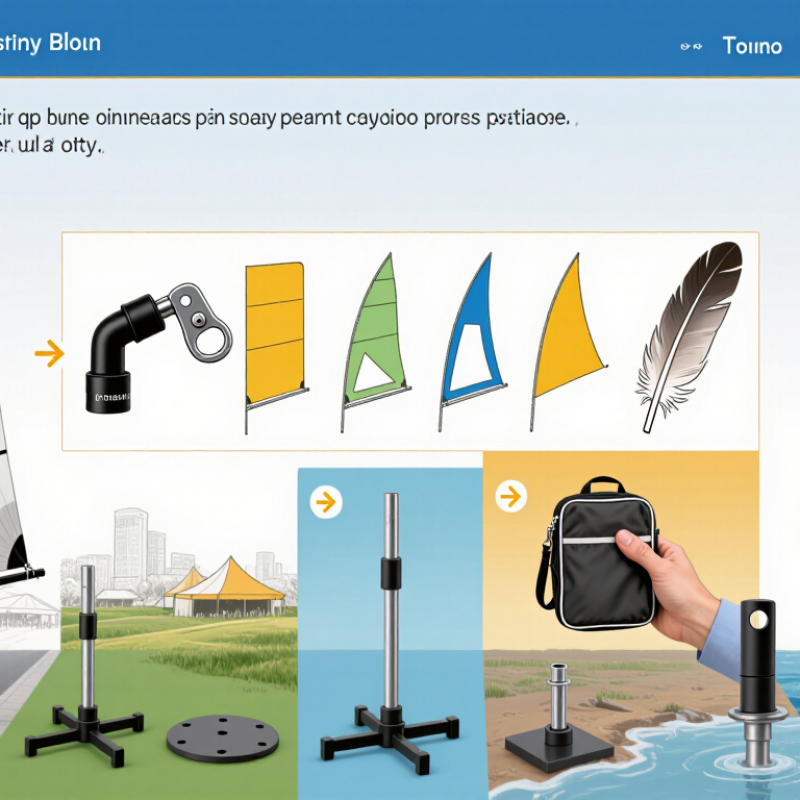
Advertising flag hardware includes every component that supports, tensions, and stabilizes the printed flag. The fabric is only one part. A typical kit contains sectional poles, connecting joints, a top cap, and a base. Some poles use a flexible top section that gives the flag its curved shape. Others keep the fabric straighter. Small differences matter.
The flag usually attaches through a sleeve or pocket sewn along one edge. Check that the opening matches the pole’s shape and diameter. A loose fit can make the fabric sag; a tight one can slow setup. Pole sections should join firmly without forcing them. That sounds obvious, but rushed assembly can leave a joint partly seated.
The base depends on the surface. A ground spike suits soft soil, while a cross base works on hard, level ground. For added stability, some cross bases accept a water or sand weight. The carry bag, fasteners, and any base adapter also count as hardware. Check these pieces before an event, not while people are waiting. No base makes a flag suitable for every condition, and exposed locations may need extra caution. I still find the base gets less attention than the pole, even though it often decides whether the setup feels secure.

Advertising flag hardware works as a small system, not a single pole. The fabric sleeve slides over a flexible mast, while a rotating arm helps the flag turn with changing wind. That movement can reduce twisting, though it does not make the fabric immune to wear. At ground level, a spike anchors the mast in firm soil; a weighted cross base suits pavement or indoor floors. Check that the connector fits snugly and that the mast locks without wobbling.
Tips: Match the base to the surface before choosing a flag size. Press a ground spike fully into compact soil, and avoid placing it where people may trip. On hard flooring, use a stable, sufficiently weighted base. Inspect joints, stitching, and the sleeve after setup; small looseness can become obvious in gusts.
For frequent outdoor use, compare mast flexibility, corrosion-resistant fittings, and replacement-part availability. A very light assembly may be easier to carry, but it can feel unstable with a larger flag. It is tempting to focus on height alone. That can be a mistake. Wind exposure and setup location matter just as much, and no hardware choice removes the need to take a flag down in severe conditions.
Feather and teardrop flags need a curved top pole that holds the fabric under tension. The pole follows the flag’s outline, helping prevent the leading edge from folding over. A ground spike suits soft soil, while a weighted cross base works better on pavement. Check the pole’s connection before setup; a loose joint can let the flag twist.
Rectangular flags usually use a straight pole with a top crossbar. The bar keeps the upper edge open, making the message easier to read from a distance. Some designs use a sleeve, while others attach with grommets. Match the hardware to the flag’s construction, not just its dimensions. Small mismatches matter.
Blade flags often use a flexible pole shaped to support their narrow profile. Their bases should suit the surface and expected conditions; a compact base may shift on uneven ground. There is no perfect setup. A heavy base adds stability, but makes frequent relocation less convenient. Measure the pole sleeve and inspect the base fit before ordering. I would also test the assembly outdoors, because indoor checks can miss how the fabric pulls in a breeze.
Common hardware types for different flag shapes
Suitability scores are a practical guide from 1 (limited fit) to 5 (strong typical fit), not laboratory test results. Feather and teardrop flags commonly use flexible poles with ground spikes or cross bases; rectangular flags can also suit wall mounts. Check pole compatibility, surface conditions, and wind exposure before choosing hardware.
For advertising flags, hardware choice starts with the site, not the fabric. Aluminum poles are light and resist corrosion, while steel bases add weight but need sound coatings to limit rust. Check the full assembly: pole, swivel, bracket, fasteners, and base must suit the flag’s size and exposure. Small parts matter.
Wind figures need context. ASCE/SEI 7-22 provides location-specific, risk-based wind design values; it does not give every flag base a universal safe wind rating. NOAA’s 1991–2020 Climate Normals use three decades of weather records, a useful reminder that local conditions vary. But climate averages cannot predict a sudden gust at a street corner. Ask suppliers for tested limits and the test setup, then lower or remove a flag when conditions exceed those limits. That step is often missed.
Installation should match the surface. A ground spike may work in firm soil, but loose or saturated ground can let it tilt. On pavement, use a weighted base rated for the assembly, or a properly specified anchor. Follow the maker’s embedment and fastener instructions; check for cracks, loose bolts, and sharp edges after installation. ASTM G154 describes a laboratory method for UV exposure of nonmetallic materials, but such testing does not equal a guaranteed outdoor service life. Sun, moisture, and abrasion still vary. I would treat a test result as evidence, not a promise.
What Is the Best Advertising Flag Hardware in 2026?
Choosing advertising flag hardware starts with the place and conditions where the flag will be used. A lightweight pole may suit an indoor event, while outdoor displays need a stable base and weather-resistant components. For a sidewalk, check the available footprint and surface before choosing a ground spike or weighted base. On grass, a spike can hold firmly, but rocky soil may make installation difficult. Start with the setting, not just the price.
Match the pole shape to the flag’s design, and confirm that the sleeve or attachment points fit securely. Check the assembled height, packed length, and replacement-part availability. Flexible poles can handle movement, while rigid sections may feel steadier in calmer locations. Neither option is perfect. Wind, repeated setup, and careless storage can shorten hardware life. Small details matter. Measure twice before ordering, especially if the flag has a custom sleeve or unusual dimensions.
Tips: Before buying, test the base on the actual surface and inspect every connector. Gently shake the assembled pole to spot loose joints. Keep a spare fastener if the hardware allows it. A compact kit is convenient, but a very light base may shift outdoors. Recheck stability after changing locations.
The best setup depends on the flag shape and size, the installation surface, expected wind exposure, and how often the display needs to be moved. Compare the common hardware options below before choosing.
| Hardware option | Typical installation surface | Main advantages | Limitations and checks | Best suited for |
|---|---|---|---|---|
| Ground spike | Firm soil, grass, or other penetrable ground | Lightweight, quick to install, and easy to transport; places the flag close to the ground without a separate ballast base. | Not suitable for concrete, paving, or hard-packed surfaces that cannot be penetrated. Check that the spike is fully inserted and secure; avoid use where buried utilities may be present. | Outdoor events, lawns, and temporary displays on suitable ground. |
| Cross base with water or sand weight | Flat, firm surfaces such as pavement, floors, and event venues | Folds or separates for transport, and can be weighted to improve stability. Does not require digging or permanent installation. | Stability depends on the base design, added weight, flag size, and wind conditions. Confirm that the weight is compatible with the base and follow the supplier’s outdoor-use guidance. | Trade shows, sidewalks, entrances, and temporary displays where a flat surface is available. |
| Water-fillable base | Flat, level indoor or outdoor surfaces | Can be carried empty and filled at the display location. Provides ballast without needing loose weights. | Must be filled and closed correctly, and emptied before transport or freezing conditions. Check for leaks, a stable footprint, and compatibility with the pole fitting. | Portable displays where water is accessible and a heavier base is needed. |
| Flat steel plate base | Level hard floors and paved areas | Low-profile and durable; can be practical where a wide base could obstruct movement. | Can be heavy to carry and may need additional securing outdoors. Check plate dimensions, edge treatment, and whether the fitting matches the flag pole. | Indoor promotions, retail spaces, and controlled locations with level flooring. |
| Wall or permanent surface mount | Suitable walls, posts, or other fixed structures | Keeps the display footprint clear and can provide a stable installation when correctly fixed to an appropriate structure. | Requires suitable fixings and permission to install. Confirm the mounting surface, fastener type, pole angle, and exposure to wind before installation. | Longer-term displays on buildings, fences, or approved fixed structures. |
| Vehicle wheel base | Ground beneath a stationary vehicle tire | Uses the vehicle’s weight to hold the base in place and can be convenient for roadside or vehicle-related promotions. | Requires a safely parked vehicle and a compatible wheel-base design. Keep the flag clear of traffic, moving parts, and pedestrian routes; do not use while the vehicle is moving. | Stationary vehicle displays and temporary outdoor promotions near parked vehicles. |
| Rotating pole and top fitting | Used with a compatible base or fixed mount | A rotating fitting lets the flag turn with changing wind direction, which can help reduce twisting around the pole. | Rotation does not make a flag windproof. Check pole sections, connectors, flag sleeve or attachment style, and the fitting’s compatibility with the chosen flag shape. | Feather, teardrop, or other flag systems designed for a rotating pole assembly. |
Selection checklist: Match the pole and fittings to the flag’s shape and size; choose a base suited to the surface; account for wind and foot traffic; and follow the hardware supplier’s setup and weather guidance. No portable base should be treated as a substitute for safe use in unsuitable wind conditions.

We have over 30 years of experience in designing complete hydraulic systems, repairs and distribution of fluid power equipment and parts.
FOLLOW US ON :
Address:
4020 SE 45th CT.
Ocala, FL 34480
Phone No:
Email:
sales@cunninghamfluidpower.com