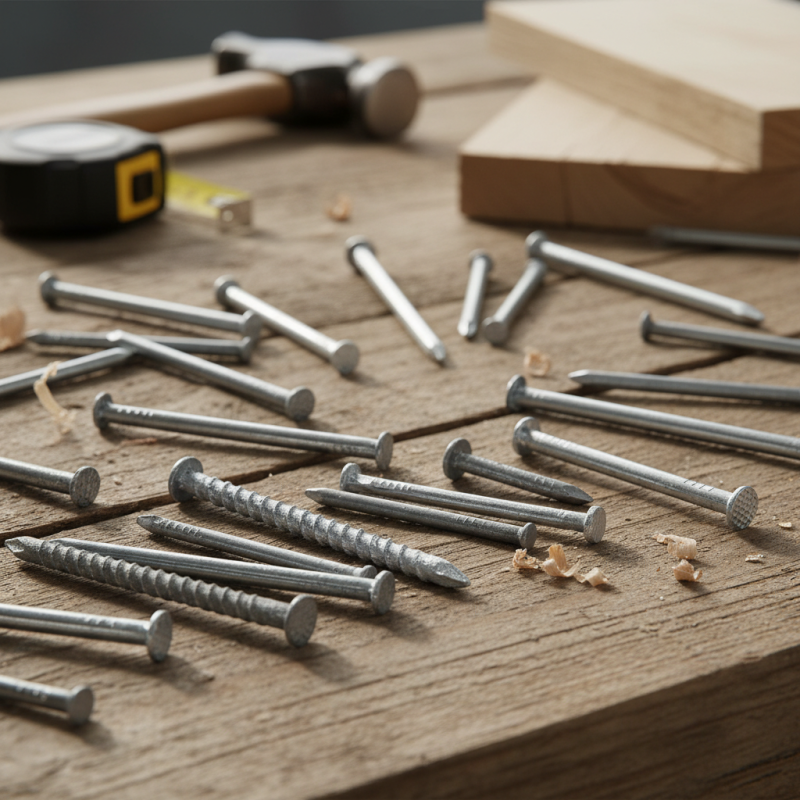
Best Galvanized Nails for Your Home Improvement Projects?
When tackling home improvement projects, choosing the right materials is crucial. One essential item is galvanized nails. These nails have a protective zinc coating. This coating helps prevent rust, ensuring a longer lifespan.
Galvanized nails are suitable for various applications. You can use them for indoor and outdoor projects. However, not all galvanized nails are created equal. There are different types of galvanized nails available, each designed for specific tasks. It can be overwhelming to choose the best ones for your needs.
In this guide, we will explore the best galvanized nails in the market. We will examine their features, strengths, and weaknesses. This way, you can make an informed decision for your next home improvement project. Remember, the right nails can significantly impact the quality of your work.
Understanding Galvanized Nails: Definition and Benefits
Galvanized nails are coated to resist corrosion. This makes them ideal for indoor and outdoor projects. The zinc layer protects the metal underneath. According to recent industry reports, galvanized nails can last up to 50 years in suitable conditions. Their durability makes them necessary for various applications, especially in humid environments.
Using galvanized nails can significantly impact your project's longevity. For example, in roofing, they ensure that your shingles stay in place through wind and rain. This choice reduces maintenance costs over time. However, it’s important to note that not all galvanized nails are created equally. Some cheaper options may not provide the same level of protection.
Tips: Always check for the gauge and length before purchasing. A thicker nail will hold better, especially in heavy materials. When in doubt, consult professionals to confirm the right specifications for your projects. Remember, a small mistake can lead to costly repairs later on.
Types of Galvanized Nails for Different Home Improvement Needs
When it comes to home improvement, choosing the right nails is crucial. Galvanized nails are a popular choice due to their rust resistance. Different types of galvanized nails suit various projects. For roofing, consider ring-shank nails. These provide extra gripping power to hold shingles firmly in place.
For decking projects, opt for smooth-shank galvanized nails. They penetrate wood easily and create a clean finish. According to industry reports, using the wrong type can lead to premature failures. On average, homeowners spend about 15% more on maintenance when improper fasteners are used.
Tip: Always check the gauge. Thicker nails offer better holding power. For siding, use siding nails; they are designed specifically for this job and help prevent water infiltration. Finally, consider the length. Nails that are too short might not provide adequate support. A thoughtful selection can make a significant difference in the durability of your project.
Factors to Consider When Choosing Galvanized Nails
When choosing galvanized nails, there are several factors to consider. The thickness of the nail is crucial. Industry reports indicate that nail gauge affects both strength and holding power. A 16-gauge nail is typically stronger than a 18-gauge one. Proper gauge selection depends on the project type. Walls may require thicker nails, while finer work might not.
Corrosion resistance is another vital aspect. Galvanization provides a protective layer. However, the coating can vary in thickness. A study from the National Association of Home Builders highlighted that thicker galvanized nails outperform thinner ones in humid conditions. This is particularly important for outdoor projects or in regions with high moisture levels.
Consider the length of the nails as well. Selecting the right length ensures a secure hold. Many DIY enthusiasts often overlook this detail. Using nails too short can result in weak joints. Conversely, too long nails can split the material. A balance is necessary for optimal results. Understanding these factors can lead to better choices for successful home improvement projects.
Best Galvanized Nails for Your Home Improvement Projects
| Nail Type | Length (inches) | Gauge | Coating Type | Best Use |
| Common Nails | 3 | 16 | Hot-Dip Galvanized | Framing and Sheathing |
| Decking Nails | 2.5 | 10 | Electro-Galvanized | Decking and Outdoor Projects |
| Roofing Nails | 1.5 | 12 | Hot-Dip Galvanized | Shingle Installation |
| Finish Nails | 2 | 18 | Electro-Galvanized | Trim and Molding |
How to Properly Use and Install Galvanized Nails
Using galvanized nails is essential for many home improvement projects. They resist rust and corrosion. This durability makes them suitable for both indoor and outdoor use. According to the Home Improvement Research Institute, nearly 70% of construction projects in the U.S. utilize galvanized fasteners. Choosing the right size is crucial. Common lengths range from 1 inch to 3 inches.
Proper installation enhances the effectiveness of galvanized nails. Pre-drilling holes is a common mistake; it can prevent wood from splitting. The recommended distance for driving nails is about 1.5 times the nail length from the edge of the wood. Having a firmer grip on your tool can significantly improve accuracy. Use a hammer with uniform blows for the best results. Misalignment or overdriving can compromise the integrity of the materials joined.
Despite their advantages, issues can arise during installation. For instance, the galvanization layer may chip if excessive force is applied. This can lead to rust over time. Attention to detail is vital during the driving process. Using galvanized nails requires some practice. The right technique not only extends the lifespan of your project but also enhances overall aesthetics.
Best Galvanized Nails for Your Home Improvement Projects
Maintenance Tips for Projects Using Galvanized Nails
When tackling home improvement projects with galvanized nails, maintenance is key. These nails resist rust, making them ideal for outdoor use. However, they can still degrade over time if not properly cared for. Inspect regularly for signs of corrosion. Look for rust spots or discoloration. Early detection can prevent larger issues.
In addition to inspections, proper installation matters. Ensure nails are driven straight and flush to avoid weakening the structure. Using the right tools can make a difference. A suitable hammer or nail gun can enhance accuracy and reduce damage. Pay attention to the material you’re working with, as softer woods may require less force.
Store galvanized nails in a dry place to prevent moisture exposure. This simple step can prolong their life. Consider the environment where they will be used. Extreme temperatures or high humidity can affect performance. Reflecting on your project’s conditions is essential for longevity. Don't overlook these factors; they can impact the success of your home improvement efforts.