

China’s real-time monitoring sensor market spans compact temperature probes, vibration transmitters, pressure sensors, and wireless data-logging systems. For buyers, the challenge is not simply finding a low price. A sensor must deliver stable readings, fit the installation environment, and communicate reliably with existing control or cloud platforms. Small details matter: cable shielding near a motor, enclosure ratings in a washdown area, and calibration records for each measurement range.
Real-time computing researcher James A. Stankovic described the core principle clearly: “The correctness of a real-time system depends not only on the logical result but also on the time at which that result is produced.” That distinction applies directly to sensor selection. A delayed alarm can be as unhelpful as an inaccurate reading. Look closely at sampling intervals, response time, stated accuracy, operating temperature, and communication protocols. Ask suppliers how they test products and whether they can provide traceable documentation. Claims deserve verification.
This guide examines China-based suppliers through practical criteria: product range, customization, quality controls, technical support, and export experience. It also considers whether a supplier can explain its specifications plainly, rather than relying on impressive catalog language. No supplier is perfect. A strong datasheet cannot replace a careful pilot installation, and even a well-reviewed device may perform differently on a noisy factory floor. The most useful shortlist is built around the application, not a ranking alone. Compare evidence, request samples where practical, and confirm after-sales arrangements before placing a large order.
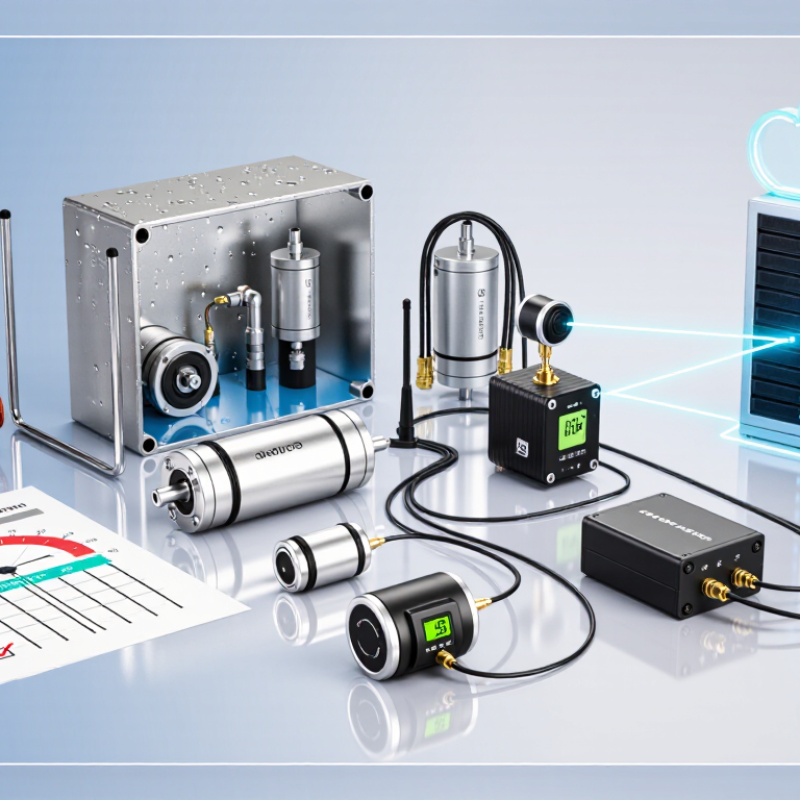
Real-time monitoring sensors in China are used across factories, buildings, transport networks, and environmental systems. They measure conditions such as temperature, vibration, pressure, humidity, and gas concentration. Readings can travel through wired networks or wireless gateways to control rooms, where operators watch trends and respond to alarms. Small details matter. A temperature probe beside a motor may reveal a developing fault before production stops.
China’s Ministry of Industry and Information Technology reported 3.377 million 5G base stations nationwide by the end of 2023. This expanding network can support connected monitoring, especially where many devices send frequent readings. But 5G is not essential for every sensor: factories often use established industrial networks when reliability and predictable latency matter more than mobility. The IoT Analytics report State of IoT 2024 estimated 16.6 billion connected IoT devices worldwide at the end of 2023. That figure covers many device types, not sensors alone, so it should not be read as a sensor-market total.
Choosing a monitoring system involves more than comparing sampling rates. Buyers should check calibration records, measurement range, response time, enclosure protection, and how the device behaves during network outages. A dashboard may look precise while a poorly placed probe misses a hot bearing. Data quality is easy to overlook. Installation conditions, maintenance intervals, and clear alarm thresholds deserve equal attention.

Real-time monitoring relies on sensors that turn changing machine conditions into usable data. Pressure sensors help track pumps, pipes, and hydraulic systems, where a sudden reading change may signal a blockage or leak. Temperature sensors, including resistance-based probes and thermocouples, are common in ovens, motors, and process lines. A probe placed near a hot surface can read differently from one in the airflow. Small errors matter.
Vibration sensors detect imbalance, bearing wear, and loosened mounts by measuring motion over time. On a production line, regular readings can reveal a gradual change before it becomes an unplanned stop. Flow sensors monitor liquids and gases; ultrasonic models suit some clean pipes, while other designs work better with conductive fluids. Gas sensors add another layer of awareness in enclosed work areas, but readings depend on placement, ventilation, and sensor condition. No sensor is perfect.
When comparing suppliers, check measurement range, response time, calibration records, and compatibility with the site’s data system. Ask how a sensor performs under heat, dust, moisture, or vibration, and whether technical support can help with installation. A detailed specification is useful, but it cannot replace testing in the actual process. Even reliable equipment can drift, so maintenance schedules should reflect operating conditions rather than a convenient calendar alone.
Approximate response-time ranges by sensor type, alongside common industrial monitoring applications.
Ranges are illustrative, not universal specifications. Actual response depends on sensor design, installation, signal conditioning, and measurement conditions.
When evaluating Chinese real-time monitoring sensor suppliers, match the sensor to the actual site conditions. Check measurement range, accuracy, response time, and stated operating temperature. A sensor that performs well in a clean test room may behave differently near vibration, dust, or changing humidity. Numbers matter. Ask how each specification was measured, and request a sample report rather than relying on a catalog table.
Review calibration procedures, production checks, and documentation for the exact model you plan to buy. For a temperature sensor, for example, compare readings against a reference instrument at several points across its working range. Check whether the supplier records calibration dates and explains acceptable drift. Also confirm output formats, communication protocols, and how readings reach your monitoring platform. Compatibility is easy to overlook until installation.
A small pilot can reveal practical issues before a full order: unstable readings, awkward wiring, or unclear setup instructions. Ask about lead times, spare units, technical support hours, and replacement procedures. Clear answers are useful evidence, though they are not proof of consistent quality. I would be cautious about judging a supplier from one successful sample; production batches can vary, and even a careful evaluation leaves some uncertainty.
China’s real-time monitoring sensor suppliers vary in engineering depth, production scale, and support. A capable supplier should explain measurement accuracy, response time, operating temperature, and calibration methods in clear terms. Ask how sensors perform near vibration, dust, moisture, or electrical interference. These conditions can affect readings. Details matter.
Product ranges may include temperature, pressure, humidity, vibration, flow, and gas sensors, with wired and wireless communication options. For a factory line, buyers might need compact probes that fit existing equipment and transmit readings to a central dashboard. For outdoor use, enclosure protection and stable operation across changing temperatures deserve closer review. Not always simple.
Customization can cover probe length, connector type, cable routing, housing materials, sampling frequency, and communication protocols. Suppliers may also adapt firmware or provide interfaces for existing monitoring systems. Request a sample configuration and test it under realistic conditions before placing a large order. Check documentation, calibration records, and after-sales response times, too. A specification sheet rarely captures every installation problem. I would still verify small details, such as connector clearance, because they are easy to overlook.
China Best Real Time Monitoring Sensor Suppliers
Quality Standards, Procurement, and After-Sales Support
Reliable real-time monitoring starts with measurable quality controls. Ask suppliers for calibration records, accuracy ranges, response times, and documented test conditions. A temperature sensor tested in a stable room may behave differently near vibrating machinery or in humid air. Check whether the stated operating range matches your site, not just the product sheet. Small details matter.
Procurement should include practical verification. Request a sample and compare its readings with a trusted reference instrument across expected conditions. Review connector types, cable length, enclosure rating, and data-output compatibility before placing a large order. Confirm lead times and spare-part availability in writing. A low unit price can become costly if replacement units take weeks to arrive. We have seen specifications look complete while one interface detail was missing; that is worth checking twice.
Tips: Agree on acceptance criteria before shipment, including calibration tolerance and inspection records. Ask who handles troubleshooting, how quickly support replies, and whether replacement or recalibration is available. Keep a few installation photos and operating logs; they make support discussions clearer. After-sales promises can sound reassuring, but response times are not always easy to predict. Ask for a realistic service process, then document it.
| Evaluation Area | What to Verify | Evidence to Request | Procurement and After-Sales Considerations |
|---|---|---|---|
| Quality management | Check whether the supplier operates a documented quality management system and whether its certified scope covers the relevant manufacturing activities. | Current quality-system certificate, issuing body, validity dates, and certified scope. ISO 9001 specifies requirements for a quality management system; it does not certify a particular sensor’s performance. | Confirm how nonconforming products, corrective actions, and production changes are controlled. Define notification and approval requirements for changes that may affect the product. |
| Measurement performance | Review the measurement range, accuracy or maximum permissible error, resolution, repeatability, response time, and operating conditions against the application. | Product datasheet and test report identifying the tested model, measurement range, test conditions, and method. Ask how uncertainty and measurement limitations are reported. | Specify acceptance limits and test conditions in the purchase specification. Compare performance over the intended operating range, not only at a single reference point. |
| Calibration and traceability | Determine whether calibration is available, what points are covered, and whether the calibration result is traceable to recognized measurement standards. | Sample calibration certificate showing measured results, reference standards, environmental conditions, and uncertainty where applicable. ISO/IEC 17025 applies to the competence of testing and calibration laboratories; check the laboratory’s accredited scope if accreditation is required. | State whether calibration certificates are required for each unit or for a sample. Agree on calibration intervals based on application, risk, and observed drift rather than assuming one interval fits every sensor. |
| Applicable technical standards | Check standards relevant to the sensor type and intended use. For example, IEC 60751 covers industrial platinum resistance thermometers, while IEC 60584 covers thermocouples. | Declaration of conformity and test documentation that identify the standard and edition used. Confirm that the specified standard applies to the sensor technology and product configuration. | List required standards and editions in the inquiry or purchase order. A standards reference alone does not establish suitability for every installation or regulatory requirement. |
| Environmental protection | Assess enclosure protection, temperature limits, humidity tolerance, vibration resistance, and chemical compatibility for the installation environment. | Test reports or product documentation supporting the claimed enclosure rating. IEC 60529 classifies degrees of protection provided by enclosures; verify the rating for the complete installed assembly where relevant. | Specify the environment and installation method, including exposure to dust, water, condensation, chemicals, and vibration. Confirm whether connectors and cable entries retain the stated protection level. |
| Electrical safety and EMC | Review supply voltage, power consumption, isolation, grounding, surge protection, and electromagnetic compatibility for the intended system. | Applicable safety and EMC test reports or declarations. IEC 61326-1 provides EMC requirements for electrical equipment for measurement, control, and laboratory use; applicability depends on product type and use. | Confirm the required output, cable length, grounding arrangement, and installation environment. Include system-level EMC checks where the sensor will operate with other equipment. |
| Real-time data and interfaces | Define sampling rate, reporting interval, latency, time synchronization, data format, and behavior during network interruptions. | Interface specification, protocol documentation, sample data, and a demonstration using the intended controller or monitoring platform. | State required update and alarm behavior in the specification. These values depend on the sensor, network, software, and application; request tested figures for the proposed configuration. |
| Cybersecurity and data handling | For connected sensors, review authentication, access control, update process, communication protection, and data ownership. | Security documentation describing supported controls, software or firmware update procedures, and vulnerability reporting channels. | Clarify who can access device and operational data, how credentials are managed, and how long security updates are provided. Apply the organization’s network and cybersecurity requirements. |
| Production consistency | Assess incoming-material checks, in-process controls, final inspection, serial-number traceability, and handling of production changes. | Quality-control plan, sample inspection records, product identification details, and an explanation of lot or serial traceability. | Agree on inspection requirements, sampling plans, and acceptance criteria before ordering. For repeat orders, define how product equivalence and approved changes will be maintained. |
| Quotation and total cost | Compare unit price alongside calibration, accessories, cabling, software, integration, packaging, and recurring service costs. | Itemized quotation showing model configuration, quantity, included documentation, warranty terms, shipping terms, and any additional charges. | Request a written statement of production lead time and shipment schedule for the quoted configuration. Confirm quotation validity, payment terms, and responsibility for transport and import charges. |
| Sample and acceptance testing | Evaluate a representative sample for measurement performance, installation fit, interface compatibility, and operation under expected conditions. | Sample test plan, recorded results, and documented pass/fail criteria agreed by both parties. | Complete sample approval before bulk production where practical. Define the inspection period, defect reporting process, and remedies for units that fail the agreed acceptance criteria. |
| Warranty and technical support | Review warranty duration, covered defects, exclusions, repair or replacement process, and availability of technical assistance. | Written warranty terms, support contact details, troubleshooting guide, and service procedure. | Clarify response and repair targets, return authorization steps, shipping responsibility, and availability of replacement units. Do not rely on informal assurances in place of written terms. |
| Spare parts and lifecycle | Check availability of compatible connectors, cables, probes, and replacement units, as well as product-change and discontinuation practices. | Parts list, compatibility information, and written lifecycle or end-of-sale notification policy, if available. | For long-term installations, consider spare-unit requirements and require advance notice of changes that could affect compatibility, calibration, or maintenance. |

We have over 30 years of experience in designing complete hydraulic systems, repairs and distribution of fluid power equipment and parts.
FOLLOW US ON :
Address:
4020 SE 45th CT.
Ocala, FL 34480
Phone No:
Email:
sales@cunninghamfluidpower.com