China Top Acrylic LED Sign Board Manufacturer?
Choosing a China Top Acrylic Led Sign Board Manufacturer requires more than comparing prices or browsing polished product photos. A reliable supplier should demonstrate practical experience with acrylic fabrication, LED installation, lighting tests, and export packaging. This guide explores how manufacturers manage these details, from selecting clear acrylic sheets to producing even illumination across letters, logos, and panels. Small defects matter. A cloudy edge, visible wiring, or uneven brightness can weaken an otherwise attractive sign.
The right Acrylic Led Sign Board manufacturer should provide clear specifications, realistic production timelines, and evidence of consistent quality. Ask about acrylic thickness, LED lifespan, waterproof protection, power efficiency, color temperature, and mounting methods. Factory photographs, sample videos, inspection records, and customer feedback can support credibility, although they should not replace direct verification. Experienced buyers often request a prototype before approving a larger order. That step may add time, but it can reveal problems early.
Manufacturing is never perfectly predictable. Materials may vary slightly, and installation conditions can change the final appearance. A dependable supplier explains these limitations instead of promising impossible results. Communication also matters. Technical drawings, voltage requirements, logo files, and packaging instructions must remain accurate throughout production. This overview will help businesses assess Chinese manufacturers with greater confidence, practical judgment, and attention to long-term performance. Look beyond the lowest quotation. A sign should not only look bright on delivery day; it should remain stable, readable, and serviceable in real commercial environments.
Acrylic LED Sign Boards: PMMA Optical Transmittance Can Reach 92%
China Top Acrylic LED Sign Board Manufacturer?
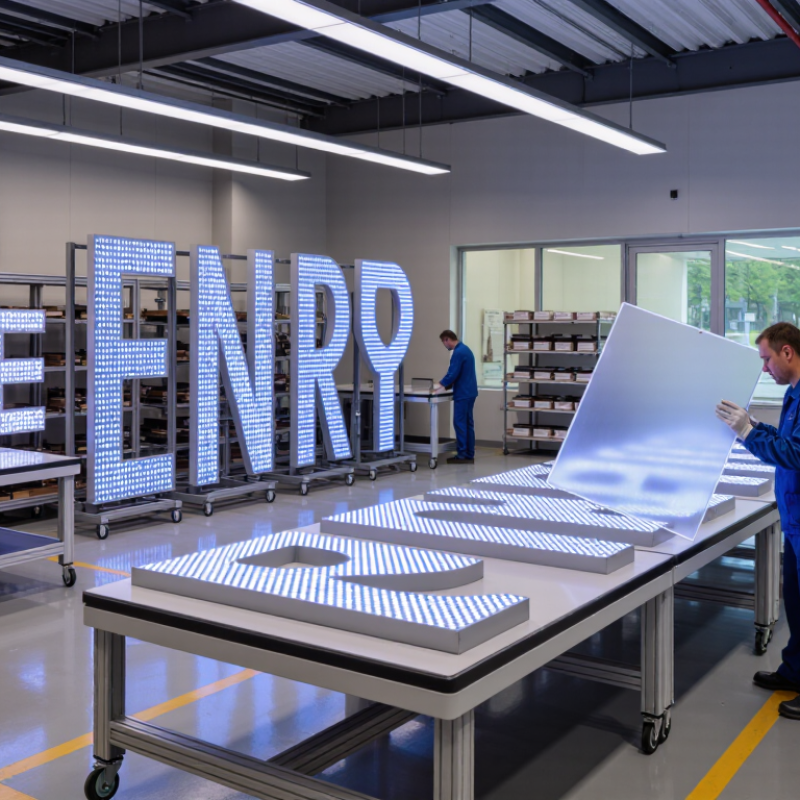
Acrylic LED sign boards use PMMA because the material can provide optical transmittance of up to 92% under suitable test conditions. This figure depends on grade, thickness, surface finish, and measurement method. Clear PMMA can spread LED light across a panel, helping create bright letters with fewer dark areas. In practical fabrication, a 3 mm sheet often balances light transmission, rigidity, and manageable weight. Thicker sheets may look stronger, but they can reduce brightness and increase material cost.
A reliable manufacturer should verify PMMA quality, LED spacing, color consistency, and heat management before production. Small samples matter. A sign may appear even in the workshop but show visible shadows outdoors. The cause could be poor diffusion, uneven LED placement, or an overly shallow cabinet. Edge polishing also deserves attention because rough edges scatter light unpredictably. The 92% transmittance claim is useful, but it should not replace actual brightness testing.
Tips: Request a material specification and a lighting sample before ordering. Check the panel at night, from several viewing angles. Leave room for ventilation around the LEDs. Do not assume maximum transparency always creates the best sign; controlled diffusion may produce a cleaner result. Calibration can still be imperfect, so final inspection remains necessary.
LED Sign Illumination: Modern LEDs Commonly Deliver 80–150 lm/W
China Top Acrylic LED Sign Board Manufacturer?
LED Sign Illumination: Modern LEDs Commonly Deliver 80–150 lm/W
When evaluating an acrylic LED sign board manufacturer in China, ask for measured illumination data, not only promotional brightness claims. Modern LEDs commonly deliver 80–150 lumens per watt under controlled conditions. Actual sign performance can be lower. Acrylic thickness, diffuser quality, LED spacing, and heat buildup all affect the result.
Measure the sign face directly. Use a calibrated light meter at several points, including corners and letter edges. Uneven spacing may create bright dots near the modules. Dark gaps often appear inside deep characters. A reliable manufacturer should provide LED efficacy, color temperature, color rendering information, power consumption, and test conditions. Details matter.
Small errors become visible at night.
For example, a 100-watt system producing 10,000 lumens may seem efficient. However, losses from lenses, wiring, and the acrylic face reduce useful output. A practical target is uniform light, not maximum lumens alone. In field inspections, overheated power supplies often caused gradual dimming after several hours. This issue is easy to miss during a short factory demonstration.
Ask whether testing covers continuous operation, outdoor moisture protection, and temperature changes. Request sample photos taken without excessive camera exposure. The best supplier is not simply the one quoting the highest lm/W figure. It is the manufacturer that explains limitations clearly and supports repeatable quality checks.
China Top Acrylic LED Sign Board Manufacturer? – LED Sign Illumination: Modern LEDs Commonly Deliver 80–150 lm/W
Modern LED sign illumination commonly operates within an efficacy range of approximately 80–150 lumens per watt. Actual performance depends on LED module design, optical efficiency, operating current, thermal management, diffuser losses, and installation conditions. The ranges shown are representative engineering benchmarks rather than company or brand specifications.
Quality Benchmarks: IP65 Protection and ISO 9001 Production Controls
When choosing a top acrylic LED sign board manufacturer, IP65 protection should be a practical benchmark, not a marketing phrase. IP65 means the enclosure is dust-tight and protected against low-pressure water jets. It does not mean the sign can be submerged. That difference matters outdoors.
A dependable sign should have sealed cable entries, protected LED modules, firm acrylic joints, and sensible drainage. During installation, small gaps around screws can become serious weaknesses after rain, dust, and temperature changes. The acrylic face may look flawless, yet the rear enclosure often determines service life. Check it carefully.
ISO 9001 production controls add another layer of reliability. They should cover incoming acrylic inspection, LED consistency, wiring checks, adhesive curing, and final brightness testing. Each batch should have traceable records. Good factories also control color, voltage, and surface alignment. Paperwork alone proves little. Ask for inspection reports and sample test results.
No production line is flawless. A minor scratch or uneven seal can escape inspection. That is why corrective action matters more than perfect claims. Experienced manufacturers should explain how defects are recorded, repaired, and prevented from returning. I would also test a finished sample before approving a large order. The uncomfortable question remains: will the sign perform after months of heat, rain, and dust? A clear answer should include evidence, not confidence alone.
How to Evaluate China’s Top Acrylic LED Sign Board Manufacturer
Evaluating China’s top acrylic LED sign board manufacturer requires more than comparing factory prices. Start with engineering evidence. Ask for acrylic grade, sheet thickness, light-transmission data, LED binning records, and thermal test results. A bright sample may still develop hotspots after months of operation. I have seen this mistake repeatedly.
The U.S. Department of Energy’s Energy Savings Forecast of Solid-State Lighting report estimated that solid-state lighting could save 7.8 quadrillion BTUs annually by 2035. Efficient LEDs matter, but efficiency alone does not prove sign quality. Check illumination uniformity across corners, power consumption per square metre, heat dissipation, and brightness after continuous testing. Request a production sample, not only a showroom prototype. Examine its edges, screw points, wiring, and rear ventilation. Small details reveal process discipline.
Documentation also separates a serious manufacturer from a trading operation. The ISO Survey 2023 recorded more than 1.26 million ISO 9001 certificates worldwide, yet certification cannot replace factory verification. Review batch traceability, incoming-material inspection, aging-test records, and corrective-action reports. Confirm whether the stated warranty covers LED failure, acrylic yellowing, water ingress, and freight damage. Independent electrical and ingress testing strengthens credibility. Still, I would question any supplier promising zero defects. Real manufacturing has variation. The better question is how clearly the factory detects, records, and fixes it.