

How to Choose a Hydraulic Coupler in 2026?

Choosing a Hydraulic Coupler in 2026 is not just a matter of matching thread sizes. The right choice affects leakage, downtime, operator safety, and how reliably equipment performs through repeated connection cycles. Small details matter. A dusty coupler beside an excavator’s attachment can behave very differently from a clean one in a workshop.

Market context helps explain why selection deserves care. Grand View Research’s Hydraulic Equipment Market Size, Share & Trends Analysis Report estimates the global hydraulic equipment market reached USD 46.4 billion in 2023, with continued growth projected through 2030. That figure covers hydraulic equipment broadly, not couplers alone, but it signals the scale of systems that depend on dependable fluid connections. For flat-face quick-action couplings, ISO 16028 provides relevant dimensional and performance requirements. Still, a standard cannot choose the right product for a particular machine.

Start with operating pressure, flow rate, fluid type, temperature, and connection frequency. Check whether the coupler must connect under pressure, resist contamination, or limit fluid loss during changes. Compare the manufacturer’s rated values with the machine’s actual working conditions, not just its headline specifications. There is no tidy universal answer. Even a correctly sized coupler may disappoint when seals, materials, or maintenance routines are overlooked. Before buying, confirm compatibility with the equipment maker or a qualified hydraulic specialist, and review the supplier’s technical data. That extra check is practical, not excessive.
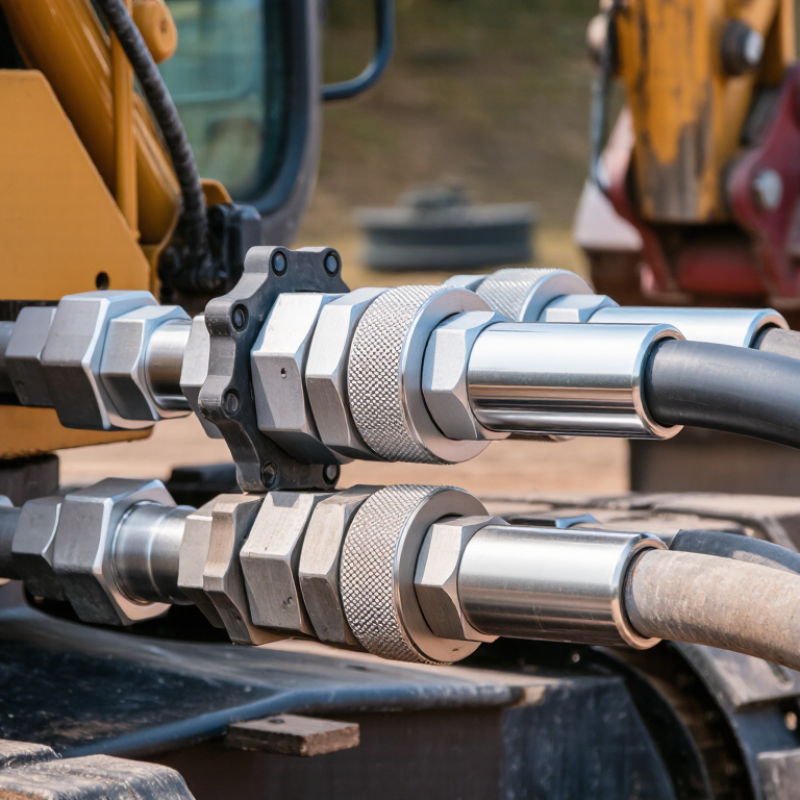
How to Choose a Hydraulic Coupler in 2026?

Define the Hydraulic System’s Application and Operating Conditions

How to Choose a Hydraulic Coupler in 2026?

Define the Hydraulic System’s Application and Operating Conditions

Start with the machine’s actual job, not just its coupler size. A loader working in dusty fields faces different demands from a stationary press in a clean workshop. Note the fluid type, normal operating pressure, peak pressure, flow rate, and expected connection frequency. Pressure spikes can exceed the system’s usual reading, so check equipment specifications rather than guessing.

Temperature matters. Cold starts can make seals less flexible, while hot fluid may shorten their service life. Consider vibration, dirt, moisture, and whether operators connect lines under pressure. A coupler that is easy to handle with gloves can save time, but ease of connection should never replace correct pressure ratings and system compatibility. Small details matter.

Tips: Record the machine model, hose size, fluid, pressure range, and working environment before comparing couplers. Check whether the system requires flat-face, poppet-style, or another connection design. Confirm that both halves match and follow the equipment maker’s guidance. If readings are unclear, measure them during real operation; a single snapshot may miss pressure peaks. I have seen selection discussions overlook duty cycle. It is easy to do.

Choose the Coupler Type and Connection Standard

Choose the coupler by operating duty, not appearance. A compact flat-face unit suits frequent connection cycles because its exposed surfaces are easier to wipe clean. ISO 16028 specifies flat-face hydraulic quick-action couplings, while ISO 7241 covers other interchangeable coupling series. These standards help narrow the choice, but matching the series alone does not confirm suitability. Check working pressure, peak pressure, flow rate, fluid type, temperature, and expected connection frequency against the equipment data.

Then verify the connection standard at both ends. A coupler may use a standard interface but still have the wrong port thread, seal, or size for the hose assembly. Not just thread. ISO 4406:2021 uses three particle-size bands—≥4, ≥6, and ≥14 μm(c)—to code hydraulic-fluid cleanliness. That matters because dirt introduced during disconnection can affect sensitive valves downstream. I would not treat a familiar-looking thread as proof; rushed visual checks are easy to get wrong. Compare the machine manual, coupler markings, and measured port dimensions, and confirm pressure ratings in the manufacturer’s technical data. A small mismatch can leak, restrict flow, or prevent safe connection.

Match Pressure, Flow Rate, Fluid, and Material Requirements

How to Choose a Hydraulic Coupler in 2026?

Match Pressure, Flow Rate, Fluid, and Material Requirements

Choosing a hydraulic coupler starts with the machine’s real operating conditions, not a catalog’s biggest number. Record normal and peak pressure, including startup spikes. Compare these figures with the coupler’s working-pressure rating at the expected temperature. Leave a safety margin. Pressure ratings can change with heat, and connected components must also handle the load.

Flow rate matters just as much. A narrow passage carrying high flow can cause pressure loss, heat, and sluggish actuator movement. Match coupler size to measured flow, and check pressure-drop data; hose diameter alone is not enough. Identify the fluid and its additives, then verify seal and body-material compatibility. Mineral oil, water-glycol, and synthetic fluids may require different elastomers. Consider corrosion, dust, and connection frequency, too. Steel can suit impact-prone equipment, while stainless steel may help in corrosive settings. Neither solves an incompatible seal. Temperature is easy to overlook, even on a careful selection sheet.

Tips: Confirm the pressure and flow ratings for both coupler halves. Check fluid compatibility at operating temperature, then inspect seals for wear before installation. Don’t guess.

Check Compatibility, Safety Features, and Environmental Conditions

How to Choose a Hydraulic Coupler in 2026?

Check Compatibility, Safety Features, and Environmental Conditions

Start with the circuit, not the coupler’s appearance. Match connection type, size, working pressure, flow rate, and fluid material compatibility. ISO 7241 specifies dimensional and performance requirements for common hydraulic quick couplings; verify the relevant series against your hose and equipment documentation. Small mismatch. Big consequence. Contamination matters, too. ISO 4406 classifies fluid cleanliness by counting particles at 4, 6, and 14 micrometres per millilitre. That makes clean caps and careful connection practices more than cosmetic details. A specification sheet can still leave gaps, so check the actual machine and operating manual.

Safety features deserve equal attention. NIOSH’s Alert 89-110 on high-pressure injection hazards warns that fluid jets can penetrate skin, even when the wound looks minor. Choose couplings with suitable pressure ratings and locking mechanisms, and depressurize the circuit before disconnecting. Check for leaks with a safe inspection method, never a hand. Then consider the site: cold can stiffen seals, heat can accelerate wear, and dust or moisture can enter exposed connections. Salt spray, vibration, and frequent connection cycles also affect service life. Test the selected coupling under real conditions when possible; laboratory ratings do not tell the whole story.

Assess Maintenance Needs and Supplier Support

A hydraulic coupler is only as dependable as the maintenance plan around it. Before selecting one, check how easily technicians can inspect seals, clean connection faces, and replace worn components. Ask whether routine service requires special tools or lengthy shutdowns. A coupler that is quick to connect but awkward to maintain can become an expensive bottleneck. Small leaks matter.

Supplier support deserves the same scrutiny as pressure rating. Ask for clear installation instructions, troubleshooting steps, spare-part availability, and a realistic response time for technical questions. McKinsey’s 2018 report, “Predictive Maintenance and the Smart Factory,” estimated that predictive maintenance could reduce equipment downtime by 30–50% across industrial settings. That is not a coupler-specific guarantee, but it shows why maintenance information and timely support can have measurable operational value. Confirm that the supplier can help identify contamination, pressure-drop, or seal-wear problems—not just process an order.

Tips: Keep a sample coupler and its service notes near the maintenance bench. Record connection cycles, leaks, and replacement dates. Then compare the notes with supplier guidance. Data can reveal patterns, though a small log is not proof of cause. Ask one more question before choosing: who will answer when the first failure happens?

How to Choose a Hydraulic Coupler in 2026? — Assess Maintenance Needs and Supplier Support

Example buyer-defined priorities (total 100%). Adjust the weighting to match your operating conditions; these are not industry benchmark data.

How to use this: Give higher priority to criteria that affect your equipment’s downtime and serviceability. Check the manufacturer’s maintenance instructions, pressure and fluid compatibility, spare-parts availability, and access to technical support before selecting a coupler.

Share by: