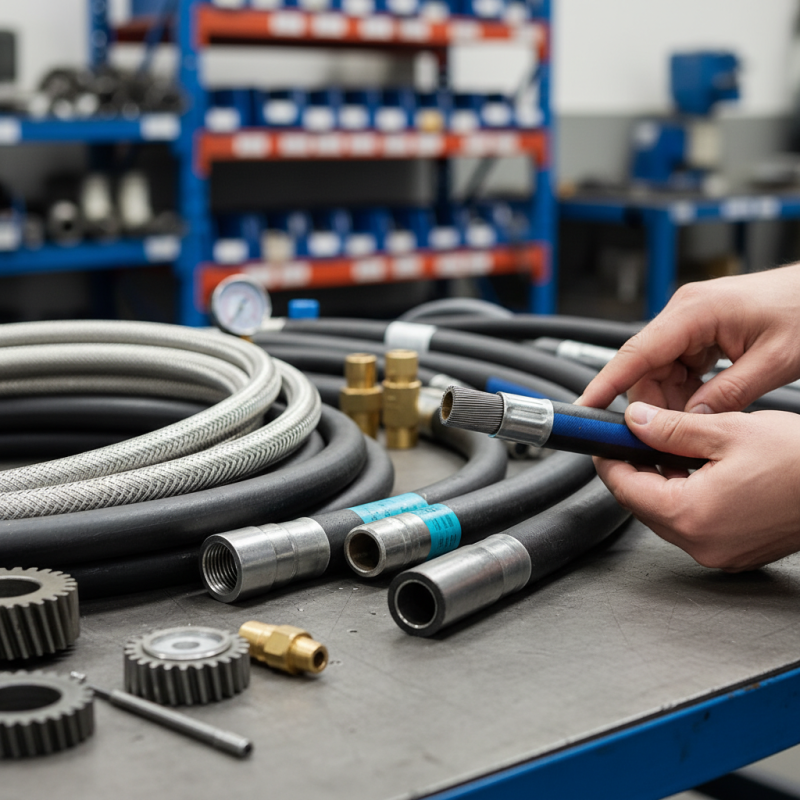
How to Choose the Best Hydraulic Hose for Sale?
Choosing the right hydraulic hose for sale is crucial for any project. A fitting hydraulic hose ensures optimal performance and safety. Numerous options exist, yet not all hoses meet the required standards. Many buyers focus solely on price but overlook quality.
A high-quality hydraulic hose can save money in the long run. Poor choices may lead to leaks or damage. Inspect materials and specifications before making a purchase. Common mistakes include ignoring the pressure rating and temperature range. Each hydraulic application has unique needs that must be matched accurately.
When seeking hydraulic hoses, consider the environment where they will be used. Will they withstand high pressures or extreme temperatures? Quality and durability play key roles in performance. It's essential to reflect on past experiences. Don’t rush the process; take your time in choosing the best hydraulic hose for sale.
Understanding Hydraulic Hose Specifications and Standards
When selecting a hydraulic hose, understanding the specifications is crucial. Hydraulic hoses are rated for pressure, temperature, and fluid compatibility. According to the International Organization for Standardization (ISO), hoses must meet specific pressure ratings and burst pressures. For instance, a common specification is ISO 18752, which outlines different performance categories. Knowing the right category helps avoid premature failures in high-pressure systems.
Fluid compatibility is another vital aspect. Different materials react differently with various fluids. The Hose Manufacturers Association (HMA) reports that using the wrong hose material can lead to hose degradation. This can cause leaks, which are costly and hazardous. Maintaining industry standards, such as SAE J517, ensures that the hose will withstand operational conditions.
Lastly, keep an eye on temperature ratings. Hoses often operate in extreme environments. A study from the American Society of Mechanical Engineers (ASME) found that many hose failures occur due to inadequate temperature ratings. Always double-check specs before making a purchase. Failure to do so could result in disastrous consequences. It’s worth investing time to fully understand these specifications before choosing a hydraulic hose.
Hydraulic Hose Specifications Comparison
Identifying the Right Material for Different Hydraulic Fluids
When selecting hydraulic hoses, material choice is critical. Different hydraulic fluids require specific types of hose materials. For instance, water-based fluids often work well with rubber hoses. However, they may not withstand the pressure of oils or hydraulic fluids with high viscosity.
According to a recent industry report, almost 30% of hydraulic failures are due to improper hose material selection.
Polyamide and polyethylene hoses are popular for their durability. They resist abrasion and are less likely to degrade in contact with fluids. But remember, they may not be suitable for extreme thermal environments. Always check the fluid temperature and pressure ratings. Tips: Be aware of your application needs. Fluid compatibility is key here.
Another important aspect is the hose's burst pressure rating. This should always exceed the system's maximum pressure. Failing to consider this can lead to dangerous failures. A survey indicates that nearly 20% of users overlook this parameter during selection processes. Tips: Regularly inspect hose conditions. Replace any worn or damaged hoses immediately to avoid system failures.
Evaluating Temperature and Pressure Ratings for Hose Performance
When selecting a hydraulic hose, understanding temperature and pressure ratings is crucial for optimal performance. A hose must withstand the specific conditions it encounters in use. Typically, most hydraulic hoses operate between -40°F to 212°F (-40°C to 100°C). Exceeding these temperatures can lead to premature failure. Research indicates that a hose’s lifespan decreases significantly with rising temperatures, often leading to leaks or bursts.
Pressure ratings are equally important. Hoses generally have maximum pressure limits, measured in psi (pounds per square inch). For instance, a hose rated for 3000 psi may not perform effectively under 4000 psi. According to industry reports, many failures stem from ignoring these ratings. Consistent monitoring of environmental conditions and regular maintenance could prevent expensive downtime and safety hazards.
Tips: Always check the manufacturer’s specifications for temperature and pressure limits. Ensure that the environment where the hose operates matches these requirements. A common oversight is assuming that all hoses are the same. Regularly inspect hoses for signs of wear or damage, as neglecting this can lead to catastrophic failures. Consider the application’s specifics before making a purchase.
Selecting Couplings and Fittings to Ensure Leak-Free Connections
When selecting couplings and fittings for hydraulic hoses, precision is crucial. Each component must fit correctly to prevent leaks. Consider the material of both the hose and fittings. Using incompatible materials can lead to failure. For example, rubber hoses paired with metal fittings may corrode over time. Regular checks are essential to ensure everything remains secure.
Tips: Always match the fitting size to your hose diameter. A mismatch can cause leaks. Check for wear and tear regularly. Sometimes, small cracks can develop unnoticed. These can lead to bigger issues down the line.
Further, ensure proper installation. Tight does not always mean right. Over-tightening can damage the fitting or the hose. Pay attention to recommended torque specifications. If you find any doubts about your setup, consult with experts. It’s better to ask than to risk failure later.
How to Choose the Best Hydraulic Hose for Sale? - Selecting Couplings and Fittings to Ensure Leak-Free Connections
| Hydraulic Hose Type | Maximum Pressure (psi) | Temperature Range (°F) | Inner Diameter (inches) | Coupling Type | Recommended Use |
| Rubber Hose | 3000 | -40 to 212 | 1/4 | Crimped | General-purpose machinery |
| Thermoplastic Hose | 4000 | -40 to 180 | 3/8 | Push-on | High-pressure applications |
| Wire Braided Hose | 5000 | -40 to 250 | 1/2 | Screw | Heavy duty machinery |
| Corrugated Hose | 3000 | -4 to 176 | 3/4 | Crimped | Oil transfer |
| PTFE Hose | 2500 | -100 to 500 | 1/2 | Smooth bore | Chemical resistance |
Considering Hose Length and Routing for Optimal Fluid Flow
Selecting the right hydraulic hose involves careful consideration of its length and routing. These factors are crucial for optimal fluid flow. According to a report from the Hydraulic Institute, improper routing can result in a 30% reduction in system efficiency. It’s essential to avoid unnecessary bends and loops. Each additional bend can lead to pressure drops and inefficiencies, affecting the overall performance.
The length of the hose directly impacts fluid velocity and hydraulic response time. A longer hose can introduce delays, leading to slower operation. For instance, a study by the International Fluid Equipment Association indicates that a 10% increase in hose length could delay fluid delivery by nearly 15%. Therefore, precise measurements and planning are vital.
However, it’s easy to overlook these details during installation. Many professionals underestimate the importance of optimal routing, leading to costly errors later. Regular reviews of hose layout should be conducted to ensure compliance with best practices. By prioritizing hose length and routing in the design phase, you can significantly enhance system reliability and performance.