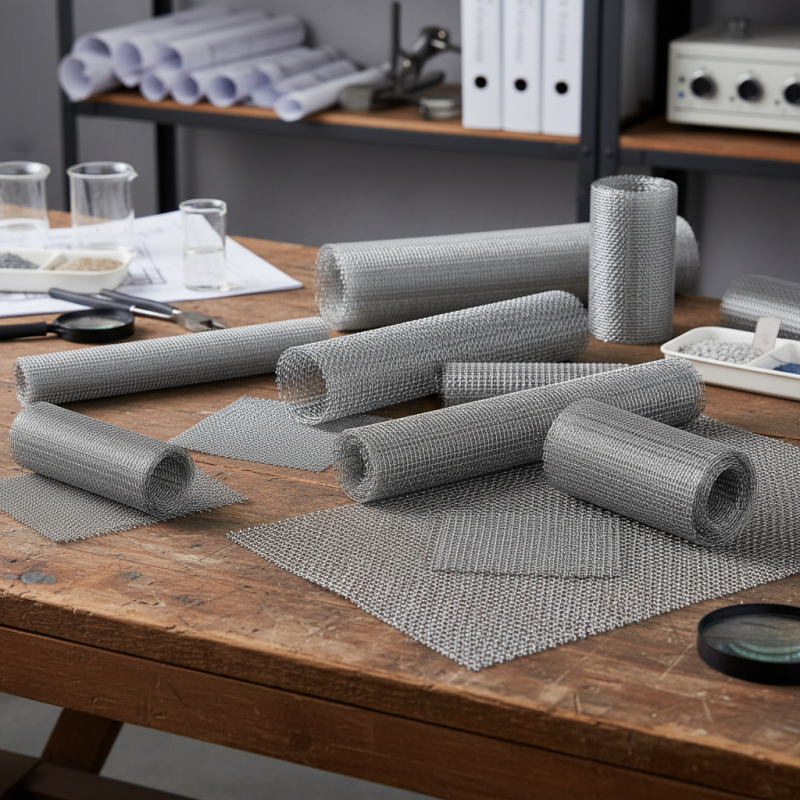
How to Choose the Best Stainless Steel Woven Wire Mesh?
Choosing the best stainless steel woven wire mesh can be challenging. It requires careful consideration of various factors. This material is essential for many industries, from construction to food processing.
When selecting stainless steel woven wire mesh, think about the specific application. The mesh's size, type, and weave pattern significantly influence its performance. Different projects may demand various mesh thicknesses and openings.
Reflect on your needs and the environment where the mesh will be used. Will it face harsh conditions? Is durability a priority? Small details can make a big difference. Collecting samples for testing is often a good idea. Ultimately, making the right choice can save time and costs.
Understanding the Basics of Stainless Steel Woven Wire Mesh
Stainless steel woven wire mesh is widely used in various applications. It consists of interlaced wires that create a sturdy yet flexible material. Understanding its construction is crucial. The wire diameter, mesh count, and weaving pattern all impact its strength and usability.
Different types of stainless steel offer varying levels of corrosion resistance. For instance, 304 and 316 grade stainless steels are common choices. However, not all applications require high-grade materials. Sometimes, a lower grade might suffice. The cost-effectiveness of using a lower grade is worth considering.
Choosing the right mesh can be tricky. Think about where and how it will be used. Is it for filtration or fencing? A decision based solely on appearance might lead to complications later. Testing samples before making a purchase is often a wise step. This allows for practical assessments, ensuring the selected mesh meets your specific needs.
Identifying Different Types of Stainless Steel Woven Wire Mesh
When choosing stainless steel woven wire mesh, understanding the different types is crucial. Commonly, you will find plain weave, twill weave, and Dutch weave. Each type serves specific purposes based on its construction. Plain weave mesh features alternating over and under patterns. It provides good strength, but flexibility is limited. Twill weave, on the other hand, creates a diagonal pattern. This enhances durability while allowing for increased flexibility.
Dutch weave is another variant, popular for filtration. It has a fine wire diameter with a thicker supporting wire. This structure provides excellent support and prevents particle passage, making it suitable for various applications. It's essential to assess the desired application when selecting a mesh type.
Consider environmental factors too. Exposure to humidity or chemicals may affect longevity. Look for meshes that can withstand your specific conditions. Many users overlook these details, leading to premature wear and tear. Reflect on your requirements critically. Choosing the right mesh type may seem simple, but it often requires deeper contemplation.
Evaluating the Specifications and Properties of Wire Mesh
When choosing stainless steel woven wire mesh, it is crucial to evaluate its specifications. The mesh's wire diameter significantly impacts strength and flexibility. Thinner wires offer more flexibility but less durability. Conversely, thicker wires provide greater strength but may limit flexibility.
Another specification to consider is the mesh opening size. Smaller openings can filter finer particles but may restrict airflow. Larger openings allow better airflow but may not retain smaller particles. Knowing the application is essential. Are you filtering water, or do you need structural support?
Material grade also plays a role in performance. Higher grades resist corrosion better but may be more expensive. The balance between cost and durability is often a point of reflection. Some buyers overlook quality in favor of low price. This mistake can lead to higher maintenance costs down the road. It's essential to assess trade-offs carefully before making a decision.
Assessing Applications and Industry Uses of Wire Mesh
When assessing applications and industry uses of stainless steel woven wire mesh, it's essential to consider several factors. This type of mesh finds applications across various sectors, including food processing, construction, and filtration. In food processing, for instance, woven wire mesh provides hygienic surfaces for brewing, baking, and filtration. Reports indicate that this industry is expected to see a growth rate of 4.5% annually. This growth reflects an increasing emphasis on safety and efficiency in food production.
Furthermore, the construction industry also relies heavily on woven wire mesh for reinforcement in concrete. It's not just about strength; it's about durability. A report from Construction Materials Journal highlights that using quality stainless steel can prolong the lifespan of structures by up to 30%. However, issues arise with corrosion if not properly installed or maintained. This vulnerability requires careful selection based on the specific environment and load requirements.
In the filtration sector, woven wire mesh is crucial for ensuring the purity of liquids and gases. Industries like oil and gas demand mesh that can withstand high pressures and varying temperatures. However, selecting the correct mesh can be tricky. The wrong choice could lead to inefficiencies or failures. Understanding these applications helps in making informed decisions about the right mesh to use, balancing cost and performance effectively.
Considerations for Selecting the Right Wire Mesh Supplier
When selecting a wire mesh supplier, consider their experience. A reputable supplier typically has years in the industry. They understand the various applications of stainless steel woven wire mesh. Check their portfolio for previous projects. This insight can reveal their capabilities.
Quality control is another key factor. Ensure the supplier has stringent quality assurance practices. Ask about their sourcing of raw materials. Not all stainless steel is created equal; it impacts durability and performance. The right supplier will be transparent about these details.
Additionally, customer service matters greatly. A reliable supplier should communicate effectively and timely. Look for their responsiveness to inquiries. This can be a reflection of how they handle orders. Pricing is essential, but don’t compromise on quality for a lower cost. It's a balancing act that requires a thoughtful approach.