How to Choose the Right Injection Machine Robot for Your Needs?
Choosing the right Injection Machine Robot can significantly impact your production process. The right robot enhances efficiency and precision in manufacturing. However, the options can be overwhelming. You may wonder what features matter most.
Consider your specific needs. How frequently will the robot operate? What types of materials will it handle? The answers to these questions can guide your decision. You might find it easy to focus on the robot’s cost, but that can be misleading. A cheaper robot may result in higher operational issues later.
It’s essential to reflect on your long-term goals. Will your production scale increase? A robot that meets your current needs may not suffice in the future. Make sure to research various models and manufacturers. Virtual demonstrations can provide insights, but be cautious. They may not represent real-world performance. So, take the time to ask questions and clarify doubts. The right Injection Machine Robot can be a game changer, but the wrong choice can lead to frustration.
Understanding the Basics of Injection Machine Robots
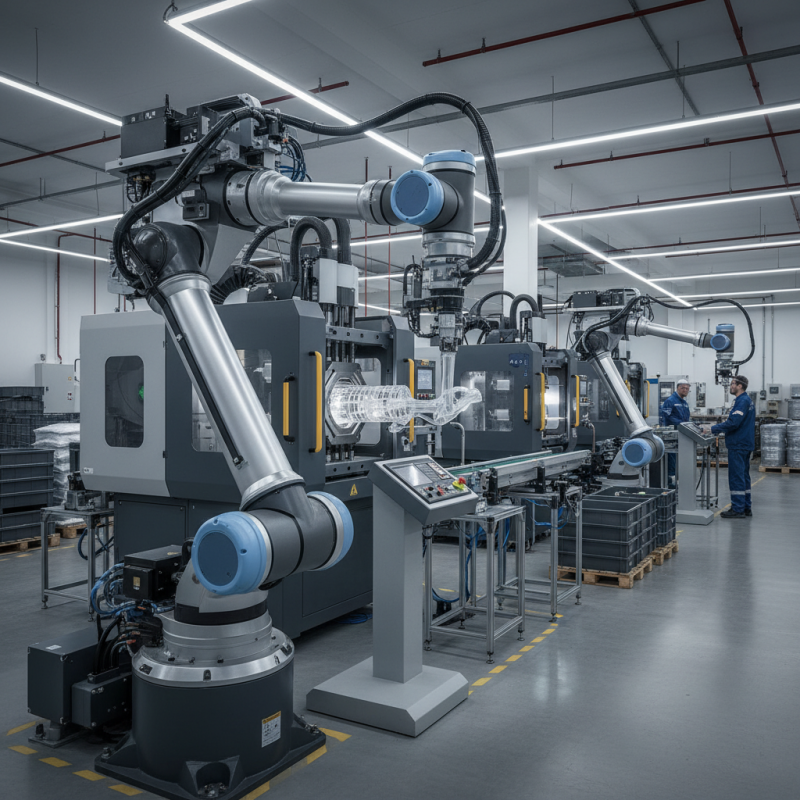
Injection machine robots have become essential in modern manufacturing. Understanding their basics is crucial for making informed decisions. These robots automate the injection molding process, increasing efficiency and precision. They handle the complex tasks of inserting and removing parts, ensuring consistent product quality.
Choosing the right robot involves several considerations. Factors such as payload capacity and speed play important roles. It’s vital to assess your production volume. If the volume fluctuates, flexibility might be more important than sheer power. It’s also worth noting that not all robots are easy to integrate with existing systems. Compatibility issues can lead to unexpected costs and delays.
Maintaining a balance between performance and budget is crucial. While some options may be more advanced, they could exceed your requirements. Consider what features are essential versus nice to have. This reflection can prevent overspending. By understanding the fundamentals, you position yourself to make better choices for your production needs.
Identifying Your Specific Production Needs and Requirements
Choosing the right injection machine robot involves understanding your unique production needs. Each manufacturing process has its nuances. Therefore, it's essential to clarify what you want. Consider factors such as production volume, cycle time, and precision required for your products. Are you dealing with complex parts or simple shapes? This will dictate the type of robot needed. Sometimes, it's easy to overlook smaller details. But those can significantly impact your efficiency.
Tips for identifying production needs: **Check your current workflow.** Identify bottlenecks or inefficiencies. This can highlight what type of robot will improve your process. **Consult your team.** They often have insights into operational challenges. Involve them in the decision-making process. **Reassess your goals regularly.** Production needs may shift over time. It's crucial to stay adaptable to these changes.
While you focus on these factors, remember that not every solution will be perfect. There might be trade-offs and compromises. A high-speed robot might not excel in precision. Or a highly precise model may be slower. Reflect on what aspects of your production are non-negotiable and where flexibility is acceptable. Finding that balance is key to selecting the right injection machine robot.
Production Needs for Injection Machine Robots
Evaluating Different Types of Injection Machine Robots
When evaluating different types of injection machine robots, several factors come into play. Start by assessing the size of your operation. Larger facilities may benefit from robots with a higher payload capacity. These can handle heavier molds or multiple tasks during the injection process. Smaller shops can opt for lighter models that still offer flexibility.
Consider your production volume. High-speed applications require robots that can perform quickly and accurately. Some robots excel at speed, while others focus on precision. It is essential to align these capabilities with your operational goals. Don’t overlook the importance of software compatibility too. Robots with user-friendly interfaces can simplify your training process.
Tips: Look for robots with adjustable settings. This allows for greater versatility across projects. Pay attention to maintenance requirements; some models may demand more frequent care. Lastly, consider the ease of integration into your existing setup. A robot may have advanced features but could be challenging to incorporate into your workflow. Reflect on these aspects as you choose your injection machine robot.
Comparing Features and Specifications of Various Models
When choosing an injection machine robot, understanding the features and specifications is crucial. Different models come with unique capabilities. For example, the speed of a robot can significantly impact production efficiency. Some robots operate at high speeds, while others may prioritize precision. Evaluate your needs carefully. Faster does not always mean better.
Consider the payload capacity as well. Some robots can handle heavier loads, while others are designed for lighter tasks. Think about the materials you'll use. Are they dense or lightweight? This will influence your choice. Another key aspect is flexibility in programming. Some robots offer advanced programming options. This can save time and improve versatility in production. Yet, this complexity can also be overwhelming.
Don't overlook the maintenance requirements as well. Simpler machines may require less regular upkeep. But, they might lack advanced features. Reflect on your team's skills. Are they familiar with maintaining complex machinery? If not, it may be wise to choose a more straightforward model despite its limitations. In the end, balancing capability with ease of use will help you make the right choice.
Determining Budget Constraints and Cost-Effectiveness
Choosing the right injection machine robot involves understanding budget constraints and cost-effectiveness. A survey conducted by Industry Week indicates that about 60% of manufacturers exceed their initial budgets when investing in automation. This factor can quickly escalate costs, mainly if not managed well. The average ROI for automated systems is often cited as being around 15-30%, but this varies significantly. It is essential to evaluate the long-term benefits against initial expenses.
When considering your budget, explore various financing options. These can mitigate upfront costs. Some studies suggest that companies that invest in energy-efficient robots report a 20% decrease in operational costs. Evaluating the total cost of ownership (TCO) will help in making informed decisions. TCO includes energy consumption, maintenance, and potential downtime.
Tips: Always factor in hidden costs. Prioritize machines with lower energy requirements. This can lead to significant savings over time. Also, consider scalability in your budget. Will this robot meet future needs? It is vital to reflect on current and future production demands before making any commitments.