How to Choose the Best Arc Welding Equipment in 2026
Choosing Arc Welding Equipment in 2026 is less about buying the most powerful machine and more about matching it to the work. A repair shop welding thin steel, a fabrication floor running long shifts, and a mobile crew working outdoors have different needs. The right choice depends on material, joint thickness, welding process, available power, portability, and duty cycle. Small details matter. A machine that trips during a long weld can slow production, even if its rated amperage looks impressive.
Workforce data also puts equipment decisions in context. The U.S. Bureau of Labor Statistics projects about 2% employment growth for welders, cutters, solderers, and brazers from 2023 to 2033, with roughly 45,800 openings each year, on average. Its Occupational Outlook Handbook points to continuing demand for skilled work across construction and manufacturing. The American Welding Society has also highlighted a substantial need for new welding professionals in its workforce research. These figures do not tell you which machine to buy, but they do underline the value of equipment that supports consistent work and practical training.
This guide explains how to compare power sources, process compatibility, controls, safety features, and service support. It also considers what specifications mean in real use, such as whether a stated duty cycle fits your production schedule. Numbers can mislead. I have seen buyers focus on peak output and overlook the power supply or consumables they actually use. That is easy to do. A careful shortlist, checked against real jobs and manufacturer documentation, is a more dependable starting point.
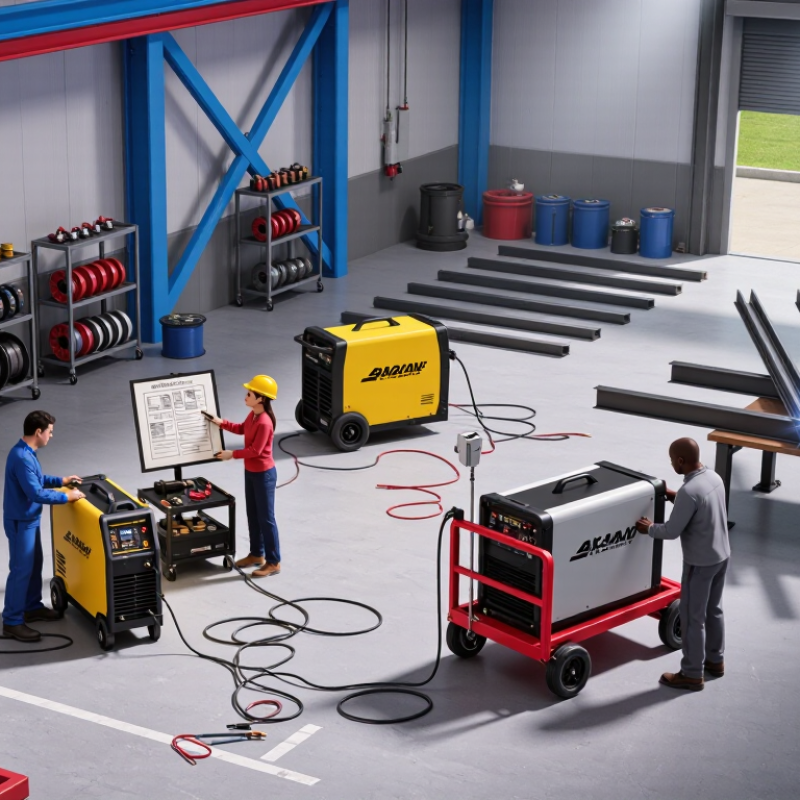
Assess Your Welding Projects, Materials, and Skill Level
Choosing arc welding equipment starts with the work, not the machine’s headline amperage. List common jobs: thin-sheet repairs, farm gates, structural sections, or stainless assemblies. Measure material thickness and note metal type, joint position, and available power. A compact inverter may suit mobile repairs; thicker sections or long duty cycles need adequate output and cooling. Check input voltage and duty cycle against your real schedule, not ideal conditions.
The process should match the material and worksite. Stick welding handles outdoor conditions well, but requires electrode control and leaves slag. TIG offers precision on thin stainless steel, yet demands steady hands and more setup. MIG suits repeated shop work, though shielding gas can be difficult in wind. This choice is easy to underestimate: a capable machine may still be wrong for the job. Keep it simple.
Let your skill level guide the controls, accessories, and practice time. Beginners benefit from clear settings, stable arc behavior, and scrap metal close to the intended thickness. Experienced welders may value adjustable output, multiple processes, and portability. The U.S. Bureau of Labor Statistics projects 2% employment growth for welders from 2023 to 2033, with about 42,600 openings annually, according to its Occupational Outlook Handbook. Demand is not a substitute for training. Budget for a helmet, gloves, ventilation, and consumables, too. A first estimate can be wrong; test a few beads before committing.
Compare Arc Welding Processes for Your Intended Applications
Choose the process for the job, not just the machine’s advertised output. Shielded metal arc welding (SMAW) suits field repairs where wind makes external shielding gas difficult. Gas metal arc welding (GMAW) is practical for repeatable shop work on thin-to-medium steel. Flux-cored arc welding (FCAW) can handle heavier sections; check whether the wire requires external gas. Gas tungsten arc welding (GTAW) offers precise control on stainless steel and aluminum, but typically demands slower travel and cleaner surfaces. Fit-up matters. A narrow joint with a visible root may favor GTAW; a long structural seam may reward FCAW’s deposition rate.
Workforce data also affects equipment choice. The American Welding Society’s 2020 workforce report projected demand for 330,000 welding professionals by 2028. The U.S. Bureau of Labor Statistics projected about 45,800 annual openings for welders and related occupations from 2023 to 2033. These figures do not rank welding processes, but they make training, consumable availability, and ease of servicing worth checking. I’d still test the process on actual material; spec sheets rarely show the awkward corner or imperfect fit-up that slows a real job.
Tips: Match the process to material thickness, position, and work setting. Test a sample joint, then inspect penetration and distortion. Ask operators which setup they can repeat safely and consistently.
Match Power Requirements and Machine Capacity to Your Work
Choosing arc welding equipment starts with the power available at your worksite, not the machine’s maximum amperage. A 120-volt outlet may suit light repairs, but it can limit output and duty cycle. For thicker steel or repeated welds, compare the machine’s input requirements with your circuit capacity and expected operating time. Check the outlet. If the wiring is uncertain, ask a qualified electrician to verify it. An undersized extension cord can cause voltage drop, an unstable arc, and excess heating. That matters.
Match the output range to the materials and process you actually use. Thin sheet metal needs controllable low amperage, while thicker plate may call for more current and larger electrodes. Use the electrode guidance and machine manual as references, leaving room for real-world variation. Keep some headroom. High maximum output is not automatically useful if the lowest setting is too high for your usual jobs. Check the duty cycle at your expected amperage: a 60-percent rating allows six minutes of welding in a ten-minute period, followed by cooling. A specification sheet can make a choice look obvious, yet long beads may expose awkward limits. Note your typical material thickness, electrode size, and available power before comparing machines.
Evaluate Controls, Duty Cycle, Portability, and Safety Features
How to Choose the Best Arc Welding Equipment in 2026
Choosing arc welding equipment starts with matching its controls to the work, not chasing the highest output. A readable amperage dial makes repeatable adjustments easier across electrode sizes. Hot-start and arc-force settings can help with striking and maintaining an arc, but excessive adjustment may cause more spatter. Specs can mislead. There is no perfect setting chart; joint fit-up and electrode condition still affect how an arc behaves.
Check the duty cycle at the current you expect to use. It indicates how long a machine can weld during a ten-minute period before cooling is needed. Higher output often means shorter operating time, so compare ratings at realistic amperage. A unit rated for heavy output may still need frequent pauses on thicker material. Confirm the stated test conditions, too.
For portability, consider the complete setup: machine, leads, cables, and any accessories you routinely carry. A comfortable handle and tidy cable storage matter on a crowded jobsite. Safety features such as thermal overload protection are useful, but they do not replace sound practice. Inspect lead insulation, use proper grounding, keep the work area dry, and provide suitable ventilation. Wear appropriate eye, hand, and body protection. Small details matter.
How to Choose the Best Arc Welding Equipment in 2026
Compare controls, duty cycle, portability, and safety features against your work before choosing a machine.
Example selection weights, not measured product ratings or market data. Adjust them for your work: check duty-cycle ratings at the output you need, compare controls and portability with your workflow, and confirm the machine’s safety features and applicable requirements.
Check Accessories, Service Support, and Total Ownership Cost
How to Choose the Best Arc Welding Equipment in 2026
A machine’s output rating tells only part of the story. Check whether the package includes suitable leads, an electrode holder, a ground clamp, and the connectors your work requires. Inspect cable length and flexibility, too; stiff leads can make awkward positioning harder. Match the power input to the outlets available at your worksite, and confirm the unit suits your materials and expected duty cycle. A low purchase price can look appealing. Missing essentials may change that calculation.
Ask how service support works before buying. Find out where repairs are handled, whether common replacement parts are stocked, and how quickly technical questions receive a response. Clear warranty terms matter, but so does practical guidance when settings or consumables cause trouble. Estimate total ownership cost across several years: equipment, accessories, routine upkeep, consumables, and potential downtime. A modestly priced unit may cost more if a failed lead keeps a job waiting. Estimates are imperfect; write down your assumptions and revisit them.
Tips: Compare complete, ready-to-use packages, not just machine prices. Keep a short list of required accessories. Ask for service details in writing, and check that replacement parts are available near your work area.