How to Choose the Best Boat Ratchet Straps?
Choosing Boat Ratchet Straps is not just a matter of picking the widest strap on the shelf. The right choice depends on the boat’s weight, the trailer’s tie-down points, and the distance each strap must span. A strap that feels substantial in your hands can still be unsuitable if its working load limit is too low. Check that rating, not just the breaking strength. Then inspect the webbing, stitching, hooks, and ratchet for wear, corrosion, or damage. Small defects matter.
For an illustrative expert voice, this guide uses Morgan Ellis, a fictional composite marine-rigging specialist: “A secure tie-down starts with the load rating and ends with a careful recheck.” This is an original editorial line, not a quotation from a real person. In practice, fit the straps so the boat cannot shift forward, backward, or sideways, while avoiding excessive pressure on delicate hull surfaces. Look for protected contact points and enough strap length for a direct, tidy route. No twisted webbing. No loose tails flapping in the wind.
Real setups are rarely perfect. A cleat may sit awkwardly, or a strap may rub against a sharp trailer edge. Pause and correct the route rather than assuming a tighter ratchet solves everything. This article will explain how to compare ratings, materials, hardware, and fit, so you can choose Boat Ratchet Straps with sound judgment—and know what still deserves a second look.
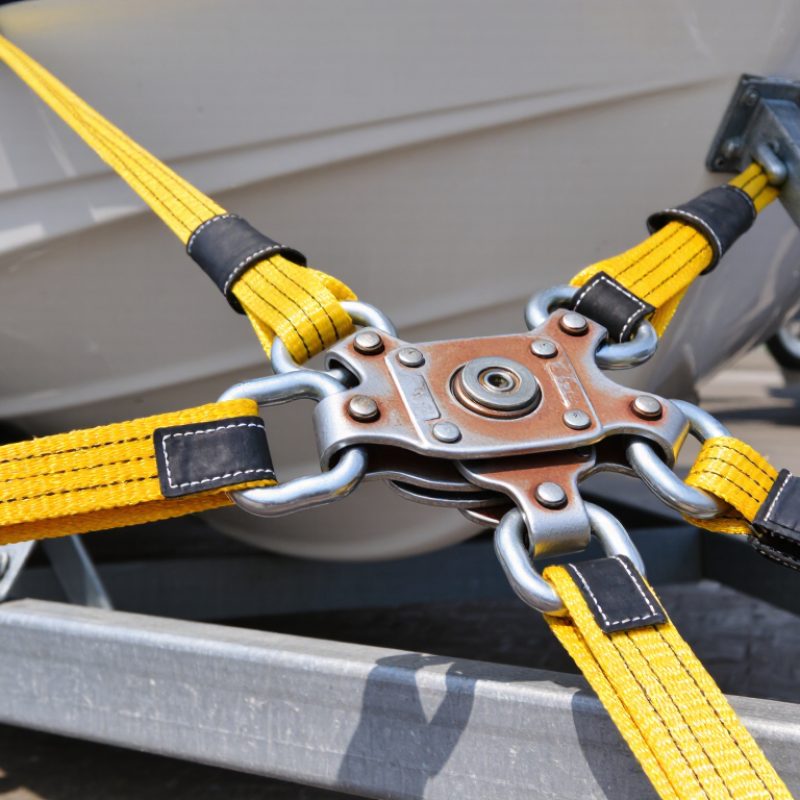
Understand the Purpose and Design of Boat Ratchet Straps
How to Choose the Best Boat Ratchet Straps?
Boat ratchet straps do more than hold a hull still. They limit movement from braking, road vibration, and crosswinds. A typical strap combines woven webbing, a ratchet handle, and hooks or fittings for trailer anchor points. Its working load limit (WLL) is the usable capacity; breaking strength is not. Choose webbing wide enough to spread pressure, and keep hardware away from sharp hull edges.
FMCSA’s 49 CFR §393.106 sets aggregate tie-down WLL at half the load weight for covered cargo. This is a transport benchmark, not a boat-specific sizing rule. Follow your boat and trailer makers’ instructions, and check each strap’s readable WLL label. Salt spray, grit in the ratchet, frayed stitching, and UV exposure can weaken straps. I’ve seen snug straps still allow stern bounce because their anchor angles were poor. Tension matters. So does geometry.
Tips: Keep straps straight, untwisted, and snug—not tight enough to crush the hull. Use soft sleeves where webbing touches an edge. Check the stitching, hooks, and ratchet before each trip. A strap can look fine at a glance. Inspect closely.
Assess Your Boat, Trailer, and Tie-Down Requirements
Before comparing boat ratchet straps, establish the actual load: boat weight with fuel and gear, trailer capacity, and the points available for secure attachment. A dry hull can become much heavier when loaded. Check the trailer and boat manuals, then inspect the bow eye, transom eyes, and frame for wear or sharp edges. Strap length matters, too; a strap that barely reaches may sit at a poor angle. Small detail. It matters.
Choose straps by their marked working load limit (WLL), not by appearance or breaking strength alone. As a reference, the Federal Motor Carrier Safety Administration’s cargo-securement rule, 49 CFR §393.106(d), requires aggregate WLL of at least 50% of cargo weight for covered commercial vehicles. That rule does not automatically govern every recreational boat trailer, so follow the trailer maker’s instructions and applicable local requirements. Use separate tie-downs to restrain the bow and stern, and avoid routing webbing across fragile fittings. Wet, gritty straps can hide cuts and abrasion. Rinse them after saltwater trips, let them dry, and replace any with damaged stitching or unreadable labels. It is easy to focus on ratchet strength and overlook the anchor point; even a strong strap cannot compensate for a weak fitting.
Compare Strap Materials, Sizes, and Working Load Limits
For most boat tie-downs, polyester webbing is a practical choice. It stretches relatively little and handles sun and moisture well. Nylon can stretch more, which may help absorb movement, but it can retain water. Polypropylene is lightweight, though its durability may not suit every exposed, high-load setup. Check the strap’s care and use instructions; material alone does not tell the whole story.
Match strap width and length to the boat, anchor points, and load. A wider strap is not automatically safer if its hooks or buckles have lower ratings. Compare the working load limit (WLL), not just the breaking strength. They are not the same rating. Use the limit for the complete assembly, including its hardware, and follow the stated number of straps and loading guidance. Measure twice. A strap that is too short may pull at an awkward angle; excess length can flap in the wind.
At the dock, position webbing so it does not rub across sharp edges or pinch hoses and cables. Tighten it enough to prevent shifting, but avoid crushing cushions or pressing hard against a delicate hull surface. Small details matter. After a rough trip, inspect stitching, buckles, and hooks for fraying, corrosion, or bending. Replace damaged gear rather than trusting a strap that only looks fine from a distance. One judgment call remains: the right tension depends on the boat’s shape and support points.
Evaluate Ratchet Mechanisms, Hooks, and Safety Features
When choosing boat ratchet straps, inspect how the mechanism moves before judging it by appearance. A smooth ratchet should tighten in controlled clicks and release without sticking. Try it with dry hands, then consider whether you could operate it near a wet, pitching boat. Feel the difference. A handle that is too short may be awkward to grip, while a loose pawl can fail to hold tension reliably. Check the strap’s working load limit, not just its breaking strength, and match it to the load and tie-down points. I would not assume a thicker strap is automatically safer; damaged stitching or a poor fit can matter more.
Hooks deserve the same scrutiny. Choose shapes that sit fully inside secure anchor points, rather than resting on an edge where movement could dislodge them. Inspect for cracks, corrosion, bent tips, and sharp burrs that might cut the webbing. Small details matter. Before travel, tighten the strap, close the ratchet completely, and keep the webbing flat, without twists. Recheck tension after the boat settles, and look again during longer trips. There is no perfect strap for every setup, and I would rather pause over a questionable hook than trust one because it looks sturdy. Don’t use a strap with frayed fibers or a ratchet that slips.
Choose, Use, and Maintain the Right Straps for Your Boat
Choosing boat ratchet straps starts with the boat and trailer, not the brightest buckle. Check the strap’s working load limit, not just its breaking strength. Select a capacity that suits the load and follow the trailer and strap makers’ instructions. Use wide, soft webbing where straps touch the hull. A sharp edge or gritty trailer rail can wear through fabric surprisingly fast. Keep the ratchet clear of the gelcoat, and tighten until the boat cannot shift without crushing or distorting anything. More force is not always safer.
Tips: Lay each strap flat and remove twists before tightening. Add a soft protective sleeve where webbing crosses a rail or hull edge. Secure the bow and stern as directed for your trailer; tie-down straps should not replace required safety connections. After a short drive, stop somewhere safe and check tension. Small details matter. I may be overly cautious, but straps can settle as the boat moves.
Rinse straps and ratchets with fresh water after saltwater trips, then let them dry fully before storage. Check stitching, webbing, hooks, and ratchet teeth for fraying, cracks, corrosion, or sticking. A strap that looks fine can still have weakened stitching. Replace damaged gear rather than trusting a quick repair. Check again before every trip.