

Choosing a Corrugated Box Feeder Machine is a production decision, not merely an equipment purchase. The right feeder must match box dimensions, board thickness, line speed, folding accuracy, and available floor space. It should also support stable feeding when dust, warped blanks, or changing orders create real factory pressure.
Smithers’ The Future of Global Corrugated Packaging to 2028 reports continued global growth, driven by e-commerce, food delivery, and recyclable packaging demand. FEFCO industry statistics also show Europe producing tens of billions of square metres of corrugated board annually. That volume increases pressure on converters to reduce stoppages and maintain consistent throughput. PMMI’s packaging automation research highlights labour shortages and the growing need for practical automation. Yet higher speed is not always better.
Packaging-equipment specialist Dennis Colley has stated, “The box is only as good as the process that makes it.” This principle applies directly to feeder selection. A powerful machine can still underperform beside poor blank storage, weak maintenance routines, or unsuitable infeed settings. That assumption is easy to miss.
This guide examines feeder types, servo control, vacuum systems, changeover time, safety features, maintenance access, and total operating cost. It also considers operator experience, because specifications rarely reveal every factory problem. A feeder may run perfectly during a demonstration, then struggle with dusty board or short production runs. The best choice is therefore not the fastest machine. It is the most reliable Corrugated Box Feeder Machine for your actual products, workforce, and production rhythm.
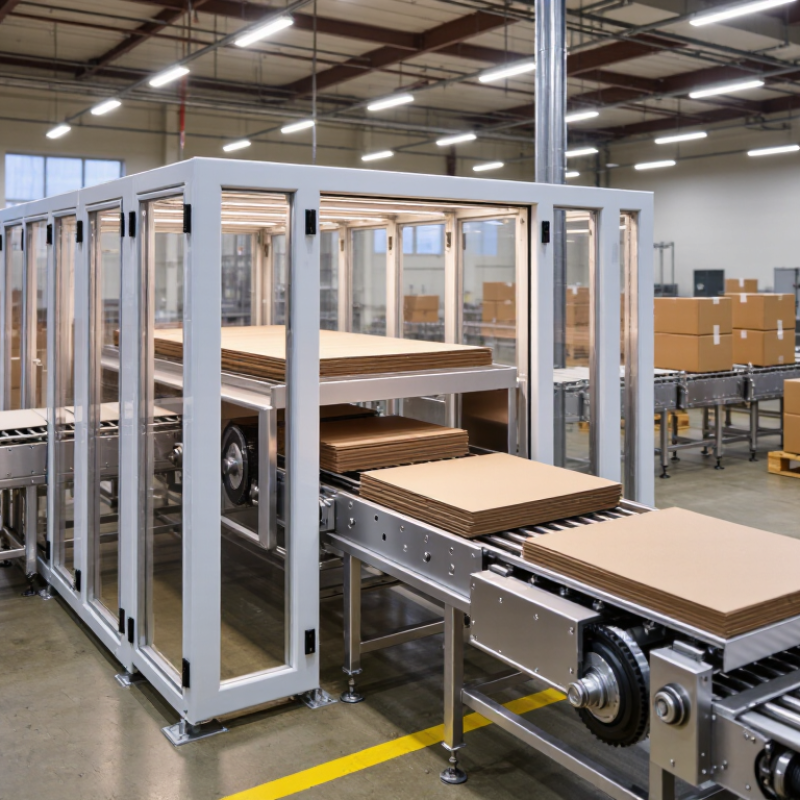
A corrugated box feeder machine separates flat blanks and delivers them at controlled intervals. Its vacuum belts, friction rollers, and sensors prevent double-feeding. Servo controls then synchronize each blank with a folder-gluer, die-cutter, or printing line. This timing protects crease accuracy and reduces jams around the infeed section. Smithers’ report, The Future of Corrugated Packaging to 2028, valued the global corrugated packaging market at approximately US$205.8 billion in 2023. Growing volumes make stable feeding increasingly important.
Applications vary by board grade, blank size, and production rhythm. A feeder handling lightweight E-flute needs different vacuum control from one processing rigid double-wall board. Short-run plants may prioritize tool-free adjustment and rapid changeovers. High-volume operations may require automatic pile loading, servo positioning, and reject detection. Small errors compound. A slightly misaligned blank can produce open seams, crushed corners, or wasted adhesive.
When choosing equipment, test real blanks rather than relying only on catalogue speed. Check minimum and maximum sheet dimensions, flute compatibility, surface print quality, and feeding stability at low speeds. PMMI’s packaging automation research identifies labor availability, changeover efficiency, and quality control as major automation drivers. Yet maximum speed is not always the best investment. A faster feeder can create more waste when cardboard moisture changes. That assumption deserves testing. Ask suppliers for trial data, noise readings, access clearances, and maintenance intervals. A practical machine should be adjustable by operators wearing gloves, even if that detail seems minor.

Choosing a corrugated box feeder machine starts with production facts, not a catalog speed figure. Record hourly output, sheet dimensions, blank thickness, and planned operating shifts. Then inspect the actual line layout. A narrow aisle may require a compact magazine and side-access adjustments. Measure twice. Feeder capacity should match the longest run, but avoid paying for unused throughput.
Box material changes feeding stability. Single-wall board, double-wall board, coated sheets, and recycled fibers behave differently. Confirm flute profile, paper weight, caliper, stiffness, and surface friction with the supplier. Moisture matters. Board stored in a humid area can curl, soften, or resist accurate separation. Ask for trials using your real blanks, including small cartons and heavy shipping cases. Watch for double feeding, corner damage, slipping belts, and uneven stack pickup. A clean sample run proves little. Longer trials expose heat buildup and inconsistent feeding.
Reliable selection also depends on adjustment range and operator access. Check vacuum or friction settings, guide movement, sensor placement, and changeover time. Controls should display faults clearly and allow repeatable settings between batches. In practice, the first capacity estimate is often optimistic. Leave a margin for worn belts, variable board lots, and brief stoppages. Ask for documented tolerances, maintenance intervals, training details, and acceptance-test criteria before purchase. Do not ignore operator feedback; they notice awkward loading points quickly.
Comparing Feeder Types, Speeds, and Compatibility Features
Choosing a corrugated box feeder starts with the blank, not the advertised speed. Friction feeders suit stable, flat sheets with consistent surfaces. Vacuum feeders handle dusty, printed, or slightly uneven blanks more reliably. Belt-fed systems can offer gentle transport, especially when large sheets need steady support. Each design has limits. Speed is not everything.
A machine rated at 200 sheets per minute may slow considerably with warped board, narrow flaps, or frequent size changes. During production trials, measure sustained speed, not the brief peak shown on a display. Test real blanks. Watch for double feeding, corner damage, and gaps between sheets. A dependable feeder should maintain alignment when the pile becomes low.
Compatibility deserves careful checking. Confirm the machine accepts your board thickness, flute profile, blank dimensions, and stacking height. Adjustable side guides, quick-change belts, and tool-free settings reduce changeover time. Sensors should detect misfeeds without stopping the entire line unnecessarily. Communication with the folder-gluer or packaging line also matters; common control signals make troubleshooting easier. I have seen operators overlook feeder height, then lose hours correcting an awkward handoff. That detail seems minor, but it affects daily output. Ask for a trial using your most difficult board, not only clean samples.
Choosing a corrugated box feeder machine requires more than checking its rated speed. Accuracy affects every downstream process. During a practical trial, inspect blank alignment, feeding consistency, and reject rates across different board thicknesses. A machine that performs well for ten minutes may struggle after several hours.
Ask how operators adjust guides, sensors, and feed pressure. Controls should be clear, responsive, and protected from accidental changes. Useful systems display alarms, production counts, and fault locations without confusing codes. Safety guards, emergency stops, and interlocking access panels need regular testing. They should protect workers without making routine adjustments unnecessarily difficult. Compliance with applicable workplace safety requirements should be verified through documented procedures and qualified inspections.
Maintenance often decides the real operating cost. Examine access to belts, rollers, sensors, and lubrication points. Replacement intervals should be realistic for your production schedule. Dust can hide small problems. Keep service records, even when the repair seems minor. No checklist catches everything. I have seen accurate equipment lose performance because a worn roller was ignored for weeks.
Tips: Run samples at slow, medium, and maximum speeds. Measure alignment after warm-up. Ask technicians to demonstrate a common fault reset. Check whether cleaning tools fit the machine. Leave room for improvement; early assumptions can be wrong.
Choosing a corrugated box feeder machine starts with supplier reliability, not the lowest quotation. Smithers reported that the global corrugated packaging market reached about US$205 billion in 2023. This scale increases pressure for stable, measurable production. Ask suppliers for factory acceptance testing, documented speed results, warranty terms, and service response times. A dependable supplier should also provide critical spare parts locally. Good brochures are not enough.
Calculate total operating cost over five years. Include purchase price, installation, electricity, labor, maintenance, tooling, waste, and downtime. PMMI’s 2024 State of the Industry research highlights continuing labor and automation pressures in packaging operations. A feeder that reduces manual handling may justify a higher initial cost.
For example, a machine costing US$70,000 may appear cheaper than a US$95,000 model. Yet, if it creates two extra hours of downtime weekly, the difference can disappear quickly.
Track actual output per hour, not advertised speed.
My first cost spreadsheet looked convincing. It missed changeover waste.
Measure scrap during short production runs, especially when board sizes change frequently. Request references from factories with similar flute types and order volumes. Review their maintenance records, not only their testimonials.
The best choice is not always the fastest machine. It is the one that delivers predictable output with transparent support costs. Reliability must be tested before it is trusted.

We have over 30 years of experience in designing complete hydraulic systems, repairs and distribution of fluid power equipment and parts.
FOLLOW US ON :
Address:
4020 SE 45th CT.
Ocala, FL 34480
Phone No:
Email:
sales@cunninghamfluidpower.com