

Choosing an Electric Heating Wire Manufacturer is a technical decision, not a simple price comparison. The wrong supplier may deliver unstable resistance, uneven heat, or premature oxidation. In a factory, that can mean warped insulation, repeated testing, and expensive production delays.
The International Energy Agency’s Energy Efficiency 2023 report recorded only 1.3% global efficiency progress in 2022, far below the annual improvement needed by 2030. This matters because heating wire efficiency begins with accurate design, not marketing language. The wire diameter, alloy composition, watt density, operating temperature, insulation, and connection method must match the application. The IEA’s The Future of Heat Pumps report also shows why system efficiency deserves careful attention. Electric resistance heating can be reliable, yet it may consume more electricity than heat-pump alternatives. Context matters.
Amory Lovins, a respected energy-efficiency expert, has said, “The cheapest energy is the energy you don’t use.” His point should influence supplier evaluation. Ask for resistance-tolerance records, thermal-aging data, batch traceability, and independent test results. Check whether samples match production batches. They sometimes do not.
A credible manufacturer should explain failure risks honestly. Look for ISO 9001 systems, material certificates, documented safety testing, and experience with your voltage and temperature range. Do not accept vague claims about “high efficiency.” Request measured values.
This guide examines manufacturing capability, material quality, customization, compliance, delivery reliability, and after-sales support. It also recognizes an uncomfortable truth: the cheapest quote may be the most expensive choice after installation. Good selection requires evidence, technical questions, and a willingness to reconsider initial assumptions.
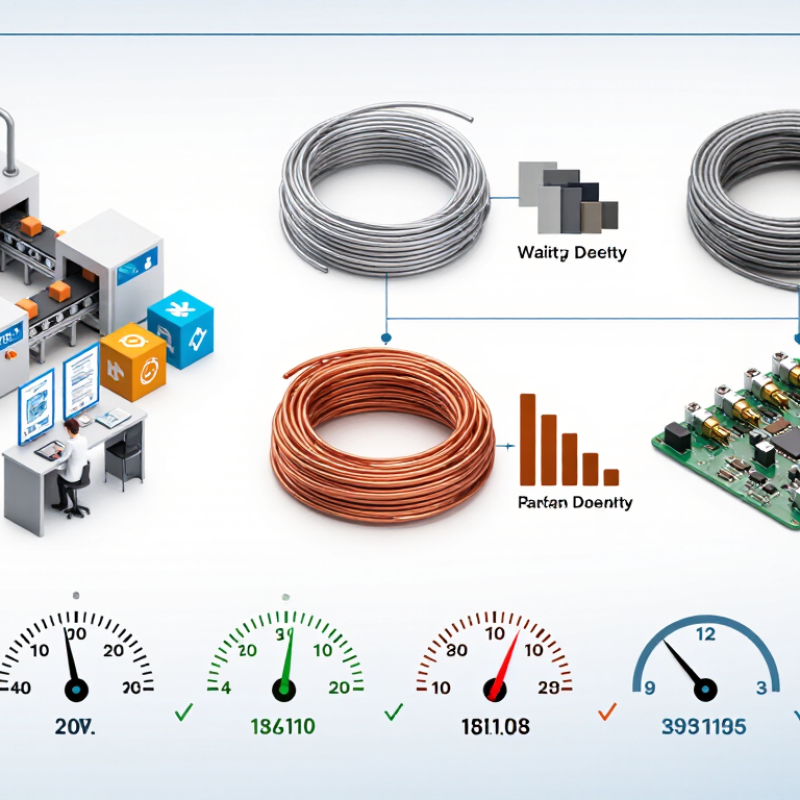
Before comparing an electric heating wire manufacturer, define the wire’s actual working conditions. Record the supply voltage, required wattage, heating length, target temperature, and duty cycle. A wire for a heated seat differs greatly from one inside an industrial furnace.
Measure the available space carefully. Note the wire diameter, bending radius, insulation thickness, and connection method. Specify the heating alloy and resistance tolerance, because small resistance errors can change heat output. Also describe moisture, vibration, chemicals, and repeated heating cycles. These details help a manufacturer recommend a practical construction instead of offering a generic product.
Keep the requirements measurable. Ask for resistance testing, dimensional inspection, insulation checks, and temperature-performance records. Request samples that match the final wire structure, not a simplified substitute. During a previous project, we focused too much on rated temperature and overlooked the connector area. It became the weak point after repeated cycling. That mistake was avoidable.
Think beyond peak temperature. Confirm cold resistance, operating voltage, power density, surface temperature, and expected service life. If the wire will be installed by hand, include flexibility and bend limits. If safety matters, request relevant compliance documents and traceable test data. Clear specifications make supplier responses easier to compare and reveal whether a manufacturer understands the application.

Start by defining the required electrical resistance. The chart shows representative resistivity values at 20°C for common heating-wire alloy families. Higher resistivity can provide the target resistance with a shorter wire length, while operating temperature, wire diameter, atmosphere, and service life should also be specified to the manufacturer.
Typical nominal resistivity values: Cu-Ni 0.49 μΩ·m, NiCr 80/20 1.09 μΩ·m, FeCrAl 1.45 μΩ·m, and stainless steel 0.70 μΩ·m. Actual values vary with composition and temperature.
Choosing an electric heating wire manufacturer starts with material evidence, not polished brochures. The U.S. Energy Information Administration’s Residential Energy Consumption Survey reports that space heating used 42% of household energy in 2020. That figure makes stable resistance and long service life essential.
Request the alloy grade, chemical composition, wire diameter tolerance, and resistance variation at operating temperature. Nickel-chromium and iron-chromium-aluminum alloys behave differently under oxidation and repeated thermal cycling. A capable manufacturer should provide batch test records, not only a generic certificate. Check tensile strength, elongation, insulation thickness, and dielectric performance against applicable IEC requirements, including IEC 62395 for electrical resistance trace heating systems.
Look closely at process control. Ask whether resistance is measured continuously during drawing, whether furnace temperatures are recorded, and whether samples undergo accelerated cycling. ISO/IEC 17025-accredited laboratory testing adds useful confidence, especially when calibration traceability is documented. The International Energy Agency’s Energy Efficiency 2023 report identifies buildings as a major global energy-use sector, reinforcing the value of efficient, dependable heating components. Still, no test plan is flawless. A supplier may pass a laboratory test yet fail after installation stress, moisture exposure, or poor bending. Request application-specific prototypes and inspect failure data openly. Quiet details matter.
Choosing an electric heating wire manufacturer starts with evidence, not attractive samples. Ask which standards govern the wire, insulation, connectors, and finished assemblies. A credible supplier should provide current certificates, test reports, and certification scope. Check whether the documents cover the actual factory and product range. A certificate alone proves little. Look for a quality system such as ISO 9001, plus applicable electrical safety requirements. For export projects, confirm relevant material and chemical compliance documentation.
During a factory assessment, review incoming material checks and batch identification. Nickel-chromium wire, terminals, and insulation should have traceable lot records. Ask how operators measure resistance, diameter, elongation, insulation strength, and operating temperature. The equipment should be calibrated, with records showing dates and reference standards. Request samples from different batches, not only handpicked pieces. Watch the process. Uniform winding tension and clean terminations often reveal more than polished presentations. A manufacturer should also explain failure handling, root-cause analysis, and corrective actions.
I have seen suppliers pass a sample review but struggle with repeatability during volume production. That gap deserves attention. Compare first-article results with later batch data, including resistance drift after thermal cycling. Ask for a clear inspection plan, acceptance limits, and retained samples. Independent laboratory testing can strengthen confidence when the application carries high heat or continuous duty. Still, no audit catches everything. A production move should trigger a fresh review, even when earlier records look clean.
How to Choose an Electric Heating Wire Manufacturer?
Customization should match the heater’s working conditions, not only its drawing. Ask whether the manufacturer can adjust wire diameter, alloy grade, insulation, resistance, length, and terminal design. Request a sample built from your actual voltage, wattage, temperature, and installation limits. A reliable supplier should provide resistance tolerances, temperature ratings, inspection records, and clear change-control procedures. Small details matter. A loose terminal can create uneven heating and expensive field failures.
Pricing needs more than a unit-cost comparison. Request a quotation that separates materials, tooling, testing, packaging, and shipping preparation. Confirm minimum order quantities and whether engineering changes create extra fees. Very low pricing may hide weaker insulation, unstable alloy quality, or limited testing. Compare the cost per approved sample, not just the cost per wire. I once focused too heavily on the cheapest offer; the delayed samples made the project more expensive.
Production capacity should be proven with evidence. Review equipment lists, monthly output, staffing, quality-control checkpoints, and typical lead times. Ask how the factory handles urgent orders without weakening inspection standards. Capacity is not merely a large workshop. It includes material availability, process stability, and traceability from incoming wire to final inspection. Request production records or a facility audit when possible. Be cautious when every answer sounds perfect. Honest limitations are often more useful than impressive promises.
Practical comparison framework using typical industry benchmarks for resistance heating wire. Actual figures vary according to alloy, diameter, order volume, tolerances, testing requirements, and shipping terms.
| Evaluation Dimension | Typical Market Benchmark | What a Capable Manufacturer Should Offer | Questions to Ask Before Placing an Order |
|---|---|---|---|
| Available Heating Alloys | NiCr 80/20 FeCrAl CuNi NiCr 80/20 is commonly used up to approximately 1,200°C in air. FeCrAl grades can reach approximately 1,300–1,400°C, depending on grade and operating conditions. CuNi alloys are generally selected for lower-temperature applications. | Clear alloy designations, chemical-composition data, resistance-per-meter information, and guidance on selecting the alloy for the intended operating temperature. | Can the supplier provide the alloy standard, chemical composition, maximum recommended operating temperature, and resistivity at 20°C? |
| Wire Diameter and Dimensional Customization | Common resistance-wire diameters are approximately 0.10–3.00 mm. Fine wire, ribbon, stranded wire, and formed heating elements may require additional tooling or process controls. | Stable diameter tolerance, custom spool lengths, wire cutting, straightening, coiling, ribbon production, and support for application-specific resistance values. | What diameter tolerance, ovality tolerance, length tolerance, and minimum order quantity apply to the requested size? |
| Resistance Accuracy | Standard industrial orders commonly target resistance tolerances of approximately ±3% to ±5%. Tighter tolerances may be available for qualified applications. | In-process resistance measurement, batch records, calibrated testing equipment, and a final inspection report linked to the production lot. | Is resistance measured by length, weight, or finished coil? Is the test temperature controlled, and will the report show actual measured values? |
| Customization Capability | Basic suppliers usually support standard alloys and sizes. Engineering-oriented manufacturers may support custom resistance, special winding pitch, custom coil geometry, insulation options, and prototype development. | Technical drawing review, sample development, design feedback, engineering change control, and documented approval before mass production. | Are design consultation and samples included in the quotation? Who owns the tooling, drawings, and approved specifications? |
| Minimum Order Quantity | Standard wire may be available from approximately 25–100 kg. Custom profiles, special alloys, or formed elements may require approximately 100–500 kg or a setup charge. | Separate MOQ policies for standard products, custom wire, and finished heating elements, with transparent setup and tooling charges. | What is the MOQ for samples, the first production order, and repeat orders? Can multiple diameters or sizes be combined in one batch? |
| Indicative Pricing Structure | Finished heating-wire prices are primarily affected by alloy, nickel or chromium content, diameter, quantity, processing, packaging, and freight. In general, standard large-volume orders offer the lowest unit cost, while custom small batches carry higher processing costs. | Itemized quotations showing material cost, conversion cost, tooling, testing, packaging, delivery terms, taxes, and validity period. A volume-break table is a useful sign of pricing transparency. | Is the price based on USD/kg, USD/m, USD/coil, or USD/set? What costs could be added after the purchase order is issued? |
| Sample and Prototype Lead Time | Standard wire samples may take approximately 3–10 working days. Custom coils, formed elements, or new tooling commonly require approximately 10–30 working days. | A written sample schedule, first-article inspection, material certificate, resistance data, and a clear process for approving samples before production. | Does the sample use the same material and process as mass production? Will the supplier provide a first-article report? |
| Monthly Production Capacity | Capacity depends on product form. A small custom workshop may produce approximately 5–30 tonnes/month, while a larger continuous-wire operation may exceed 50–200 tonnes/month. | Separate capacity information for drawing, heat treatment, winding, forming, testing, and packaging, together with realistic available capacity during peak periods. | Is the stated capacity total installed capacity or currently available capacity? What is the normal lead time for an order of 1 tonne, 10 tonnes, or more? |
| Production Equipment | Core equipment may include wire-drawing machines, annealing furnaces, resistance testers, winding machines, straightening equipment, and forming tools. | Modern equipment with preventive maintenance records, controlled furnace temperature, traceable production parameters, and backup capacity for critical processes. | Which operations are completed in-house? Are drawing, heat treatment, winding, and final testing subcontracted? |
| Quality Control and Traceability | Basic quality systems typically verify chemical composition, diameter, resistance, surface condition, tensile properties, and packaging. Higher-risk applications may require more extensive testing. | Lot numbers, certificates of analysis, dimensional records, resistance test results, nonconformance procedures, and retained samples. | Can every shipment be traced to raw material, production date, machine, operator, and final inspection results? |
| Certifications and Compliance | Depending on the end use, buyers may request ISO 9001 quality management certification, RoHS and REACH declarations, material certificates, or customer-specific compliance documents. | Current certificates issued to the actual manufacturing site, controlled declarations, and documentation that matches the supplied alloy and product form. | Are certificates current and verifiable? Do they apply to the manufacturing facility or only to a trading office? |
| Packaging and Delivery Terms | Wire is commonly supplied on spools, coils, or in protective cartons. Moisture protection and edge protection are important for long-distance transport and storage. | Agreed spool dimensions, net and gross weight labels, corrosion-protection packaging, export cartons, pallet specifications, and shipment photographs when required. | How is the wire protected from deformation, oxidation, and contamination? Are shipping terms quoted as EXW, FOB, CIF, or another basis? |
| Best-Fit Supplier Profile | Standard supplier: suitable for established sizes, repeat orders, and price-sensitive applications. Custom-focused supplier: suitable for prototypes, unusual resistance values, and formed heating elements. High-capacity supplier: suitable for stable, recurring demand and strict delivery schedules. | The strongest choice balances technical support, verified quality, realistic capacity, competitive total cost, and dependable delivery rather than relying on the lowest unit price alone. | Compare at least three written quotations using the same alloy, dimensions, tolerance, quantity, testing requirements, packaging, and delivery terms. |
Note: The capacity, MOQ, lead-time, and tolerance figures above are representative industry ranges for initial supplier screening. Request a product-specific quotation and technical datasheet before making a purchasing decision.
Choosing an electric heating wire manufacturer requires more than comparing prices. Certifications provide the first practical filter. Check whether the factory holds relevant quality, safety, and environmental certificates. Confirm the certificate number, issuing body, expiration date, and product scope. A certificate for cable production may not cover heating wire. This detail is often missed.
Ask for test reports on resistance tolerance, insulation performance, temperature limits, and thermal cycling. Independent laboratory results are more convincing than attractive brochures. Request samples from the same production line used for mass orders. Small differences can affect heating speed and service life. I would also review inspection records, though paperwork can never replace physical testing.
Delivery terms deserve equal attention. Clarify the Incoterm, packaging method, loading date, transport responsibility, and customs documents. A low quotation may exclude insurance or local charges. Get every assumption in writing. After-sales support should include installation guidance, fault analysis, replacement procedures, and response times. Ask who handles technical questions after payment. A named engineer is useful.
Do not accept vague promises.
A realistic supplier should explain possible delays, material shortages, and quality disputes before signing. That honesty may feel less comfortable, but it reveals operational maturity. One weakness in many evaluations is overvaluing certification and undervaluing communication. A manufacturer with strong documents but slow technical replies can still create costly downtime. Review sample quality, delivery records, and support arrangements together.

We have over 30 years of experience in designing complete hydraulic systems, repairs and distribution of fluid power equipment and parts.
FOLLOW US ON :
Address:
4020 SE 45th CT.
Ocala, FL 34480
Phone No:
Email:
sales@cunninghamfluidpower.com