How to Choose the Right Rolled Metal for Global Sourcing?
Choosing the right Rolled Metal for global sourcing involves more than comparing prices per tonne. A coil may look competitive, yet its thickness tolerance, surface finish, temper, or edge quality can create expensive problems later. Edwin Basson, Director General of the World Steel Association, has said, “Steel is essential to modern life.” That importance makes disciplined sourcing necessary, not optional.
This guide examines how buyers can compare mills, specifications, certifications, and delivery risks across international markets. It considers carbon steel, stainless steel, and coated products. It also explains why a mill certificate should support, not replace, independent inspection. Check the actual coil. Measure it. Record the results.
Experienced buyers usually review ASTM, EN, or ISO requirements before requesting quotations. They confirm grade, width, thickness, yield strength, surface condition, packaging, and traceability. Supplier audits can reveal details that brochures hide, including weak loading practices or inconsistent process control. A clear contract should define inspection points, tolerance limits, documentation, and remedies for nonconforming material.
Price still matters. It just should not lead alone. Freight distance, port handling, duties, payment terms, and delivery reliability can change the final cost. A spreadsheet helps, but it can miss production disruption and reputation damage. That is where this topic becomes less tidy. Even careful sourcing decisions contain uncertainty. The strongest approach combines technical evidence, commercial judgment, and honest review after each shipment.
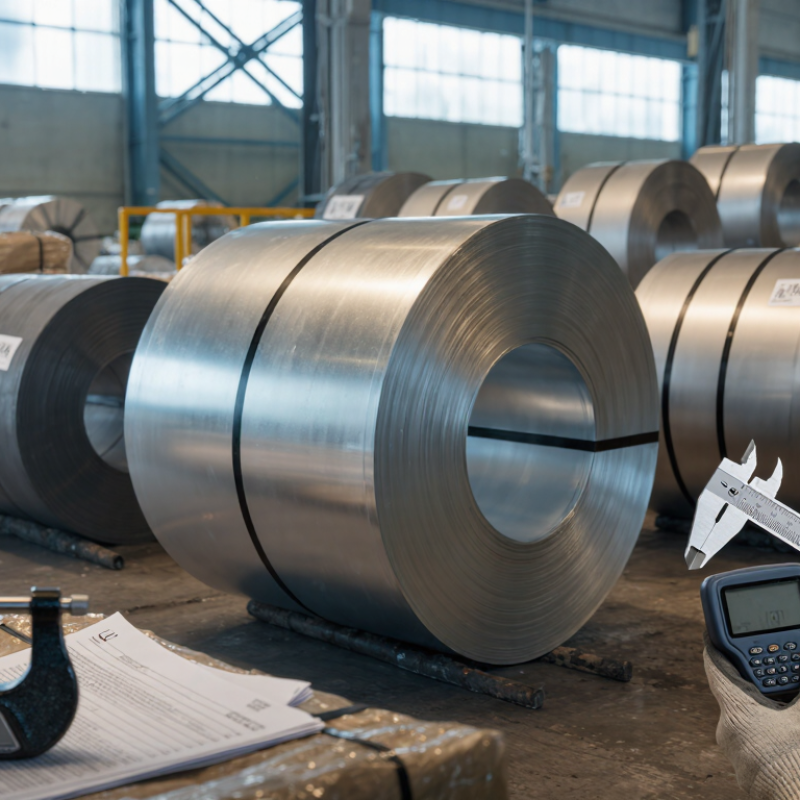
Define the Performance Requirements for the Rolled Metal
Define performance before comparing mills, countries, or prices. A rolled metal is not simply a coil; it is a load-bearing, forming, joining, and corrosion decision. Start with service conditions: tensile and yield strength, elongation, hardness, thickness tolerance, surface class, temperature, and exposure. Keep the list practical. For a roof panel near saltwater, chloride resistance and coating adhesion may matter more than peak strength. For a stamped bracket, elongation and bend radius usually deserve priority.
Scale can hide risk. The World Steel Association reported 1.892 billion tonnes of crude steel production in 2023 in World Steel in Figures 2024. That volume does not make every grade interchangeable. International Aluminium Institute production statistics reported primary aluminium output above 70 million tonnes in 2023. Large markets still contain different alloy tempers, rolling practices, and inspection cultures. Ask for the exact standard, heat or lot traceability, mechanical test direction, and allowable dimensional variation. Require mill test certificates, then verify critical values through independent testing.
Translate requirements into acceptance limits. State minimum yield strength, maximum waviness, coating mass, roughness, and permitted edge damage. Confirm whether values apply before or after forming. This detail is often missed. I once treated a published tensile range as guaranteed production value; that assumption weakened a supplier comparison. A better method is reviewing three recent lots and testing samples across the coil width. Include packaging and transit exposure in the trial. Salt spray results can support a decision, but they cannot replace field-specific corrosion analysis. Leave room to revise the specification when forming trials reveal springback, cracking, or inconsistent surface behavior.
Evaluate Thickness, Width, Surface Finish, and Forming Needs
Choosing rolled metal globally starts with thickness, not price. A 1.2 mm sheet may arrive within nominal tolerance, yet behave differently during stamping. Ask for the full thickness range, not only the target value. The World Steel Association reported about 1.89 billion tonnes of crude steel production in 2023, showing the scale of global supply variation. Larger markets do not guarantee consistent coils.
Width affects nesting, trimming, and freight efficiency. Confirm coil width, slit-edge condition, camber, and allowable tolerance. A mill-width coil can reduce waste, but only when your forming line accepts it. Surface finish needs equal attention. Define roughness, coating condition, oiling, and protection film requirements in measurable terms. ASTM A480/A480M provides widely used guidance for stainless flat products, including finish and dimensional tolerances. Vague terms such as “bright” or “clean” invite disputes.
Forming requirements should shape the purchase specification. Request tensile strength, yield strength, elongation, and, where relevant, r-value or bend-test results. The International Stainless Steel Forum reported global stainless crude steel production near 58 million tonnes in 2023, but material grades and finishing practices still differ by region. In practice, I prefer a small trial coil before approving a large order. It exposes springback, edge cracking, and surface marking early. A perfect specification is rare. I still see buyers overvalue low unit prices and underestimate tool adjustments, inspection time, and rejected parts.
Verify Supplier Quality, Certifications, and Production Capacity
Choosing the right rolled metal for global sourcing starts with the supplier, not the catalog description. Ask for evidence.
Review recent mill test certificates, inspection records, and material traceability documents. The heat number should connect the coil to its chemical and mechanical results. Check whether certificates match the requested grade, thickness, width, and delivery condition.
Certifications deserve careful attention. Confirm the issuing body, validity dates, covered facility, and certification scope. A certificate for one factory may not cover another production site. Request independent audit reports when possible, but do not treat paperwork as complete proof. I have seen polished documents fail to explain basic process controls. That gap needs questions.
Visit the production line virtually or in person. Watch how coils are received, leveled, slit, packed, and labeled. Ask about thickness tolerances, surface inspection, edge quality, and corrective actions. Capacity matters. Compare stated monthly output with actual equipment, staffing, maintenance schedules, and current orders. A supplier may quote 1,000 tons monthly, yet one aging slitting line can create a serious bottleneck.
Request a small trial order before signing a long contract. Measure flatness, burrs, surface marks, packaging strength, and delivery accuracy. Discuss how rejected material is handled. Also ask for backup plans during power interruptions, equipment repairs, or port delays. These questions can feel excessive, and some assumptions may prove wrong. Still, a supplier’s response often reveals its real production discipline.
Assess Total Sourcing Costs, Logistics, and Supply Risks
Choosing rolled metal for global sourcing requires more than comparing mill prices. A low coil price can still become expensive after freight, insurance, duties, inspection, and port charges. In practice, buyers should calculate the landed cost per usable tonne, not the quoted price per tonne. Include slitting losses, rejected material, packaging, and financing time. Small gaps become painful at scale.
UNCTAD’s Review of Maritime Transport 2024 reported 2.4% growth in seaborne trade during 2023, while ongoing route disruptions increased transit uncertainty. Steel coils may wait days at transshipment ports, especially when schedules change. The World Bank’s 2023 Logistics Performance Index also shows major differences in customs efficiency and infrastructure between sourcing markets. A reliable supplier therefore needs more than production capacity. Check export experience, documentation accuracy, port access, and backup routes. World Steel Association’s October 2024 outlook projected global steel demand growth in 2025, which may tighten availability for specific grades and finishes.
Tips: Request a landed-cost worksheet. Compare two shipping routes. Confirm coil weight limits. Ask for mill test certificates and independent inspection rights. Test a small shipment first. Do not ignore moisture protection; rust can erase a freight saving quickly. Dual sourcing reduces disruption, but it can also create inconsistent thickness or surface quality. That risk needs a shared specification, not just a second supplier. Some assumptions will be wrong. Recheck them after the first delivery.