

Choosing a Standard Conveyor is less about selecting a familiar machine and more about matching it to the work. A belt that moves cartons smoothly may struggle with oily parts, sharp edges, or uneven loads. The right choice depends on product dimensions, weight, hourly throughput, route length, available floor space, and operating conditions. Small details matter. A damp washdown area, a tight transfer point, or frequent starts can change the design requirements.
Industry investment trends make that decision increasingly important. The 2024 MHI Annual Industry Report, produced with Deloitte, found that 55% of surveyed supply-chain professionals planned to adopt robotics and automation within five years. It also reported that 88% expected to increase technology investment. These figures describe broad supply-chain plans, not conveyor purchases alone. Still, they show why equipment choices need to support changing workflows. CEMA publications offer engineering guidance for conveyor design and components, but no standard specification can replace a site assessment. That sounds neat. It is not a design brief. Before comparing belt, roller, or chain options, measure real product loads and peak demand—not just average output. Then check transfer heights, maintenance access, noise, and future line changes. A little uncertainty belongs here: demand forecasts can be wrong, and a conveyor sized only for today may become a bottleneck. This guide explains how to weigh those factors and choose a system that fits your operation, rather than a catalog description.
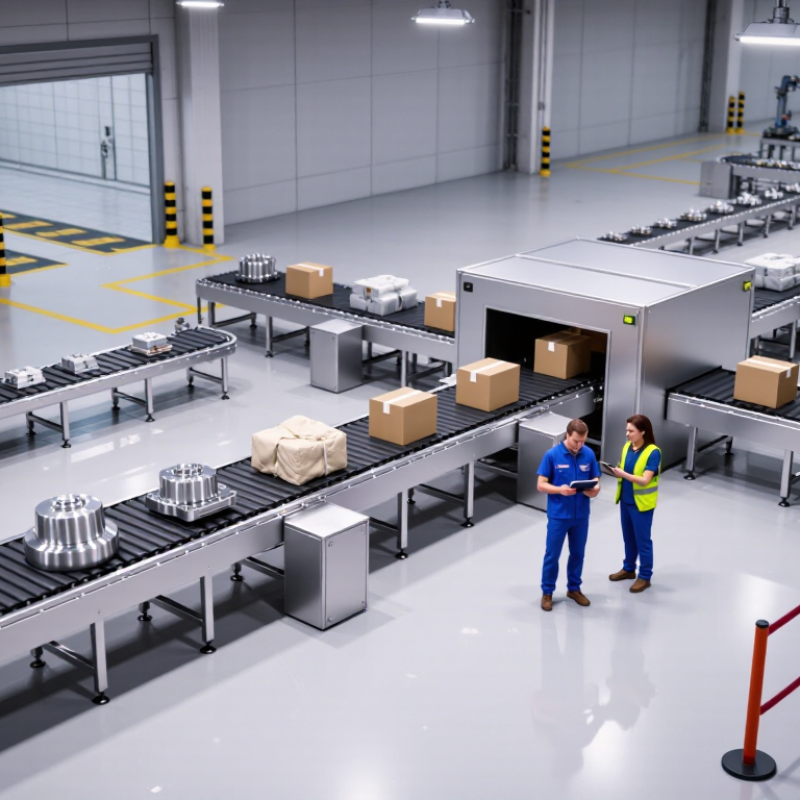
Before comparing conveyor widths or speeds, define exactly what will travel across the line. Record each item’s dimensions, weight, shape, surface, and packaging. A rigid carton behaves differently from a soft bag, loose parts, or a tote with an uneven base. Note fragile edges, slippery surfaces, and orientation needs. Small details matter. A carton that turns sideways can jam a transfer point, even when the average load looks manageable.
Then measure throughput in real operating conditions. State the required units per minute or hour, peak demand, shift length, and expected downtime. Include the heaviest item and the busiest period, not just a daily average. MHI’s 2024 Annual Industry Report found that 55% of surveyed supply chain professionals planned to increase technology investment. That signals growing automation interest, but it does not set a safe conveyor rate. Your own load profile must do that. For example, if a line handles 30 cartons per minute, confirm that upstream packing and downstream sorting can sustain the same pace. Leave room for variation. I have seen planning hinge on a clean average, then falter when cartons arrive in uneven bursts. Measure those bursts. Recheck assumptions with operators before specifying equipment.

Define the material and throughput requirements
Illustrative design targets, not conveyor capacity ratings. Actual throughput depends on material properties such as bulk density, particle size, moisture, and flowability, as well as conveyor width, speed, and incline. Confirm these inputs before selecting equipment.
Standard conveyors differ in how they support, move, and control a load. Belt conveyors carry items on a continuous surface, making them useful for cartons, loose materials, and products that need steady support. Roller conveyors use rotating rollers; gravity models suit gentle slopes, while powered versions move loads across level sections. Chain conveyors handle heavy pallets or fixtures, but their contact points can mark delicate goods. Screw conveyors move powders or granules through a rotating helical blade inside a trough or tube. Dust can be an issue.
The choice affects energy use and maintenance. The U.S. Department of Energy’s motor-systems assessment estimates that motor-driven systems account for about 54% of electricity use in U.S. manufacturing. That figure is not conveyor-specific, but it makes motor sizing and speed control worth checking. A variable-speed drive can help match belt speed to demand; it cannot fix a poorly sized conveyor. MHI’s 2024 Annual Industry Report found that 55% of surveyed supply-chain leaders planned to increase technology investment. Automation matters, yet simpler gravity rollers may still be the better fit for short, low-volume routes.
Compare load weight, shape, surface, and route before selecting a type. Measure the narrowest carton and the heaviest pallet. Check transfer points, incline, cleaning access, and noise. I would not choose from a product chart alone. Real packages wobble, and that detail is easy to miss. A site trial can reveal jams, awkward handoffs, or excessive belt speed before installation.
A standard conveyor works well only when its belt, frame, and drive match the actual job. Start with the product’s weight, size, underside, and surface condition. A smooth carton may travel easily on a flat belt, while loose parts can need side guides or cleats. Measure the load. Belt width should allow for small shifts without letting products overhang. Consider speed, too: a fast belt can make hand loading difficult, even when the motor has enough power. If oils, moisture, or frequent cleaning are present, check that the belt material suits those conditions. The cheapest option may not stay cheap.
Frame choice affects stability and maintenance. Compare the conveyor length, support spacing, expected load, and installation environment before selecting a frame material or profile. A frame that flexes can cause belt tracking problems. Small details matter. Leave access to rollers, belt tension points, and cleaning areas, rather than designing everything around a neat drawing. For the drive, specify the required speed and operating pattern, including starts, stops, and expected load changes. These details help determine motor and gearbox capacity. A drive sized only for steady running may struggle during loaded starts. It is easy to overlook this. Record the real operating conditions, then review them with a qualified conveyor supplier; one assumption will probably need revisiting.
How to Choose the Right Standard Conveyor?
Check the route before comparing conveyor specifications. Measure the full path, including turns, slopes, transfer points, and space needed for maintenance. A conveyor that fits on a drawing may block a forklift aisle or leave no room to clear a jam. Note the load’s weight, dimensions, underside, and spacing; a soft package can behave very differently from a rigid carton. Small details matter.
Safety and surroundings deserve equal attention. The U.S. Bureau of Labor Statistics recorded 2.8 million nonfatal workplace injuries and illnesses in private industry in 2022. That figure is not conveyor-specific, but it reinforces the need to assess hazards, not just throughput. Identify pinch points, accessible moving parts, emergency-stop locations, and safe cleaning access. Then check dust, moisture, temperature, washdown practices, and corrosion risks. A damp packing area or gritty workshop can shorten equipment life. We sometimes underestimate these conditions.
Tips: Walk the proposed route with operators. Mark columns, drains, door swings, and cleaning zones on the floor. Test sample products at transfer points, especially awkward or unstable loads. Ask maintenance staff to review access before finalizing the layout. Their feedback may complicate the plan, but it can reveal problems a drawing misses.
When comparing standard conveyors, the purchase price is only the visible part of the cost. A lower quote can hide frequent belt adjustments, hard-to-reach bearings, or costly downtime. Ask for an estimate covering installation, energy use, spare parts, and routine labor. Check whether common components can be replaced with ordinary tools. Small details matter. A motor mounted behind a tight guard may add minutes to every inspection, and those minutes accumulate across shifts. Compare maintenance intervals with your actual operating hours, not an ideal schedule listed on paper.
Future capacity deserves equal attention. Measure peak load, product dimensions, and the space needed for a longer line or another workstation. Leave room for safe access, not just extra conveyor sections. A system sized exactly for today's output may run near its limit after a busy season. Yet oversizing wastes floor space and energy. One planning assumption deserves a second look: spare capacity is not automatically prudent. Review forecasts with production staff, especially when product sizes or shift patterns may change. Request drawings that show connection points and likely upgrade work, then price those changes before installation. A conveyor your team can inspect, repair, and expand may avoid disruptive changes later.
| Conveyor type | Common applications | Relative initial cost | Maintenance considerations | Capacity and future expansion | Key limitations |
|---|---|---|---|---|---|
| Belt conveyor | Cartons, packaged goods, and bulk materials moving along a continuous path. | Low to medium for straightforward layouts; rises with long runs, incline sections, and specialized belts. | Inspect belt tracking, tension, splices, rollers, and belt condition. Cleaning needs depend on the conveyed material and operating environment. | Often adaptable by extending the line or adding drives and transfer points, subject to structural and power capacity. | Some products may slip or shift on inclines; belt material must suit the product, temperature, and cleaning requirements. |
| Gravity roller conveyor | Boxes and rigid-bottom loads moved by a slope or manual pushing. | Low; typically requires no powered drive, though supports, curves, and controls add cost. | Check rollers, bearings, frames, and supports for damage or buildup. Few powered components are involved. | Sections can often be added or rearranged where floor space and a suitable slope are available. | Requires loads with a suitable, relatively flat base. Movement and spacing are less controlled than on powered equipment. |
| Powered roller conveyor | Cartons, totes, and pallets that need controlled movement or accumulation. | Medium to high, depending on drive zones, controls, and accumulation requirements. | Inspect rollers, drive components, sensors, and electrical connections. Keep accumulation controls and safety devices functional. | Zones can support accumulation and modular additions; check drive capacity, controls, and system layout before expansion. | Generally suited to loads with a stable base that can engage the rollers; controls add complexity. |
| Chain conveyor | Heavy or rugged loads, pallets, and products moved on fixtures or attachments. | Medium to high; depends on load, chain arrangement, and required accessories. | Check chain wear, lubrication requirements, alignment, sprockets, and tension in line with the equipment manual. | Can handle demanding loads; adding capacity may require stronger drives, supports, and transfer equipment. | Can be noisier than some alternatives and may need more frequent attention to chain condition and lubrication. |
| Screw conveyor | Enclosed movement of powders, granules, and other bulk materials. | Medium; varies with material properties, length, enclosure, and wear-resistant components. | Inspect the screw, bearings, seals, and trough for wear or material buildup; maintenance access matters. | Capacity changes may require a larger screw, different speed, or additional equipment rather than simple line extension. | Material can degrade or compact; suitability depends on particle size, moisture, abrasiveness, and flow behavior. |
| Modular plastic belt conveyor | Food, packaging, and washdown applications requiring a cleanable conveying surface. | Medium; specialized belt materials, frames, and cleaning provisions can increase cost. | Inspect belt modules, sprockets, wear strips, and alignment. Cleaning procedures should match the product and hygiene requirements. | Modular construction can simplify layout changes, but expansion still depends on drive sizing and available space. | Not every belt material suits every chemical, temperature, or product-contact requirement; verify compatibility. |
Planning note: Relative cost ratings are directional, not quotations. Actual purchase and operating costs depend on conveyor length, load, speed, layout, controls, installation, environment, and maintenance access. Confirm required capacity, safety provisions, and material compatibility with a qualified conveyor supplier or engineer.

We have over 30 years of experience in designing complete hydraulic systems, repairs and distribution of fluid power equipment and parts.
FOLLOW US ON :
Address:
4020 SE 45th CT.
Ocala, FL 34480
Phone No:
Email:
sales@cunninghamfluidpower.com