

Choosing a Steel Heat Exchanger starts with the job it must perform, not its advertised capacity. Define the process fluid, required heat duty, operating temperatures, pressure, and expected flow range. These details shape the exchanger type, surface area, and steel grade. A unit handling clean water may face very different demands from one exposed to suspended solids or frequent temperature changes.
Material selection deserves particular care. Stainless steel can resist many corrosive environments, but no grade suits every fluid or cleaning method. Confirm compatibility with the supplier and, when needed, a qualified materials engineer. Check design pressure, temperature limits, connection sizes, and applicable industry requirements against documented product specifications. Ask how the exchanger can be inspected and cleaned. Narrow passages may look efficient on paper, yet become difficult to maintain when deposits build up.
The numbers need context. Request performance data based on conditions close to your actual operation, including flow rates and fouling assumptions. Compare lifecycle costs, not just purchase prices; energy use, maintenance access, and replacement parts can change the real value. Still, calculations depend on the quality of the inputs. A tidy spreadsheet can conceal a weak assumption. Recheck it.
Before ordering, review the proposed design with people who understand the process and installation. Confirm space, supports, controls, and service clearances at the site. The right choice is rarely a single specification. It is a practical match between operating needs, material limits, reliable evidence, and the maintenance your team can realistically provide.
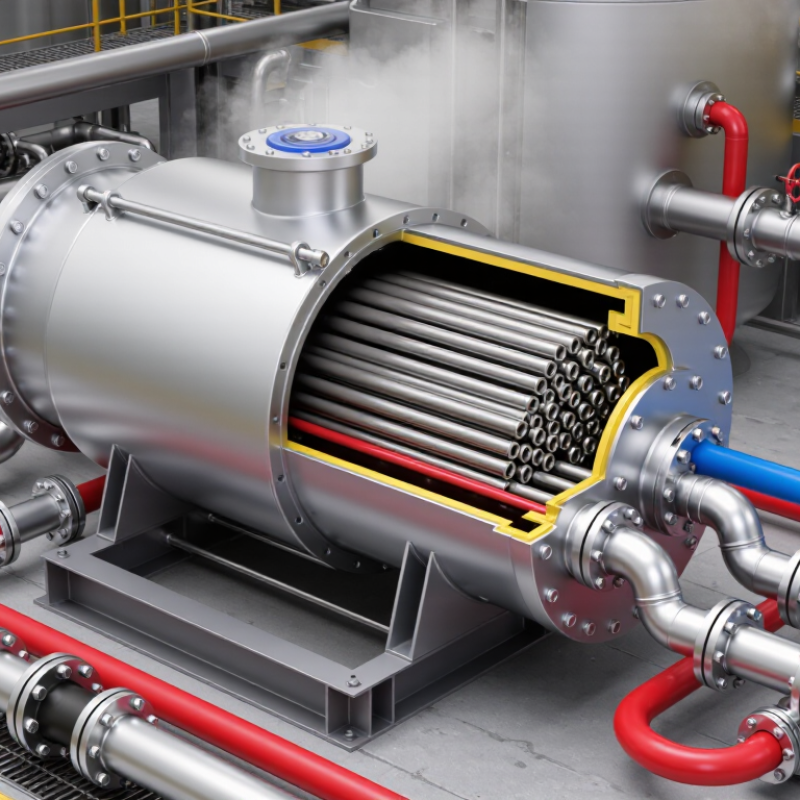
Before comparing steel heat exchangers, write down the process duty and the conditions they must handle. Record each fluid’s composition, flow rate, inlet temperature, and target outlet temperature. Include pressure and expected changes during startup, shutdown, or seasonal operation. A steady-state figure alone can hide the hardest part of the job. Small details matter.
Also describe what the fluids leave behind. Suspended solids, scale-forming minerals, and sticky residues can reduce heat transfer and make cleaning more frequent. Note how the equipment will be cleaned, and how much downtime is acceptable.
Then review material compatibility: carbon, alloy, and stainless steels behave differently in particular chemical and temperature conditions. Do not choose a grade from a generic corrosion chart alone. Ask a qualified materials specialist to review fluid data, contaminants, and operating history. The data may be incomplete; that is common, but it should be made visible. If measurements are uncertain, mark the uncertainty and verify it before fixing the design. A conservative assumption can help, though it may also lead to a larger, costlier exchanger. Define the trade-off with the process team.

Choosing steel for a heat exchanger means balancing mechanical strength with the fluids’ corrosive behavior. Carbon steel can handle substantial pressure and is often economical, but untreated water or aggressive process fluids may cause rust and wall thinning. A small corrosion allowance can help, though it cannot replace suitable water treatment and inspection. Stainless steel 304 resists many common environments, yet chloride-rich water can trigger pitting, especially around welds and crevices. Not always.
Grade 316 contains molybdenum, which improves resistance to chlorides compared with 304. It is not immune to corrosion, particularly in warm, stagnant, or concentrated chloride solutions. Duplex stainless steel offers higher strength and can provide strong resistance in demanding service, but fabrication, welding, and design requirements need careful review. Check the welds. Compare actual fluid chemistry, operating temperature, pressure, cleaning methods, and expected maintenance—not just a grade’s name. I have seen specifications focus on bulk strength while overlooking deposits at tube supports; that detail can change the corrosion risk. When conditions vary, have a materials engineer verify the selection against operating data and applicable design requirements.
How to Choose the Right Steel Heat Exchanger
Choose an Exchanger Type and Required Heat-Transfer Capacity
Choose the exchanger type around the fluids, operating conditions, and cleaning needs. A plate exchanger can suit relatively clean liquids and tight spaces. A shell-and-tube unit may be easier to maintain when fluids contain particles or require frequent inspection. For either design, check steel compatibility with the fluid, temperature, and pressure. “Steel” is not one universal solution; corrosion can still be a concern.
Estimate the required heat duty from flow rate, specific heat, and the intended temperature change. For example, a process needing to cool 2,000 kilograms of water per hour by 15°C requires roughly 35 kilowatts of heat removal. Treat this as a starting estimate, not a final specification. Real performance also depends on inlet temperatures, fouling, flow arrangement, and seasonal operating changes. Small details matter.
Use peak demand where it is realistic, then discuss an appropriate design margin with a qualified engineer. Oversizing can raise cost and may make temperature control less stable at low flow. Undersizing can leave the outlet too warm on the busiest production day. I have seen early calculations miss cleaning downtime; it is an easy assumption to overlook. Confirm the figures against measured operating data before selecting capacity.
A steel heat exchanger should be rated for the conditions it will actually face, not just its normal operating pressure. Check the design pressure and temperature on the equipment documents, then compare them with the process limits. Account for pressure surges, startup cycles, and possible corrosion over time. Small details matter.
Fabrication quality shows up in the welds, material records, and fit between components. Look for traceable steel certificates and documented welding procedures. Inspection records should explain which welds were examined and how. A pressure test can provide useful evidence, but its method and acceptance criteria should match the applicable design requirements. A neat exterior is not enough.
Confirm which standards apply to the exchanger’s location and service. Depending on the design, this may include a pressure-vessel code such as ASME Section VIII, alongside relevant material and welding requirements. Ask the supplier to identify the code edition and provide supporting calculations, inspection reports, and test documentation. Paperwork can look complete while leaving gaps, so check that the equipment nameplate, drawings, and records agree. If they do not, pause and ask an engineer to resolve the mismatch before installation.
How to Choose the Right Steel Heat Exchanger
Compare Lifecycle Costs, Maintenance Needs, and Supplier Support
A steel heat exchanger should be judged by the cost of keeping it productive, not just its quoted price. Estimate energy use, expected service life, inspection labor, cleaning time, and replacement parts over the planned operating period. A lower-cost unit may need more frequent descaling or gasket changes. Small differences add up. Ask suppliers to explain the assumptions behind efficiency and service-life estimates, including fluid temperature, pressure, and contamination levels. A clean-water rating may not reflect a process carrying scale-forming minerals or fine solids.
Maintenance access matters. Check whether technicians can reach the inspection covers and remove components without dismantling nearby piping. Request a written maintenance schedule, parts list, and realistic replacement-part lead times. Supplier support also affects downtime: clarify response hours, troubleshooting options, and whether technical staff can review operating data. Get specifics in writing. No spreadsheet captures every upset condition, so leave room for uncertainty in cost estimates. A practical comparison may favor a unit with higher initial cost if its service requirements and support arrangements fit the site’s staffing and operating schedule.
Compare materials against the actual process fluid, temperature, pressure, cleaning method, and expected service life. The lifecycle-cost assessments below are qualitative: project costs depend on design, fabrication, local prices, operating conditions, and maintenance practices.
| Material option | Typical thermal conductivity at room temperature | Lifecycle-cost considerations | Maintenance needs | Supplier support to request | Common selection considerations |
|---|---|---|---|---|---|
| Carbon steel | Approximately 45–60 W/(m·K), depending on grade and condition. | Often a lower initial material-cost option. Corrosion, coating, inspection, and replacement costs can increase total ownership cost if the fluid or environment is corrosive. | Check for corrosion, erosion, deposits, and coating damage. Water chemistry and corrosion-control measures may be important. | Request material certificates, corrosion allowance details, coating specifications where applicable, inspection guidance, and documented design limits. | Often considered for compatible, relatively non-corrosive services. Confirm corrosion suitability rather than relying on the material name alone. |
| Austenitic stainless steel (for example, 316L) | Approximately 14–16 W/(m·K). | Usually costs more initially than carbon steel. It may reduce corrosion-related maintenance in suitable service, but chloride exposure can cause localized corrosion and costly repairs. | Inspect for pitting, crevice corrosion, fouling, and deposits. Choose cleaning chemicals and procedures compatible with the alloy. | Request confirmation of the exact grade, certificates, weld and fabrication records, chloride-related guidance, and recommended cleaning limits. | Commonly considered for many process and water services. Suitability depends on chloride concentration, temperature, crevices, and other chemistry. |
| Duplex stainless steel (for example, 2205) | Approximately 15 W/(m·K); values vary with grade and condition. | Typically has a higher initial cost than common austenitic grades. In suitable chloride-bearing service, its corrosion resistance and strength may help reduce repair or replacement costs. | Monitor for deposits and localized corrosion. Welding and heat treatment require qualified procedures to preserve the intended material properties. | Request verified grade certificates, qualified welding procedures, fabrication quality records, and guidance on service chemistry and temperature limits. | May be considered where strength and resistance to certain chloride-related corrosion mechanisms are important. It is not immune to corrosion and is not suitable for every chemistry. |
| Titanium (for example, commercially pure Grade 2) | Approximately 17 W/(m·K). | Often has a substantially higher initial material and fabrication cost. It may be economically attractive in some highly corrosive services if it extends service life, but a project-specific lifecycle analysis is essential. | Check for fouling, erosion, and compatibility with the full process chemistry. Avoid unsuitable materials or practices that could contaminate or damage titanium surfaces. | Request traceable material certificates, qualified fabrication and welding documentation, chemistry-specific compatibility review, and clear repair procedures. | Used in selected corrosive services, including some seawater applications. Performance depends on temperature, velocity, crevice conditions, and the presence of specific contaminants. |
Conductivity figures are approximate room-temperature reference values and vary by alloy, product form, and condition. They are not a substitute for design calculations or a corrosion review by a qualified engineer. Before purchasing, compare expected service life, energy use, cleaning frequency, inspection access, spare-part availability, delivery lead time, warranty terms, and technical response arrangements.

We have over 30 years of experience in designing complete hydraulic systems, repairs and distribution of fluid power equipment and parts.
FOLLOW US ON :
Address:
4020 SE 45th CT.
Ocala, FL 34480
Phone No:
Email:
sales@cunninghamfluidpower.com