10 Tips for Choosing Thread Steel Bar for Global Buyers
Choosing the right Thread Steel Bar can influence structural safety, installation speed, and long-term project costs. Global buyers often compare price first, yet steel grade, thread accuracy, and certification deserve equal attention. A bar that looks perfect may still fail if its tensile strength, diameter tolerance, or coating thickness is unsuitable. Small details matter.
This guide presents ten practical tips for evaluating Thread Steel Bar suppliers and products across international markets. It considers material standards, thread design, corrosion protection, factory quality control, testing documents, packaging, and delivery reliability. Experienced buyers usually request mill certificates, inspection reports, sample measurements, and clear traceability records before placing large orders. They also confirm whether the product matches local engineering requirements and project specifications. Do not rely on photographs alone. Ask for evidence.
Supplier communication is another useful test. A dependable manufacturer should explain production processes, testing methods, tolerances, and possible limitations without making vague promises. Still, no checklist removes every risk. Specifications can be misunderstood, documents may require independent verification, and transport conditions can affect the final product. That is why careful buyers compare technical data with physical samples and past performance. A lower quotation may hide higher inspection, replacement, or installation costs. Think beyond the invoice. With a disciplined evaluation process, international purchasers can select Thread Steel Bar with greater confidence, clearer accountability, and stronger project control. Some decisions remain uncertain, but honest review is better than confident guessing.
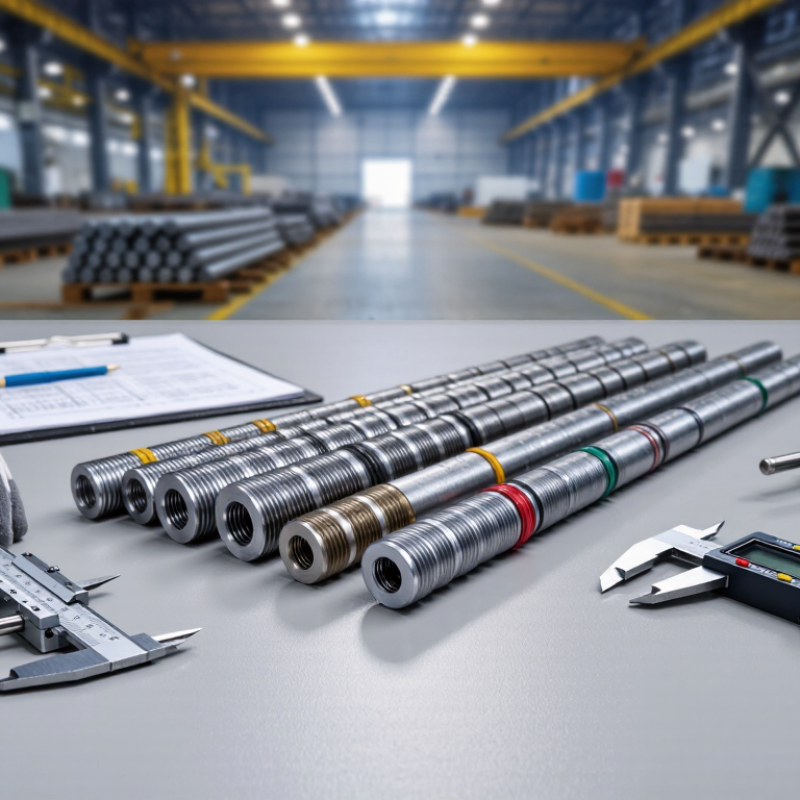
Identify Bar Type and Size: Compare 15–36 mm Diameters and Thread Profiles
Tip 1: Identify the bar type before comparing prices. Fully threaded bars provide continuous engagement, while partially threaded bars suit fixed-depth connections. Diameter alone does not define performance. A 15 mm bar may fit compact assemblies, while 20, 25, or 32 mm bars often support heavier loads. Larger 36 mm bars need matching nuts, couplers, and drilling equipment.
Tip 2: Compare thread profiles carefully. Metric coarse threads are common, but fine threads can offer better adjustment and engagement in specific applications. Check pitch, thread angle, tolerance, and thread length on the technical drawing. A bar can look correct and still fail to mate. I have seen installation delays caused by confusing nominal diameter with actual thread dimensions.
Tip 3: Request measurable evidence. Reliable suppliers should provide chemical composition, tensile results, yield strength, dimensional inspection, and coating details. Confirm whether the bar is cut, rolled, or cold-formed, because production methods influence thread consistency. Inspect sample bars for damaged crests, uneven pitch, rust stains, and bent ends. Small defects matter.
For global purchasing, compare 15–36 mm sizes against the project load, embedment length, and available accessories. Do not select the largest diameter automatically. It may increase weight, transport cost, and installation effort without improving the connection. Check the applicable engineering standard and local requirements with a qualified professional. This step is easy to skip. It should not be. Suppliers should also confirm packing, marking, inspection procedures, and traceability before shipment.
10 Tips for Choosing Thread Steel Bar for Global Buyers - Identify Bar Type and Size: Compare 15–36 mm Diameters and Thread Profiles
| Nominal Diameter | Theoretical Mass
(kg/m) | Common Bar Type | Typical Thread Profile | Typical Application | Key Buying Check |
| 15 mm | 1.39 | Threaded tie bar or small-diameter anchor bar | Metric V-thread or continuous coarse thread | Light-duty formwork, tie systems and temporary anchoring | Confirm nut, coupler and washer compatibility; do not match diameter alone. |
| 20 mm | 2.47 | Threaded reinforcing or anchor bar | Metric V-thread, coarse thread or trapezoidal thread | Medium-duty anchoring, structural ties and rock support | Request the pitch, thread angle and effective tensile area from the supplier. |
| 25 mm | 3.86 | Continuous-thread anchor or reinforcing bar | Coarse rolled thread or trapezoidal thread | Soil nails, rock bolts, micropiles and permanent anchoring | Check whether the thread is rolled or cut, because this affects fatigue and cross-section. |
| 28 mm | 4.84 | High-strength threaded anchor bar | Continuous coarse or trapezoidal thread | Ground anchoring, slope stabilization and heavy-duty rock reinforcement | Verify coupler strength, nut seating area and required corrosion protection. |
| 32 mm | 6.32 | Heavy-duty prestressing or anchor bar | Coarse rolled thread or trapezoidal thread | Large ground anchors, deep foundations and structural tension systems | Compare certified yield strength, ultimate strength and elongation values. |
| 36 mm | 8.00 | Extra-heavy threaded anchor or tension bar | Large trapezoidal or continuous coarse thread | High-capacity anchors, retaining structures and major foundation works | Confirm drilling diameter, installation equipment, coupler load and transport weight. |
1. Identify the bar system
Distinguish between a tie bar, reinforcing bar, rock bolt, soil nail, micropile bar or prestressing bar before comparing sizes.
2. Match the thread profile
A metric V-thread, continuous coarse thread and trapezoidal thread are not interchangeable, even when their nominal diameters are similar.
3. Check pitch and angle
Specify thread pitch, flank angle, crest and root form, along with the tolerance required for nuts and couplers.
4. Compare effective area
Tensile resistance depends on the thread-root or stress area, not only the outside diameter.
5. Review steel grade
Compare yield strength, tensile strength, elongation, chemical composition and inspection requirements against the project specification.
6. Confirm manufacturing method
Rolled threads generally preserve more material beneath the thread than cut threads; request the manufacturing description and inspection records.
7. Check straightness and length
Confirm standard length, allowable straightness, end condition, thread length and cutting tolerance before shipment.
8. Specify corrosion protection
Select bare, galvanized, epoxy-coated or other project-approved protection according to exposure and service life.
9. Verify accessories
Nuts, plates, couplers, spherical washers and drill bits must be designed for the same thread profile and load level.
10. Request traceability
Ask for heat numbers, mill certificates, dimensional inspection results, mechanical test reports and packing details.
Technical note: The theoretical mass values are calculated from the nominal solid steel diameter using mass = diameter² × 0.006165 kg/m, based on a steel density of approximately 7,850 kg/m³. Actual threaded-bar mass may vary because of thread geometry, tolerances and end machining. Always approve the final pitch, profile, grade and accessory dimensions from the applicable project standard and supplier drawings.
Set Strength Requirements: ASTM A722 Grade 150 Requires 1,035 MPa Tensile Strength
Tip 1: Set the strength requirement before comparing prices. ASTM A722 Grade 150 requires a minimum tensile strength of 1,035 MPa, equal to 150 ksi. This figure describes ultimate tensile capacity, not simply yield strength. Ask for test results showing the actual tensile value, elongation, and test standard. A certificate without traceable heat numbers is weak evidence.
Tip 2: Check whether the bar suits the complete anchorage system. Confirm diameter, thread form, thread length, nut compatibility, and required embedment. A high-strength bar can still fail as a system if the threads are poorly formed. Inspect sample threads with a matching nut. They should engage smoothly, without binding or visible tearing. Small details matter here.
Tip 3: Request independent verification when the project carries serious risk. Review mill certificates, batch identification, dimensional reports, and coating records. For international shipments, clarify inspection timing and document language before production. Do not rely on tensile strength alone. Surface damage, incorrect machining, or mixed batches may create installation problems. It is tempting to accept a lower price after seeing a clean spreadsheet. That can be a mistake. No checklist catches every issue, so buyers should compare documents with physical samples and site requirements.
Match Threads and Accessories: Verify Pitch, Nuts, Couplers, and ISO 261 Fit
Choosing threaded steel bar is not only about diameter and steel grade. The thread must fit every connected accessory in the installation. Confirm the nominal diameter, thread form, and pitch before requesting quotations. A metric thread may look correct, yet a fine-pitch nut will not properly engage a coarse-pitch bar.
Use a calibrated thread pitch gauge on a production sample. Measure several locations, including both ends, because rolling or cutting can create local variation. Check nuts and couplers from the actual installation, not only from a catalog image. The internal threads should turn smoothly by hand for several rotations. Stop if binding appears. Forced assembly can hide poor alignment and damage the thread.
ISO 261 helps define preferred metric thread dimensions and pitch combinations, but it does not replace dimensional inspection. Ask for inspection records showing diameter, pitch, thread length, straightness, and surface condition. Confirm the required tolerance standard separately, such as the applicable ISO tolerance specification. A reliable supplier should provide material traceability and a clear sample approval process. Keep one approved bar, nut, and coupler together as a reference set.
I have seen projects delayed by one overlooked pitch difference. It looked minor. It was not. Global buyers should also confirm measurement units, thread direction, packaging labels, and accessory availability at the destination. Documents can be complete and still miss the real assembly condition. Test the actual combination before shipment.
Assess Corrosion Protection: Compare Coatings and ASTM A123 Compliance Records
Corrosion protection should be checked before comparing price or tensile strength. The NACE IMPACT study estimated global corrosion costs at about US$2.5 trillion annually, equal to 3.4% of global GDP. For threaded steel bar, hot-dip galvanizing can provide a durable zinc barrier and sacrificial protection. However, coating quality depends on steel chemistry, surface preparation, bath control, and thread geometry.
Tip: Ask for the latest coating inspection records, not only a certificate of conformity. ASTM A123 specifies minimum zinc coating requirements for iron and steel products. Verify coating thickness, appearance, adherence, and sampling methods against the relevant product category. Threaded components may also require review under ASTM A153, depending on their form and use. A thicker coating is not automatically better. Excess zinc can affect thread fit.
Compare batch traceability with independent test results. Useful records include magnetic thickness readings, lot numbers, inspection dates, and nonconformance actions. ISO 1461 is another useful reference for hot-dip galvanized coatings, but it should not replace the project specification. In field inspections, damaged thread tips and unsealed cut ends are common weak points. They deserve separate repair procedures. I would also question records with identical readings across every bar; real measurements usually vary slightly. That small imperfection may reveal more than polished paperwork.
10 Tips for Choosing Thread Steel Bar for Global Buyers
Assess Corrosion Protection: Compare Coatings and ASTM A123 Compliance Records
ASTM A123/A123M specifies minimum average hot-dip galvanized coating thickness according to the steel material thickness. For structural steel categories, the minimum average coating thickness increases from 45 μm for steel under 1.6 mm to 85 μm for steel over 4.8 mm. Buyers should compare supplier inspection records with these requirements and request coating-thickness test results for each production batch.
Verify Global Supply: Require EN 10204 3.1 Certificates and Heat Traceability
When choosing threaded steel bar for global projects, verify the supply chain before comparing price or delivery time. Require an EN 10204 3.1 inspection certificate for every relevant heat. The certificate should identify the manufacturer, steel grade, dimensions, heat number, chemical composition, and mechanical test results. It should also carry the authorized inspection representative’s approval, independent of the production department.
Traceability must continue beyond paperwork. Ask suppliers to show the heat number on the certificate, bundle tag, and bar marking. At receiving, compare these details with the packing list and purchase order. A small mismatch can affect an entire batch. Keep photographs of markings before unloading, especially when containers travel through several countries. This creates useful evidence if documents become separated during transit.
Ask for the certificate before shipment, not after a quality dispute. Confirm that test values meet the agreed standard and project specification. A polished document can still hide weak control. Sometimes, the paperwork is incomplete. That is a warning, not a minor inconvenience. Request mill records, retesting procedures, and an explanation for missing data. If a supplier cannot connect one bar bundle to one verified heat, pause approval. Price savings rarely compensate for unclear origin, delayed inspection, or rejected material at the destination.