

How to Choose the Right Pallet Rack in 2026?
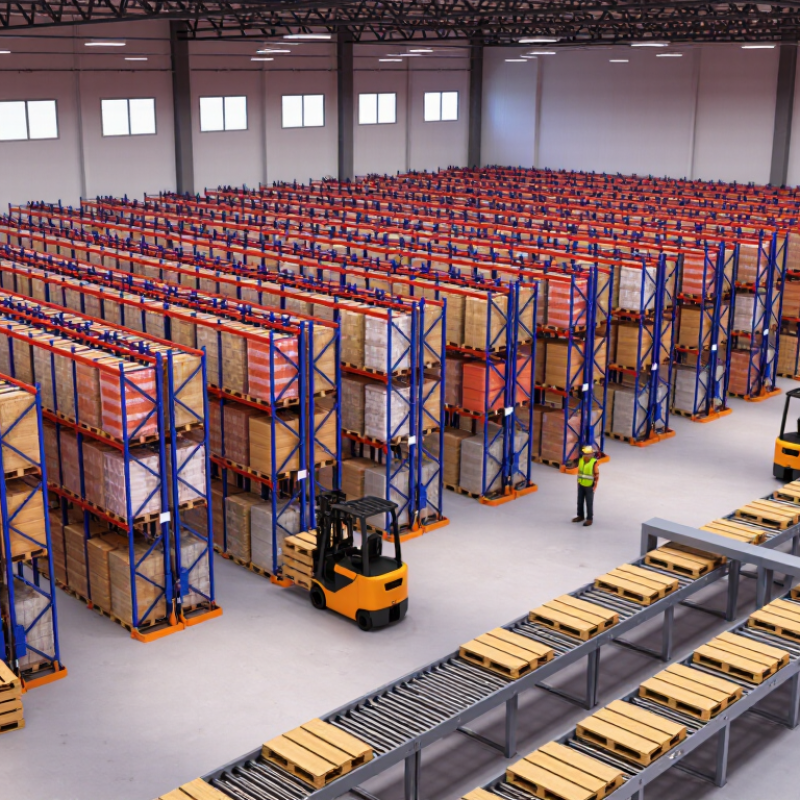
Choosing the right Pallet Rack in 2026 starts with the loads, the building, and the work happening between the aisles. A rack that looks suitable on a floor plan may fail the real test when a forklift turns, a pallet overhangs, or inventory changes. Record each load’s weight, dimensions, and handling method. Then measure clear height, aisle widths, doorways, sprinkler clearance, and floor conditions. Small details matter. A few inches can change the layout.
As a practical rule from rack-design practice: “Choose the rack around the load and workflow—not the other way around.” Treat that as a planning principle, not a substitute for site-specific engineering. Selective rack offers direct access to each pallet. Drive-in systems can increase storage density, but they require a compatible loading pattern and careful truck operation. Push-back and pallet-flow options also change how stock moves, rotates, and gets replenished. There is no universal winner.
This guide will compare rack types, capacity factors, aisle and equipment needs, safety features, and future flexibility. It will also explain what information to confirm with a qualified supplier or structural engineer before purchase. Be cautious with online capacity charts. Their numbers may not match your beams, frames, anchors, or actual loading conditions. And one honest caveat: forecasts for 2026 cannot predict every change in inventory or warehouse traffic. Leave room to adapt.
Assess Your Storage Needs, Inventory, and Growth Plans
How to Choose the Right Pallet Rack in 2026?
Assess Your Storage Needs, Inventory, and Growth Plans
Start with the pallets you actually store, not a catalog image. Measure their footprint, loaded height, and heaviest weight. Account for overhang, unstable loads, and clearance around lights or sprinkler heads. Then examine how inventory moves. Which items leave every day? Which sit for months? A pick-history report may reveal slow stock occupying valuable, easy-to-reach locations. Walk the aisles, too. The spreadsheet can miss a blocked corner or a forklift turning problem.
Your handling equipment matters as much as the rack itself. Measure forklift height, turning radius, and aisle width before comparing layouts. A narrow-aisle design may add storage positions, but only if your equipment and operators can work there safely. Have a qualified rack professional verify the planned configuration, load capacity, and applicable site requirements. Keep load information visible and current.
Growth forecasts are rarely neat. New product lines can arrive before the spreadsheet catches up, while seasonal peaks may need temporary space. Estimate pallet volumes for the next few years, and consider whether bays can be expanded without disrupting daily work. It is tempting to fill every available wall, but leaving a little room for change may prevent an awkward redesign later. Even a marked-up floor plan can expose a problem: one extra row might leave too little space near the receiving door.
| Storage Requirement | Rack Type to Consider | Pallet Access | Storage Density | Inventory and SKU Fit | Growth and Planning Considerations |
|---|---|---|---|---|---|
| Fast access to a wide variety of products | Selective pallet rack | Direct access to each pallet position | Low to moderate; aisles take up a significant share of floor space | Well suited to many SKUs, mixed products, and frequent picking | Flexible to reconfigure as product mix changes. Confirm aisle width against the lift truck and handling method. |
| Higher storage density with fewer aisles | Double-deep rack | Two pallets deep; the rear pallet is accessed after the front pallet | Moderate to high | Works best when products are stored in multiple pallets per SKU and last-in, first-out access is acceptable | Requires a reach truck or another suitable handling solution. Check equipment availability before selecting this layout. |
| Large quantities of a limited number of SKUs | Drive-in or drive-through rack | Forklifts enter storage lanes; access within a lane is limited | High | Best for batch storage with relatively few SKUs per lane. Drive-in commonly uses last-in, first-out; drive-through can support first-in, first-out when loading and unloading are separated. | Allow for lane depth, product turnover, and vehicle clearances. Deep lanes can make stock rotation and individual pallet access more difficult. |
| Multiple pallets per SKU with faster replenishment and retrieval | Push-back rack | Loads are placed and retrieved from the same aisle; pallets move on nested carts | High | Suitable for several pallets per SKU where last-in, first-out handling is acceptable | Evaluate lane depth, pallet condition, and load consistency. Confirm that the chosen system is compatible with the site’s pallets and operating procedures. |
| Time-sensitive products that need orderly stock rotation | Pallet-flow rack | Typically loaded from one side and retrieved from the other | High | Often suitable for higher-volume SKUs and first-in, first-out workflows | Plan for separate loading and picking aisles. Verify pallet dimensions, load quality, and flow-lane maintenance requirements. |
| Long, bulky, or irregularly shaped materials | Cantilever rack | Open-front access to arms and storage levels | Varies with material length and handling equipment | Useful for items such as pipe, lumber, and long building materials that do not fit standard pallet positions | Size columns, arms, and bases for the actual load and its overhang. Consider material length, weight distribution, and the required handling aisle. |
| Mixed case picking alongside reserve pallet storage | Selective rack with a picking or carton-flow area | Direct access to reserve pallets; forward-pick access depends on the configured system | Low to moderate, depending on aisle and pick-face design | Can separate high-velocity picking stock from reserve inventory | Use order history and replenishment frequency to size pick faces. Keep pedestrian and forklift routes clearly planned. |
| Future expansion or changing inventory needs | Modular selective rack, or a hybrid layout | Usually direct access where selective rack is used | Depends on the mix of rack types and aisle layout | Suitable when SKU count, pallet quantities, or order profiles may change | Reserve space for growth, document load requirements, and verify that any future reconfiguration remains within the approved design. |
| Important planning note: Rack capacity is not a universal value. It depends on the rack design, beam and frame configuration, pallet dimensions, load weight and distribution, building conditions, and applicable local requirements. Have a qualified rack designer or engineer verify capacities, anchorage, clearances, and site-specific safety requirements before installation or modification. | |||||

We have over 30 years of experience in designing complete hydraulic systems, repairs and distribution of fluid power equipment and parts.
FOLLOW US ON :
Contact Details
Address:
4020 SE 45th CT.
Ocala, FL 34480
Phone No:
Email:
sales@cunninghamfluidpower.com