

Industrial Touch Display products support control, monitoring, and information access across factory floors, kiosks, and equipment panels. Their performance depends on more than screen size. Brightness, touch response, operating temperature, interface options, and enclosure design all matter in daily use. A display facing a sunlit production line has different needs from one installed inside a sealed machine cabinet.
China has a broad field of manufacturers, from established electronics firms to specialized panel suppliers. This overview introduces notable companies and considers the practical details buyers should compare. It focuses on product range, customization, manufacturing capabilities, and the support available after delivery, while recognizing that public claims can be difficult to verify without direct checks. A polished catalog is not proof.
For a fair comparison, request clear specifications and sample units where possible. Test touch accuracy with the gloves operators actually wear. Check connector placement, mounting dimensions, and readability under the site’s lighting. Ask how warranty claims and replacement parts are handled. Small details matter.
The strongest fit depends on the application, budget, and required service life; no single manufacturer suits every project. This guide is a starting point, not an independent factory audit. Some information may change, so confirm current specifications, certifications, lead times, and support terms directly with each manufacturer before making a decision.
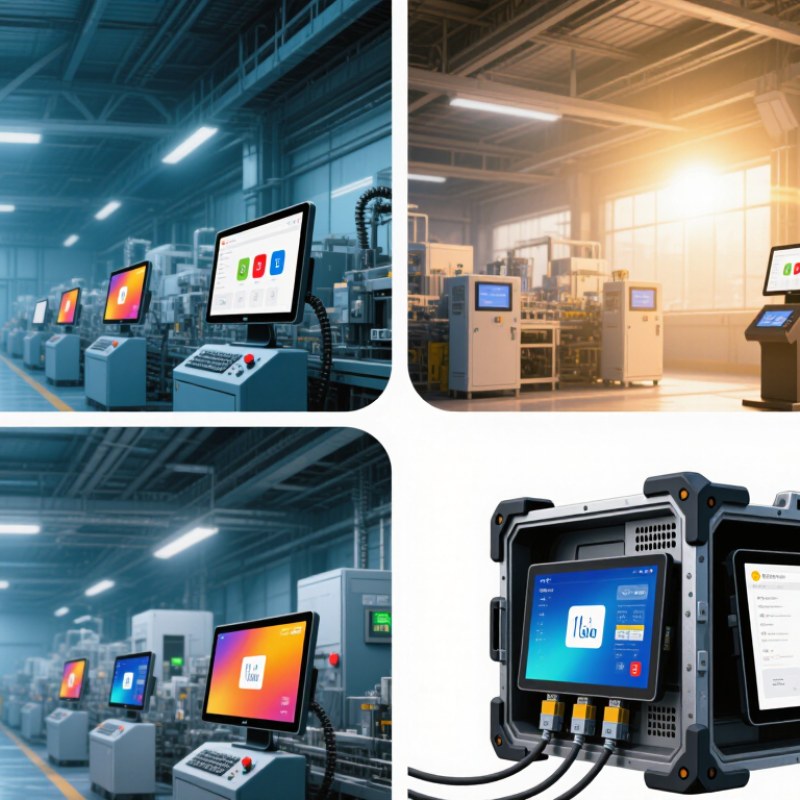
Top Industrial Touch Display Manufacturers in China
Industrial Touch Displays: Types, Features, and Applications
Industrial touch displays are built for control rooms, production lines, and equipment panels where ordinary screens may struggle. Common types include projected capacitive and resistive displays. Capacitive screens offer responsive multi-touch control, while resistive screens can work with gloves or a stylus. Small details matter.
A display’s suitability depends on its environment. Brightness affects readability near sunlit factory windows, and wide viewing angles help operators check information from different positions. Check the stated operating temperature, ingress protection rating, connector options, and compatibility with the host system. Glove support varies by design; do not assume every capacitive panel can recognize thick work gloves. Heat changes everything.
Applications range from machine monitoring and process control to warehouse terminals and outdoor kiosks. On a production line, a clear interface can help workers spot an alarm without stepping away from equipment. In a dusty or damp area, enclosure protection and easy-to-clean surfaces may matter more than a high-resolution image. A pilot installation is worthwhile: test the display with actual gloves, lighting, and software before specifying it for an entire site. That step is often overlooked.

China’s industrial touch-display supply base is broad, but a low quote alone says little about long-term reliability. MarketsandMarkets estimated the industrial display market at USD 5.1 billion in 2021 and projected USD 6.7 billion by 2026, a 5.6% compound annual growth rate. This growth makes careful supplier evaluation essential. A polished brochure is not proof.
Start with the operating conditions: ambient temperature, sunlight, vibration, cleaning chemicals, and glove use. Ask for test reports tied to the exact display assembly, not a similar product. Check whether ingress-protection claims cover the complete enclosure and refer to IEC 60529. For temperature cycling, ask how testing follows relevant IEC 60068 procedures. Ask for raw logs. Confirm touch response near the screen edges and through the specified cover glass; a quick demo may hide intermittent faults.
Then assess production controls. Review incoming-part inspection, calibration records, traceability, and how defects are handled. Request samples from a normal production run, not only hand-picked prototypes, and compare brightness and touch accuracy across units. If possible, visit the factory and observe assembly and final inspection. Even a careful audit has limits: pilot samples may perform better than later batches, so define acceptance criteria and retesting in writing. Market forecasts describe demand, not supplier quality.
Leading Industrial Touch Display Manufacturers in China serve factories where operators wear gloves, machinery vibrates, and screens run for long shifts. Strong suppliers specify touch technology, brightness, operating temperature, and ingress protection against the actual installation environment. A bright screen can still fail if sunlight washes out its image or the enclosure traps heat. Details matter.
MarketsandMarkets estimated the global industrial display market at about USD 6.2 billion in 2023 and forecast approximately USD 8.2 billion by 2028. This is a market-wide estimate, not a China-only figure. It points to sustained demand for durable operator interfaces. Buyers should compare sample units, touch response with work gloves, and readability under factory lighting. Ask for test conditions, not just a specification sheet.
Chinese manufacturers can offer flexible customization, including panel sizes, mounting formats, and interface options. Evaluate their engineering process as closely as their production capacity. Can they provide traceable test records and consistent replacement parts? A factory visit can reveal cable routing, dust control, and inspection practices. Small details count. Yet supplier claims sometimes outpace verification; independent testing is worth considering before a large order. A technically capable partner should discuss failure modes openly, including dead pixels, touch drift, and heat-related dimming.
Chinese industrial touch-display manufacturers vary most in integration depth, not advertised resolution. A 2023 MarketsandMarkets report valued the global human-machine-interface market at USD 5.5 billion, forecasting USD 7.2 billion by 2028. This broader market is not a display-only measure, but it signals demand for capable operator interfaces. Details matter.
Compare manufacturers on projected capacitive touch performance, optical bonding, and readable brightness under factory lighting. Ask how touch behaves with gloves, moisture, and electrical noise. Check operating-temperature ranges, interface options, and documented reliability tests. A crisp showroom image proves little. One caveat: a bright demo room can flatter a panel.
Some suppliers focus on standard modules with quick customization; others engineer controllers, cover glass, and embedded electronics together. The latter can simplify integration, but may increase development time or constrain later changes. Request sample units and test them on the actual mounting angle, with the intended enclosure and ambient light. MarketsandMarkets’ forecast offers useful context, not a supplier scorecard. Compare test methods and failure data, too; they are not always presented consistently.
The table below is a practical comparison framework, not a ranking of named companies. Capability levels are indicative; verify specifications, certifications, and production capacity for each supplier and product model.
| Comparison dimension | Baseline capability | Established capability | Advanced capability | What buyers should verify |
|---|---|---|---|---|
| Display technology | LCD modules for common industrial applications | Multiple LCD sizes, resolutions, and brightness options | Broad configuration choices, including optical bonding and sunlight-readable options where offered | Panel datasheet, brightness in cd/m², viewing angles, operating temperature, and lifecycle status |
| Touch technology | Projected capacitive or resistive touch options, depending on model | Controller and cover-lens options matched to intended use | Application-specific tuning for gloves, moisture, or electromagnetic interference, where validated | Touch-controller details and test results using the buyer’s gloves, fluids, and installation conditions |
| Mechanical design | Standard panel-mount or open-frame formats | Custom bezels, mounting arrangements, and front-panel materials | Project-specific enclosure design and sealing options for defined environments | Mechanical drawings, gasket design, mounting method, and the exact scope of any ingress-protection rating |
| Environmental robustness | Standard indoor operating conditions | Models designed for wider temperature ranges or higher-vibration settings | Documented, application-specific qualification for demanding conditions | Test methods, temperature limits, vibration and shock reports, and whether ratings apply to the complete unit |
| Interfaces and integration | Common video and touch interfaces available by model | Choice of interface boards, cables, and mounting configurations | Co-designed integration with host systems and defined interface documentation | Supported video inputs, touch protocol, connector pinouts, firmware requirements, and change control |
| Customization and engineering | Selection from standard product configurations | Custom labels, cables, cover glass, or enclosure details | Joint design reviews, prototype iterations, and documented product revisions | Engineering ownership, non-recurring costs, sample schedule, and approval process for design changes |
| Quality and traceability | Incoming and outgoing inspection procedures | Documented quality system and batch-level inspection records | Traceability and reliability testing aligned with the customer’s requirements | Current certificates, audit scope, sample inspection reports, and corrective-action process |
| Production and support | Standard lead times and order quantities for catalog products | Pilot production and forecast-based supply planning | Documented capacity planning, product-lifecycle support, and defined service processes | Quoted lead time, minimum order quantity, spare-parts policy, warranty terms, and end-of-life notice period |
Evaluation note: Request model-specific evidence and compare products against the same operating, mechanical, and interface requirements. A capability listed as available should not be treated as a verified specification until confirmed in writing.
Top Industrial Touch Display Manufacturers in China
Industry Trends Shaping China’s Industrial Touch Display Market
China’s industrial touch display market is moving toward tougher, more adaptable interfaces. On factory floors, operators need screens that remain readable under bright lights and respond through gloves. Dust, oil, and vibration still matter. They are not minor details. These demands are driving interest in optical bonding, wider operating temperatures, and stronger front panels. Projected capacitive touch is common in new designs, while resistive panels remain useful where thick gloves or styluses are involved. There is no universal winner.
Manufacturers are also balancing local component sourcing with consistent quality and long product lifecycles. Buyers increasingly ask for customized sizes, interface options, and operating systems that fit existing equipment. Edge computing may bring more diagnostics to the display, but added features can raise cost and complicate maintenance. Not every upgrade pays off. A bright screen can still be hard to read when reflections are overlooked. Likewise, a sealed enclosure may trap heat if its thermal design is weak. These trade-offs make sample testing under real lighting, temperature, and touch conditions essential. Specifications help, but factory conditions can be less tidy than a test bench.

We have over 30 years of experience in designing complete hydraulic systems, repairs and distribution of fluid power equipment and parts.
FOLLOW US ON :
Address:
4020 SE 45th CT.
Ocala, FL 34480
Phone No:
Email:
sales@cunninghamfluidpower.com