Top Metal 3D Printing Factories for Global Buyers
Metal additive manufacturing has moved from specialist prototyping into production for aerospace, medical, energy, and industrial applications. The Wohlers Report 2024 estimates that the global additive manufacturing industry generated $21.9 billion in revenue in 2023, an 11.1% increase over 2022. This figure covers the wider industry—not metal printing alone—so buyers should avoid treating it as a metal-market estimate. Still, it signals a maturing supply chain. The right Metal 3d Printing Factory can turn a qualified design into repeatable parts, but machines alone do not guarantee quality.
A useful supplier review starts with evidence: material and process capabilities, inspection records, documented quality controls, and examples of comparable production work. Ask how the factory manages powder handling, build traceability, post-processing, and dimensional checks. Request sample reports, not just polished photographs. A small feature on a titanium bracket may look clean in a render and still fail a tolerance check. Details matter.
The comparison in this guide is intended to help global buyers ask sharper questions about capacity, technical support, lead times, and communication. Not every factory suits every part. A supplier experienced in complex aerospace components may not be the best fit for a short-run tooling order. Price matters, of course. But a low quote can leave important work—such as machining or inspection—outside the stated scope. That is easy to miss. Use the listed factories as starting points, then verify current certifications, capabilities, and project fit directly with each supplier.
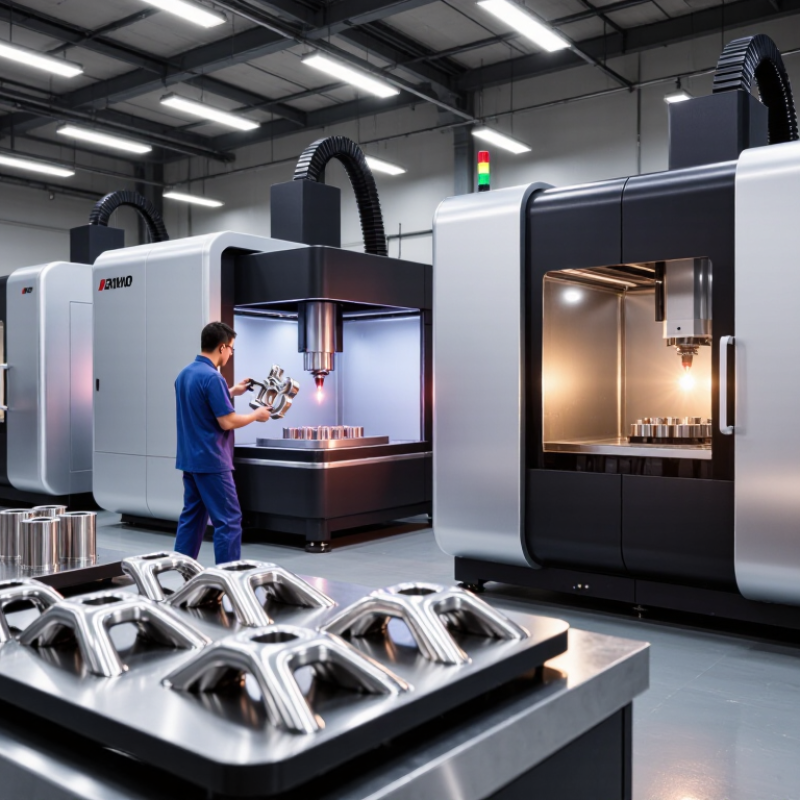
What Defines a Leading Metal 3D Printing Factory
A leading metal 3D printing factory is defined by repeatable control, not machine count. Buyers should look for documented powder handling, calibrated lasers, stable build parameters, and traceable material lots. A build record should connect each part to its powder batch, machine settings, operator checks, and post-processing route. Details matter. For critical components, ask how the factory validates density and detects internal defects, using suitable methods such as computed tomography or destructive coupon testing. Inspection claims should come with clear acceptance criteria.
Capacity matters, but evidence matters more. The Wohlers Report 2024 estimated the global additive manufacturing industry reached US$20.035 billion in 2023, growing 11.1% year over year. That figure covers the wider industry, not metal printing alone; buyers should avoid treating it as a metal-market forecast. ISO/ASTM 52920:2023 also provides a framework for qualifying industrial additive manufacturing processes and sites. Ask whether quality procedures align with relevant requirements, and request sample inspection records, equipment calibration dates, and nonconformance examples. A factory may have excellent machines yet weak documentation. That is harder to see during a sales call. A practical audit should follow one part from incoming powder to final measurement, including any rework or failed build.
Metal 3D Printing Processes and Materials
Metal additive manufacturing is not one process. Powder bed fusion uses a laser or electron beam to melt thin powder layers, creating detailed parts with fine internal channels. Directed energy deposition feeds metal powder or wire into a focused heat source, making it useful for repairs and larger components. Binder jetting joins powder with a liquid binder, then requires debinding and furnace sintering. That extra step can cause shrinkage. A small dimensional error can matter.
Material choice follows the process. Stainless steel suits corrosion-resistant parts; titanium alloys offer high strength at low weight; nickel alloys tolerate heat. Aluminum can reduce mass, but thin features may warp during printing. Feedstock quality matters, too: powder size, shape, and reuse affect flow and consistency. Wohlers Report 2024 put the global additive manufacturing industry at $20.0 billion in 2023, up 11.1% year over year. The figure covers the wider industry, not metal printing alone. Buyers should still request process-specific test data, such as density, tensile strength, and build orientation. A polished sample is not enough. Even experienced teams can overlook how supports, heat treatment, and machining alter the final part.
How Factories Ensure Quality and Production Reliability
Reliable metal 3D printing starts before the build plate enters the machine. A factory should record powder supplier, alloy grade, particle condition, and reuse history for every production lot. Operators monitor chamber oxygen and machine alarms during printing. They also retain parameter logs, so a failed part can be traced to a specific build. Small details matter. A loose powder sieve or drifting laser can undermine an otherwise polished inspection report.
Wohlers Associates reported that global additive manufacturing revenues reached $20.0 billion in 2023, an 11.1% increase over 2022 (Wohlers Report 2024). That growth makes repeatable quality controls more important, but market growth alone proves nothing about a factory’s reliability. Buyers should ask for build records, calibration schedules, material certificates, and inspection results tied to the actual part. Factories may use witness coupons, dimensional checks, and computed tomography when internal defects could affect performance. ISO/ASTM 52920:2023 also provides requirements for qualifying industrial additive manufacturing processes and sites. Still, paperwork has limits. A certificate cannot replace a clear explanation of how defects are detected, handled, and prevented from recurring.
Quality Benchmarks for Metal 3D Printing
Minimum tensile-property requirements for additively manufactured Ti-6Al-4V under ASTM F2924.
The specification sets minimums of 895 MPa for tensile strength and 825 MPa for yield strength. These are material acceptance benchmarks, not factory performance results; production parts require validation against the applicable specification and build requirements.
Comparing Factories for Global Sourcing
Comparing metal 3D printing factories starts with the same part, drawing, and delivery assumptions. Ask each supplier to quote one component with clear dimensions, material, quantity, and finish requirements. Then compare process capability, inspection records, and stated lead time—not just the unit price. A factory that explains support removal, surface finishing, and dimensional checks gives buyers more useful evidence than a polished brochure. Details matter. Still, published capacity figures may not reflect current workloads, so confirm them directly.
Tips: Request a sample build and its inspection report. Check how the factory documents material batches and handles design changes. Ask who pays for protective export packaging, and request photos of packed parts before dispatch.
For global sourcing, communication deserves its own comparison column. Note response times, drawing-review questions, and whether measurement units are handled consistently. These small details can expose avoidable delays. Compare payment schedules and shipping estimates using the same assumptions, while keeping a buffer for customs processing or rework. The lowest quote may be reasonable, but only when its scope matches the others. I would not treat a single successful sample as proof of repeatability; ask how production parts are checked across the full order.
Industries Served by Metal 3D Printing Factories
Metal 3D printing factories serve industries where complex shapes, low-volume production, or lighter components can justify the process. In aerospace, engineers may print brackets with internal channels or lattice structures to reduce weight. Each part still needs careful inspection, since a small defect can affect performance under vibration or heat. Traceable material records and documented testing help buyers assess production quality.
Medical manufacturers use metal printing for some surgical instruments and patient-matched implants. A factory must control dimensions, surface finish, and cleaning steps. Tiny channels can trap residue. That detail is easy to underestimate. Energy companies also use printed parts for pumps, burners, and heat-exchange equipment, where internal geometries can support fluid flow or thermal management.
Automotive firms and industrial toolmakers often turn to metal printing for prototypes, spare parts, and conformal-cooling inserts. A printed tool may shorten cooling time, but results depend on design, material, and production settings. Buyers should ask how a factory validates repeatability across batches. A smooth sample is not enough. I’ve seen specifications focus on geometry while overlooking post-processing; that gap deserves a second look. Fit still matters.