

What Is a Shearing Machine Blade and How Does It Work?

A Shearing Machine Blade is a precision cutting tool used to separate sheet metal, plates, and other flat materials. It works through controlled shear force rather than sawing. One blade usually moves against another fixed blade. Their edges meet at a carefully selected angle, creating a clean fracture through the material.

The cutting process begins when the upper blade descends. The metal is held firmly by a clamping system. Pressure rises beneath the cutting edge, causing slight bending, plastic deformation, and final separation. Blade clearance is critical. Too little clearance may increase wear and damage the edges. Too much clearance can leave burrs, distortion, or a rough cut. Material thickness, hardness, blade angle, and machine alignment all affect the result.

In practical maintenance, technicians inspect cut edges, blade faces, and unusual machine noise. A sharp blade should produce consistent cuts without excessive burrs. Small details matter. Even a thin burr can indicate incorrect clearance or poor alignment. Manufacturers normally specify suitable blade materials, hardness levels, and sharpening limits. These recommendations provide a more reliable starting point than guesswork.

Yet no blade lasts forever. I have seen maintenance plans fail because operators judged sharpness by appearance alone. That approach is imperfect. Measurement, trial cuts, and production records offer better evidence. A complete understanding of how a Shearing Machine Blade works helps users select, adjust, and maintain it safely. The machine manual still matters. There is no universal setting.
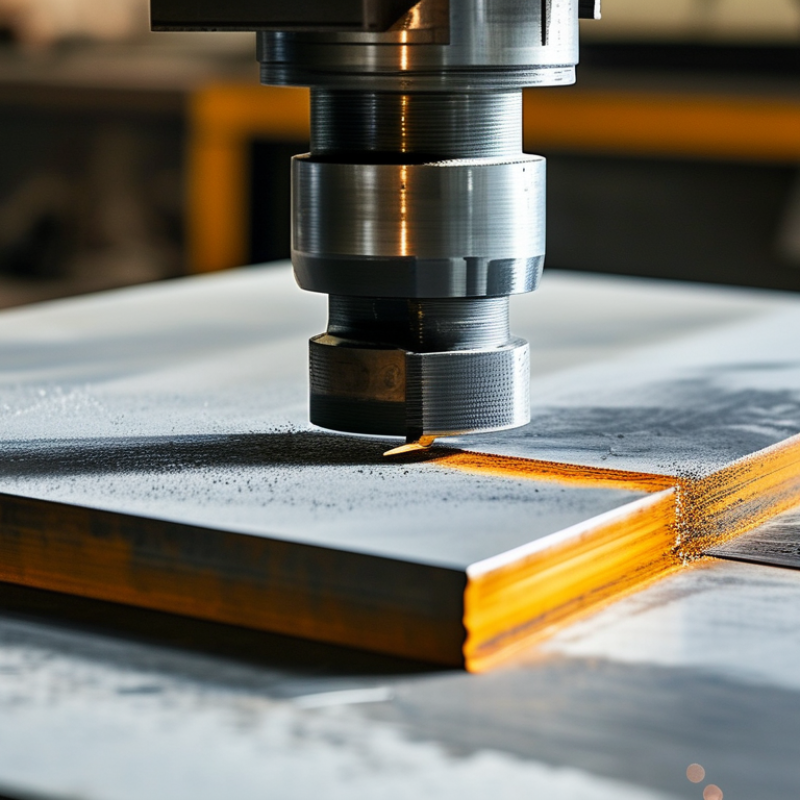
What Is a Shearing Machine Blade and How Does It Work?

Definition and Purpose of a Shearing Machine Blade

A shearing machine blade is a hardened cutting tool designed to separate sheet metal through controlled shearing force. In most machines, the upper blade moves downward while the lower blade remains fixed. The metal is clamped, compressed, and fractured along a straight line. The blade does not slice like a kitchen knife. It creates a narrow plastic-deformation zone before the material separates.

Its purpose is practical: producing accurate blanks, trimming edges, and preparing plates for forming or welding. Blade clearance must match the material type and thickness. As a working reference, many fabricators set clearance near 5% to 10% of material thickness, but this range is not universal. Stainless steel, aluminum, and mild steel respond differently. Incorrect clearance can create burrs, bevels, cracked edges, or excessive noise. The 2024 Global Metal Cutting Machine Market report by Grand View Research forecasts continued industrial demand, with automation and precision processing as major growth factors.

Experience on the shop floor shows that blade sharpness alone does not guarantee a clean cut. Alignment, clamping pressure, lubrication, and machine rigidity also matter. Small setup errors become visible as uneven edges. That is easy to underestimate. The U.S. Bureau of Labor Statistics recorded 5,283 fatal work injuries in 2023, reinforcing the need for guarding and verified operating procedures. Operators should inspect blade gaps, fasteners, and edge damage before production. A blade may still cut metal while already reducing accuracy. That warning deserves attention.

What Is a Shearing Machine Blade and How Does It Work?

A shearing machine blade is a hardened cutting tool that separates sheet metal by applying opposing forces along a straight cutting line. Proper blade clearance—the gap between the upper and lower blades—helps produce a clean cut while reducing burrs, distortion, and excessive blade wear.

Key Components and Blade Materials

What Is a Shearing Machine Blade and How Does It Work?

A shearing machine blade uses opposing edges to slice metal through controlled clearance. The upper blade moves downward, while the lower blade supports the sheet. Key components include the blade body, cutting edge, mounting holes, clamping surface, and relief angle. The blade body carries impact loads. The edge creates the initial fracture.

Blade material determines service life and cutting accuracy. High-carbon, high-chromium tool steel offers a practical balance between hardness and toughness. High-speed steel resists wear during demanding production, but it costs more and can be less forgiving under impact. Carbide provides exceptional abrasion resistance. However, it may chip when alignment is poor. According to the USGS Mineral Commodity Summaries 2025, global tungsten mine production reached approximately 81,000 metric tons in 2024. Tungsten is important in many carbide grades, though blade performance depends on the complete composition and heat treatment.

The World Steel Association reported roughly 1.88 billion tonnes of crude steel production in 2024. That scale explains why blade stability matters in high-volume fabrication. A small clearance error can leave burrs, edge rollover, or uneven cuts. In workshop trials, a harder blade does not always last longer. Excessive hardness may fail suddenly. Proper tempering, accurate grinding, and regular edge inspection often matter more than hardness figures alone. I would also question generic material claims. Sheet thickness, tensile strength, machine rigidity, and cutting speed must guide the final selection.

What Is a Shearing Machine Blade and How Does It Work? - Key Components and Blade Materials

Category Component or Material Primary Function Typical Characteristics Common Applications or Considerations
Machine Component Upper Blade Moves against the lower blade to apply the shearing force and separate the sheet. Usually mounted in a reciprocating, swinging, or guillotine-style cutting system. Requires correct alignment, secure clamping, and suitable edge clearance.
Machine Component Lower Blade Provides the fixed or counter-cutting edge that supports the material during cutting. Often positioned on the cutting table or lower blade holder. Its edge condition directly affects burr formation and cut quality.
Machine Component Blade Holder Secures the blade and transfers cutting loads from the machine structure. Must resist vibration, deflection, and loosening during repeated cycles. Incorrect mounting can cause uneven wear or blade damage.
Machine Component Blade Edge The sharpened contact area that initiates penetration and fracture of the sheet. May be straight, segmented, or specially profiled depending on the machine design. Sharpness, edge geometry, and surface finish influence cutting force and burrs.
Machine Component Blade Clearance Controls the gap between the upper and lower blades as they pass each other. The correct value depends on material type, thickness, and hardness. Too little clearance may increase force and wear; too much may produce burrs or distortion.
Machine Component Hold-Down Device Clamps the sheet near the cutting line to reduce movement and vibration. May use mechanical, hydraulic, or other powered clamping systems. Proper pressure helps maintain dimensional accuracy and a clean cut.
Blade Material High-Carbon Tool Steel Provides a practical combination of hardness, toughness, and sharpening capability. Suitable for general-purpose cutting when impact loads are moderate. Often selected for mild steel and other routine sheet-metal applications.
Blade Material Alloy Tool Steel Improves resistance to wear, deformation, and repeated mechanical loading. Alloying elements may include chromium, molybdenum, vanadium, or tungsten. Used when longer service life and more stable edge performance are required.
Blade Material Cold-Work Tool Steel Maintains high hardness and wear resistance during room-temperature cutting. Can provide a durable edge for demanding production environments. Appropriate selection depends on material hardness, thickness, and impact risk.
Blade Material High-Speed Steel Offers high hot hardness and strong resistance to edge wear. Retains useful hardness at elevated temperatures generated by heavy cutting. May be chosen for high-wear applications, although cost and toughness must be evaluated.
Blade Material Stainless Tool Steel Combines cutting performance with improved corrosion resistance. Useful where moisture, corrosive residues, or frequent cleaning are present. May require balancing corrosion resistance against toughness and sharpening needs.
Operating Principle Shearing Action The blades first deform the sheet, then create cracks that meet and separate the material. The process is primarily a controlled cutting and fracture operation rather than melting. Cut quality depends on blade condition, clearance, alignment, and material properties.
Performance Factor Blade Hardness Resists edge deformation and abrasive wear. Higher hardness can improve wear resistance but may reduce impact toughness if excessive. Must be matched to the workpiece and machine operating conditions.
Performance Factor Blade Maintenance Preserves edge sharpness, dimensional accuracy, and safe machine operation. Includes inspection, cleaning, correct tightening, alignment checks, and timely sharpening or replacement. Worn or damaged blades can increase burrs, cutting force, noise, and operating risk.

How a Shearing Machine Blade Cuts Metal

A shearing machine blade is a precision cutting tool designed to separate metal without producing chips. In a typical guillotine shear, the upper blade moves downward while the lower blade remains fixed. The sheet is held firmly by a pressure beam. This prevents movement during the cut.

The cutting action begins with blade penetration. A sharp edge presses into the sheet and creates localized plastic deformation. As pressure increases, cracks form from both blade edges. These cracks meet, and the metal separates through a clean shearing zone. Blade clearance controls this process. Excessive clearance can leave burrs and a rough fracture surface. Too little clearance increases force, heat, and edge wear. Real cutting is less tidy than diagrams suggest.

The World Steel Association reported 1,892 million tonnes of crude steel production in 2023. This scale shows why repeatable shearing matters in fabrication. The U.S. Geological Survey estimated global iron ore production near 2.5 billion metric tons in 2023, supporting continued demand for steel processing equipment. Operators usually adjust clearance according to material thickness, strength, and blade condition. They also inspect the cut edge, not only the machine settings. A straight, bright edge often indicates balanced clearance. Heavy burrs suggest a problem, but not always one cause. Alignment, clamping, and worn corners can produce similar defects. A small error can become expensive.

Blade Types for Different Shearing Applications

A shearing machine blade cuts material through controlled pressure and a moving edge. In metal fabrication, the upper blade descends against a fixed lower blade. Correct clearance allows a clean separation instead of excessive burrs or deformation. Blade selection depends on material thickness, hardness, width, and cutting frequency.

Straight guillotine blades suit sheet metal, plates, and long linear cuts. They may use a square edge for general work or a slight rake angle to reduce cutting force. Circular blades work well in rotary shears, slitting lines, and narrow strips. Their continuous rotation supports faster production and consistent strip widths. For paper, film, rubber, and textiles, sharper edges and different blade angles are often necessary. Softer materials can compress before cutting, so an overly blunt edge may create tearing rather than a clean cut.

Blade material also matters. Hardened tool steel provides practical wear resistance, while specialized carbide edges can handle abrasive production conditions. Still, harder is not always better. A brittle edge may chip when clearance is wrong or when foreign particles enter the cutting zone. From regular machine checks, uneven wear often points to poor alignment rather than poor blade quality. Operators should inspect burrs, listen for unusual vibration, and verify the gap with suitable measuring tools. I have found that blade charts help, but real cutting results sometimes disagree. A short trial cut remains valuable.

Maintenance, Safety, and Blade Replacement

A shearing machine blade cuts sheet metal by moving past a fixed blade with controlled clearance. Its sharp edge is only one part of the system. Proper alignment, pressure, and blade gap determine whether the cut is clean or ragged. Maintenance begins with removing metal chips, oil residue, and dust after each shift. Inspect the edge for dents, cracks, uneven wear, or unusual bright spots. A small defect can spread quickly under cutting pressure.

Safety must come before adjustment. Switch off the machine, isolate every energy source, and follow the written lockout procedure. Never rely on the control panel alone. Wear cut-resistant gloves when handling a blade, but keep hands away from exposed edges. Use lifting equipment or two trained workers for heavy blades. Guards should remain installed during testing. A rushed wipe can leave a sharp chip behind. I have seen minor cleaning shortcuts create avoidable injuries.

Replace a blade when damage, repeated burrs, or poor cutting remains after correct adjustment. Record the blade position before removal, then support it while loosening fasteners. Install the replacement with the correct size, material, hole pattern, and edge direction. Tighten fasteners evenly and check alignment with a suitable gauge. It is easy to over-tighten one side and distort the cutting gap. After installation, test with scrap material at low speed. If the cut looks wrong, stop and recheck the clearance instead of forcing production. A qualified technician should handle uncertain repairs.

Share by: