7 Tips for Buying Steel Cord Conveyor Belts
Buying Steel Cord Conveyor Belts is a technical decision, not a simple price comparison. These belts move heavy materials across mines, ports, power plants, and long overland routes. A failed splice can stop an entire loading system. It can also leave a costly scar on production planning.
The International Energy Agency’s Coal 2024 report describes global coal demand as remaining near record levels through 2027. This pressure keeps bulk-material handling systems working hard. Meanwhile, CEMA’s Belt Conveyors for Bulk Materials, Seventh Edition, emphasizes correct belt tension, pulley design, loading conditions, and splice performance. ISO 15236-1 also defines requirements for steel cord conveyor belt construction and testing. These references matter because belt strength alone does not guarantee service life.
The right purchase begins with seven practical checks. Confirm tensile strength, cover grade, cord spacing, pulley diameter, impact conditions, and splice compatibility. Examine the supplier’s test certificates and failure history. Ask how the belt performs around sharp ore, wet coal, or abrasive limestone. Feel the cover hardness. Inspect the cord layout. Small details matter.
Do not trust a dramatic catalog claim without operating evidence. A cheaper belt may reduce the invoice, yet increase downtime, labor, and replacement risk. Still, specifications are not perfect predictions. Site conditions change, and some assumptions deserve a second review. This guide explains seven buying tips for Steel Cord Conveyor Belts, combining engineering practice, recognized standards, and a careful view of total cost.
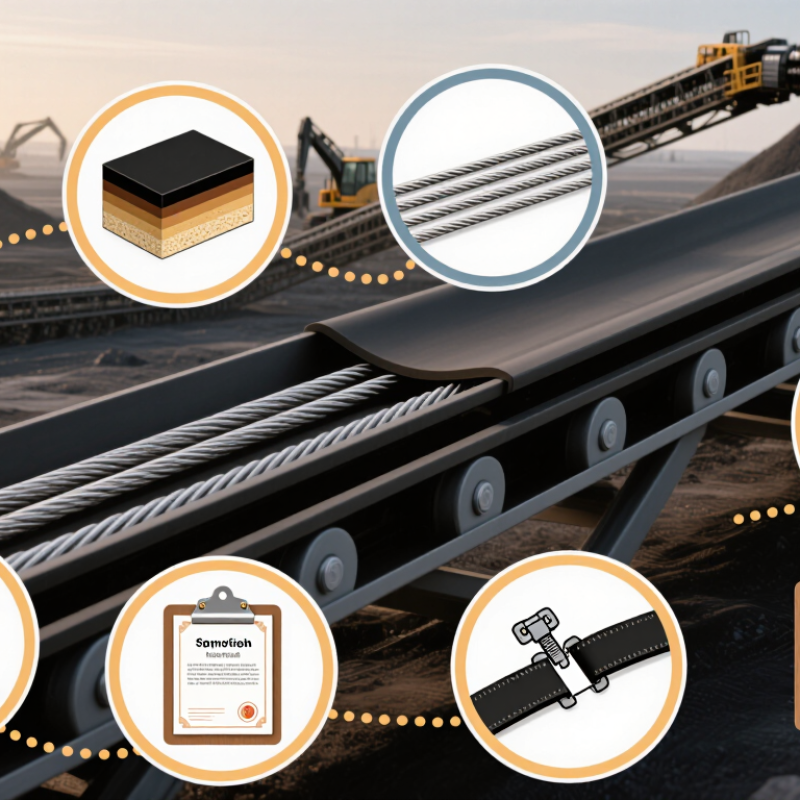
Define the Conveyor Belt’s Operating Requirements
Before choosing a steel cord conveyor belt, define its operating requirements precisely. Record capacity in tonnes per hour, belt speed, conveyor length, lift, incline, and starting frequency. CEMA’s Belt Conveyors for Bulk Materials, 7th Edition, uses these factors to calculate effective tension and power demand. ISO 5048 also treats belt tension, resistance, and elevation as core design inputs. Guessing here can produce an expensive mismatch.
Tip: Describe the material in detail. Note lump size, bulk density, moisture, temperature, abrasiveness, and impact energy. A belt carrying dry limestone faces different stress from one carrying wet, sticky ore. Check operating and ambient temperatures against ISO 14890 requirements. Include cleaning methods, loading-point geometry, take-up travel, and emergency-stop conditions. These details affect steel cord fatigue, splice performance, and cover wear. Small omissions become large failures.
Tip: Measure real conditions, not only design values. Compare normal throughput with peak surges and blocked-chute events. Ask maintenance teams how often the belt slips, mistracks, or starts under load. Their field experience may contradict the original spreadsheet. That is useful evidence. Record pulley diameters, startup torque, braking behavior, and inspection history. CEMA guidance can support calculations, while site measurements validate them. A perfect specification still needs review after commissioning. Maybe the overlooked detail is seasonal moisture. Short notes matter.
7 Tips for Buying Steel Cord Conveyor Belts: Define the Conveyor Belt’s Operating Requirements
Before selecting a steel cord conveyor belt, document the expected belt width, speed, capacity, conveyor inclination, ambient temperature, and required tensile strength. The chart shows a representative heavy-duty operating profile expressed as a percentage of a practical design reference.
Reference case: 1,800 mm belt width, 5 m/s belt speed, 4,000 t/h conveying capacity, 12° inclination, 35°C ambient temperature, and ST 3150 N/mm nominal belt strength. Final specifications should be verified through conveyor calculations, loading conditions, safety factors, and applicable standards.
Choose the Correct Steel Cord Belt Construction
7 Tips for Buying Steel Cord Conveyor Belts
Choose the Correct Steel Cord Belt Construction
Select the belt strength from actual tension, not habit. Calculate belt length, lift height, material load, and starting forces before ordering. A thicker belt is not automatically safer. Excessive strength can increase bending stress and reduce pulley life. Check the manufacturer’s stated breaking strength and safety factor against recognized conveyor design practices.
Match the cord spacing to the required load and splice design. Closely spaced cords can improve force distribution, but they demand accurate splicing. Examine the pulley diameter carefully. A belt with unsuitable flexibility may develop hidden fatigue near small pulleys. I have seen belts look perfect outside while internal cords weakened around tight bends. That mistake is expensive.
Choose the cover grade for the material, temperature, and impact conditions. Sharp rock needs stronger impact protection than dry grain. Wet, abrasive fines may require a different compound and cleaning plan. Confirm the belt’s troughability before installation. Poor trough formation can cause spills and edge wear. Ask for test certificates, cord alignment data, and splice instructions. Do not rely on verbal promises.
Inspect the loading zone before final selection. Drop height matters. So does skirt pressure. Use trained technicians for splicing, and record every joint measurement. Keep spare fasteners and repair materials on site. Leave room for doubt. Operating conditions often change after purchase, and the original specification may prove incomplete.
Check Strength, Dimensions, and Performance Specifications
Tip one: Verify belt strength in kN/m, not only the product name. ISO 15236 defines steel cord belt requirements, including tensile strength and splice performance.
Tip two: Match the belt width to the existing structure. A few millimeters can affect skirt sealing, loading, and tracking. Measure pulley diameters carefully. Undersized pulleys can fatigue cords faster. Tip three: Check cord spacing and cover thickness. These details influence impact resistance and longitudinal tear behavior. Tip four: Review the duty cycle, temperature range, abrasion rating, and material size. The World Mining Data 2024 report records more than 18 billion tonnes of mineral production worldwide, showing why heavy-duty conveying demands precise selection.
Tip five: Request test results for tensile strength, elongation, adhesion, and splice efficiency. CEMA’s belt conveyor calculation methods can help verify tension, power, and take-up requirements. Tip six: Compare the specification sheet with actual site conditions. I have seen belts selected correctly on paper but fail near transfer points because impact energy was underestimated. Tip seven: Inspect trial samples and ask for traceable quality records. Do not accept vague claims such as “high performance.” Performance needs numbers. A neglected detail remains a real risk. Consider pulley lagging, alignment, cleaners, and maintenance access too. These factors can change belt life, even when the belt itself meets ISO requirements.