10 Tips for Choosing the Right Ceramic Rod?
Choosing the right Ceramic Rod can feel simple until the application begins to fail. A rod may look flawless, yet crack after repeated heating, bend under pressure, or react with a cleaning chemical. The correct choice depends on more than diameter and price. Temperature, load, electrical insulation, surface finish, porosity, and dimensional tolerance all matter.
This guide introduces ten practical tips for making a more reliable decision. It draws on common engineering methods, supplier specifications, and real-world inspection habits. Start with the working environment. A ceramic rod used inside a furnace faces different demands from one used as an electrical spacer or laboratory support. Alumina, zirconia, steatite, and other ceramics offer different balances of strength, hardness, thermal shock resistance, and cost. Material names alone are not enough.
Measure carefully.
Check the rod’s length, diameter, straightness, and end finish. Request test data, batch information, and evidence of quality control from the supplier. A polished surface may reduce wear, but it can also hide small chips around the ends. I have seen selections based only on impressive temperature ratings. That assumption is easy to make, and sometimes wrong. Thermal cycling, sudden cooling, mounting pressure, and vibration can determine service life more than the advertised maximum temperature.
A small prototype test is often worthwhile. It can reveal handling problems before full production begins. These tips will help you compare options with clearer judgment, while leaving room for one important truth: no Ceramic Rod is perfect for every application.
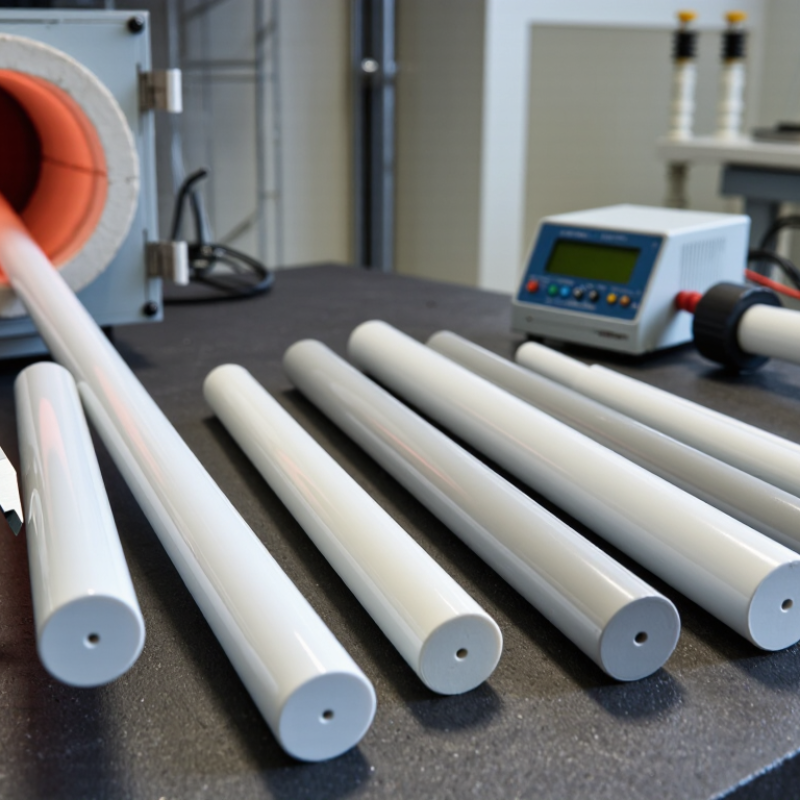
Understand Ceramic Rod Types and Their Key Properties
Choosing a ceramic rod begins with identifying its ceramic type, not simply comparing prices. Each composition behaves differently under heat, pressure, and electrical stress.
Alumina rods offer strong wear resistance, reliable insulation, and practical cost control. They suit guides, spacers, furnace fixtures, and stable-temperature components. Zirconia provides higher toughness and better resistance to cracking during repeated contact. It works well where sudden mechanical loads may occur. Silicon nitride combines low density, excellent thermal shock resistance, and strong performance at elevated temperatures. Steatite can be economical for electrical insulation, but it usually needs gentler handling.
Porosity matters because tiny pores can trap moisture, weaken surfaces, or reduce cleaning reliability. Check purity, density, diameter tolerance, straightness, and surface finish. A polished rod may slide smoothly, while a rougher surface may improve bonding. Thermal expansion also deserves attention. A rod can survive high heat yet fail during rapid temperature changes. I once treated temperature rating as the main selection factor. That was incomplete. The surrounding metal, mounting pressure, and heating rate mattered too. Ask for test data when dimensions are critical. Measure received parts, because actual tolerances may differ from assumptions. Choose the type that matches chemicals, vibration, moisture, and cleaning conditions.
Match Rod Dimensions and Shape to the Intended Application
10 Tips for Choosing the Right Ceramic Rod?
Tip 1: Start with the load, not the appearance. Measure the working length, diameter, and clearance around the rod. A long, thin rod may flex under pressure, even when the ceramic is hard. Shorter rods usually offer better stiffness. Tip 2: Match the shape to contact conditions. A round rod suits bearings, guides, and smooth rolling contact. A flat or custom-shaped rod may distribute force across a wider surface. Sharp corners can create stress points. Avoid them when impact is possible.
Tip 3: Check how the rod will be installed. A tight bore needs accurate diameter control and enough tolerance for thermal changes. A sliding fit requires smoother surfaces and careful clearance. Tip 4: Consider heat movement. Ceramic and metal may expand differently during heating. Measure both materials at operating temperature, not only at room temperature. This detail is easy to overlook. Tip 5: Choose the end shape carefully. Chamfered ends reduce chipping during insertion, while rounded ends may protect nearby components.
Tip 6: Review surface finish and straightness with the supplier’s technical data. These details can affect sealing, friction, and alignment. Tip 7: Test a sample under real pressure, vibration, and temperature. A calculation may look correct, but field conditions can be less polite. I have learned that the first dimension is not always the best dimension. Tip 8: Leave room for cleaning and inspection. Tip 9: Recheck support spacing. Tip 10: Document the final dimensions before production.
Choose the Right Surface Finish and Manufacturing Tolerance
Choosing the right ceramic rod involves more than diameter and length. Surface finish and manufacturing tolerance often decide whether a part performs reliably. In laboratory and production checks, I have seen a smooth rod reduce friction, but only when its dimensions matched the mating bore. A polished surface may look ideal. It is not always better. Excessive polishing can remove useful texture or expose small flaws near the edge. Ask for measured roughness, not vague terms such as “fine finish.” Specify Ra or another agreed parameter, then confirm how it was tested.
Manufacturing tolerance deserves equal attention. A rod used as a guide may need a tighter diameter range than one used as a simple support. Tight tolerances can improve alignment, yet they usually increase inspection time and cost. Measure the rod at several points, including both ends. Ceramic dimensions can vary subtly after sintering and grinding. Temperature matters too. I once treated a small measurement difference as a defect, then found that the workshop and inspection area had different temperatures. That assumption needed correction.
Match the finish to the application: sliding contact, electrical insulation, chemical exposure, or heat. Check straightness, roundness, chamfers, and edge chips alongside diameter. Request traceable inspection records and clear acceptance criteria. If the rod enters a precision bore, test a sample assembly before ordering a large batch. A practical trial can reveal binding that a certificate cannot show. Leave realistic clearance. Perfect numbers can still produce poor movement.
Compare Quality, Compatibility, Cost, and Supplier Support
10 Tips for Choosing the Right Ceramic Rod
Quality should be checked beyond a smooth white surface. Measure diameter, straightness, and length with calibrated tools. Look for chips, hairline cracks, and uneven glazing under bright light. A reliable supplier should provide material data, dimensional tolerances, density, and temperature ratings. These records make technical decisions easier.
Compatibility matters during real operation. Confirm the rod’s maximum temperature, thermal expansion, electrical insulation, and chemical resistance. Match the diameter and fit with your heater, fixture, or guide system. A small mismatch can create stress after heating. I once selected a rod by size alone, and the assembly cracked during repeated thermal cycling. That mistake was avoidable. Request a sample and test it under actual working conditions.
Cost needs a wider view. Compare unit price, machining charges, packaging, minimum order quantity, shipping, and expected service life. A cheaper rod may wear faster or require frequent replacement. Supplier support also affects the final cost. Ask about drawings, sample approval, inspection reports, traceability, lead times, and replacement procedures. Clear answers show practical experience. Vague promises do not. Keep written specifications, because memory becomes unreliable during busy production schedules. One detail is easy to miss: confirm whether the quoted tolerance applies before or after firing.