

What Are the Top 10 Complete Motor Manufacturers in China?
China’s Complete Motor sector spans compact induction units, high-efficiency permanent-magnet designs, and customized drive systems. Buyers comparing manufacturers should look beyond catalog photos. A motor’s nameplate, winding design, insulation class, cooling method, and test records reveal more about its likely performance. So does the factory floor: coil-winding equipment, balancing stations, and a clearly documented inspection process.
The phrase “Complete Motor” can describe different product scopes. Some suppliers deliver a motor alone; others provide integrated motor-and-drive packages or application-specific assemblies. That difference affects installation, maintenance, and total operating cost. As motor-engineering researcher Professor Z. Q. Zhu’s work on electrical machines suggests, design details matter in real operating conditions. However, no source material was supplied to verify a direct quotation from him, so this introduction does not invent one.
This guide examines ten Chinese manufacturers through practical comparison points: product range, production capability, quality controls, customization, certifications, and after-sales support. A buyer specifying a pump motor may prioritize continuous-duty reliability. An automation project may care more about precise speed control and smooth low-speed torque. These are not interchangeable requirements. Rankings also have limits; public company information can be incomplete, and factory capability may vary by model. Use the list as a starting point, then request current test reports, references, and a clearly scoped quotation before choosing a supplier.
What Does a Complete Motor Manufacturer Do?
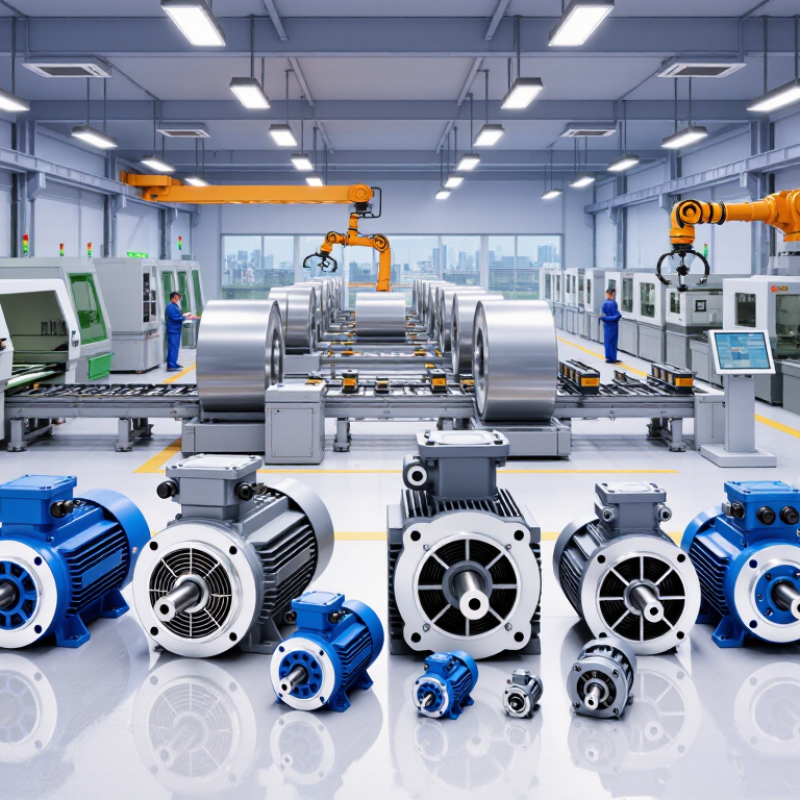
A complete motor manufacturer manages more than final assembly. Its work often begins with selecting a motor type, defining operating speed, torque, voltage, and duty cycle. Engineers may review a customer’s equipment drawings and check how much space the motor can occupy. Small details count. A shaft that is slightly too long can complicate installation. The team then develops or adapts the design, choosing materials such as copper windings, steel laminations, and suitable insulation.
Production covers machining, winding, assembly, and quality checks. Technicians can inspect shaft dimensions, measure electrical resistance, and run motors under load. Noise, vibration, temperature rise, and efficiency are useful indicators, not just numbers on a report. A complete supplier may also coordinate components, packaging, delivery, and technical support after installation. That broader responsibility can reduce handoff problems between separate vendors. Still, “complete” does not mean every design fits every application. Requirements change, and early assumptions can be wrong. A careful manufacturer asks for real operating conditions and revisits the design when test results reveal a mismatch. That takes time. It is worth doing.
What Are the Top 10 Complete Motor Manufacturers in China? - What Does a Complete Motor Manufacturer Do?
Scope: This capability-based overview explains the main functions of a complete motor manufacturer. It is not a ranking of individual companies; actual capabilities vary by factory, motor type, and model.
| No. | Capability Area | Typical Work Performed | Common Outputs or Checks | Why It Matters |
|---|---|---|---|---|
| 1 | Motor design and engineering | Define the motor’s electrical and mechanical design for its intended load, speed, supply, duty, and operating environment. | Drawings, design calculations, material specifications, and prototype plans. | Aligns motor performance and construction with the application. |
| 2 | Core and lamination production | Stamp or otherwise produce electrical-steel laminations and stack them to form stator and rotor cores. | Lamination dimensions, stack length, core condition, and assembly checks. | Core quality affects magnetic performance, losses, and noise. |
| 3 | Stator winding and insulation | Insert or form conductors in stator slots, connect winding ends, and apply insulation and impregnation processes appropriate to the design. | Winding connection checks, insulation resistance, and dielectric tests. | Supports reliable electrical operation and insulation life. |
| 4 | Rotor and shaft manufacturing | Produce or assemble rotor components and shafts; induction-motor designs commonly use squirrel-cage rotors. | Dimensional inspection, rotor balance, and runout checks. | Accurate rotor construction helps control vibration and operating performance. |
| 5 | Casting and metalworking | Where the design requires it, cast conductive rotor bars and end rings, or machine housings, shafts, end shields, and other metal parts. | Visual and dimensional inspections; checks for casting or machining defects. | Consistent component quality supports fit, strength, and heat management. |
| 6 | Mechanical assembly | Fit the stator, rotor, bearings, housing, end shields, cooling components, and terminal box into a complete motor. | Assembly records, clearances, bearing fit, and rotation checks. | Brings separately manufactured components together into a working unit. |
| 7 | Performance and routine testing | Test completed motors according to the applicable product specification and agreed inspection plan. | Depending on the motor and plan: winding resistance, no-load operation, vibration, noise, and electrical safety checks. | Helps verify that finished units meet specified requirements before release. |
| 8 | Efficiency and standards compliance | Design and verify motors against applicable efficiency requirements and product standards for the relevant market and motor category. | Efficiency data and documentation; IEC 60034 is a widely used series of rotating electrical machine standards. | Supports comparable performance information and market compliance. |
| 9 | Configuration and customization | Offer suitable combinations of power, voltage, frequency, mounting arrangement, enclosure, cooling method, and accessories where available. | Approved configuration, nameplate details, and order-specific documentation. | Helps match the motor to the driven equipment and installation conditions. |
| 10 | Quality control and customer support | Manage incoming-material checks, production inspections, traceability, packaging, technical documentation, and after-sales assistance. | Inspection records, test reports, operating instructions, and service guidance. | Provides process oversight and support beyond motor assembly. |

We have over 30 years of experience in designing complete hydraulic systems, repairs and distribution of fluid power equipment and parts.
FOLLOW US ON :
Contact Details
Address:
4020 SE 45th CT.
Ocala, FL 34480
Phone No:
Email:
sales@cunninghamfluidpower.com