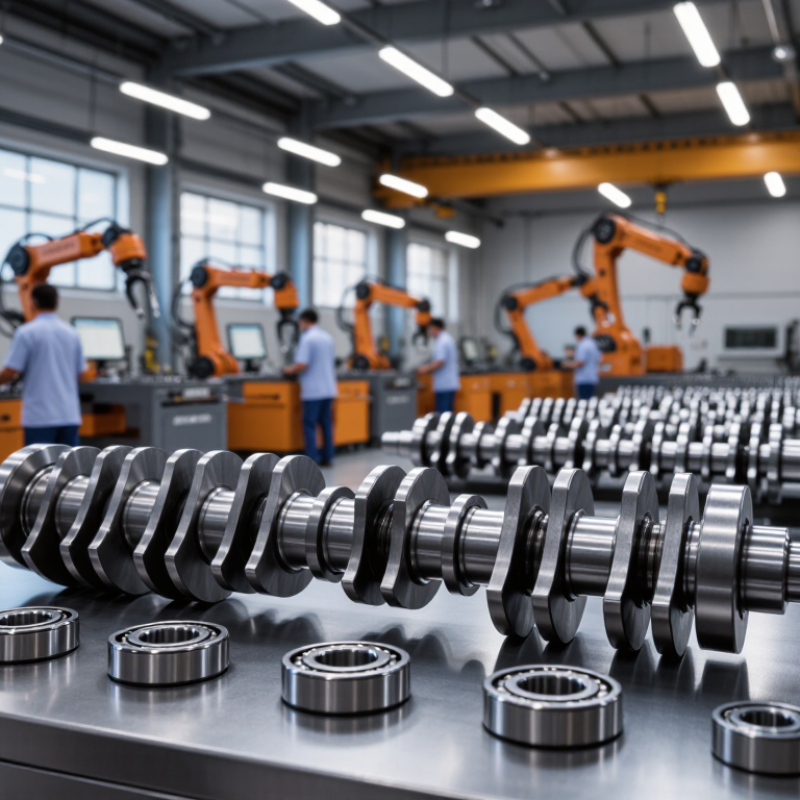
China’s crankshaft bearing sector deserves closer examination as engine production, aftermarket demand, and export capability continue to develop. According to the China Association of Automobile Manufacturers (CAAM), China produced approximately 31.28 million vehicles in 2024. New-energy vehicles represented about 12.89 million units. Internal-combustion engines still serve millions of passenger cars, commercial vehicles, agricultural machines, and industrial engines. That installed base sustains demand for reliable Crankshaft Bearing products.
This guide evaluates ten Chinese manufacturers through practical purchasing criteria. These include material composition, overlay technology, dimensional control, fatigue resistance, oil-groove design, and batch consistency. Supplier experience matters. A bearing that appears precise on a clean sample may perform differently after thousands of operating hours. Factory audits, inspection records, and traceable test results therefore deserve equal attention. Reports from the China Bearing Industry Association and automotive market analyses by Grand View Research indicate strong competition across China’s bearing supply chain, although crankshaft-bearing figures are rarely separated in public statistics. That limitation should be acknowledged.
No ranking is absolute. Applications vary. A heavy-duty diesel engine needs different load capacity and clearance control than a compact gasoline engine. Buyers should also review IATF 16949 certification, ISO 9001 systems, metallurgical testing, warranty procedures, and export support. The selected companies are considered from a manufacturing and sourcing perspective, not through unverified advertising claims. Some information may change as factories expand, merge, or update product lines. Careful verification remains essential. Evidence matters more than polished catalogs.
Crankshaft bearings support the crankshaft while allowing smooth rotation inside the engine block. They maintain a thin oil film between the journal and bearing surface. This film reduces friction, absorbs vibration, and carries heat toward the engine oil. Small clearance matters. Too little clearance can cause seizure, while too much can reduce oil pressure.
Common types include bi-metal aluminum-tin bearings, copper-lead bearings, and tri-metal designs with a thin overlay layer. Each material balances strength, wear resistance, and conformability differently. During inspection, technicians check bearing thickness, surface finish, oil grooves, locating tabs, and crush height. A dull contact pattern may reveal poor alignment. It should not be ignored.
Reliable production normally uses controlled dimensional tolerances and checks related to ISO plain-bearing practices, material hardness, fatigue resistance, and oil compatibility. Testing may include load cycling, temperature exposure, and contamination resistance. In real engine service, clean assembly is equally important. One small metal chip can damage a polished journal. A strong datasheet is useful, but it cannot replace measured clearance and traceable inspection records. Some specifications also look excellent on paper, yet fail when lubrication changes or installation pressure is uneven. That gap deserves careful review.
China’s crankshaft bearing manufacturing landscape has grown from basic machining toward tightly controlled engine-component production. Manufacturers now combine steel or copper-based alloys, precision casting, and computer-guided machining. Many facilities inspect bore diameter, wall thickness, surface roughness, and oil-groove accuracy at several production stages. Small errors matter.
The strongest producers usually support passenger vehicles, commercial engines, agricultural machinery, and industrial power systems. Their capabilities often include fatigue testing, hardness checks, coating evaluation, and full batch traceability. A reliable supplier should provide material certificates, dimensional reports, process records, and sample testing before volume production. Factory audits also reveal practical details, such as tool maintenance, operator training, and storage conditions. These details are easy to overlook.
China’s leading manufacturers compete through flexible tooling, shorter development cycles, and increasingly automated inspection. Some can produce prototypes quickly, while others focus on stable mass production and export documentation. However, capacity alone does not prove technical strength. In my experience, communication during tolerance changes often exposes the real difference between suppliers. A polished presentation is not enough. Data must support it. The industry still faces uneven quality control, inconsistent subcontracting, and pressure to reduce costs. That reality deserves attention. Buyers should compare test methods, not only prices or catalog ranges. A supplier that clearly explains failure analysis may be more dependable than one offering the largest product list. Each application also requires separate review, because bearing loads, lubrication conditions, crankshaft materials, and operating temperatures can vary sharply.
Typical engineering dimensions of automotive crankshaft bearing components
The chart presents representative dimensional ranges commonly used in automotive crankshaft bearing construction. Steel backing and the bearing alloy provide the primary structural support, while the nickel barrier and overlay are much thinner functional layers used to improve bonding, corrosion resistance, and conformability. Actual specifications vary by engine design, load rating, material system, and production standard.
China’s top 10 crankshaft bearing manufacturers are best compared by specialty, not publicity. China produced 30.16 million vehicles in 2023, according to the China Association of Automobile Manufacturers. That scale supports deep bearing expertise, but production volume alone proves little.
The first group focuses on passenger-car bearings, using aluminum-tin alloys and computer-controlled thickness checks. Several suppliers specialize in heavy-duty diesel engines, where thicker shells and stronger backing resist high combustion loads. Others serve agricultural machinery with impact-resistant materials and simpler field replacement.
Four additional manufacturers concentrate on precision forging, polymer coatings, hybrid powertrain bearings, and export-oriented aftermarket parts. Their laboratories commonly inspect roundness, surface roughness, fatigue resistance, and oil-groove accuracy. Small details matter.
Industry data from Grand View Research places the global engine bearing market on a steady growth path through the decade, driven by vehicle production and replacement demand. Chinese suppliers also benefit from mature casting, stamping, and machining networks. In practical audits, buyers should request load-test records, batch traceability, dimensional reports, and failure analysis samples. ISO 9001 certification helps, but it is not enough. A certificate cannot reveal poor storage or inconsistent alloy control. The ranking remains partly subjective. Some smaller factories may outperform larger exporters in one engine class, while public data rarely exposes warranty returns or long-term fatigue results. That gap deserves attention.
Choosing among China’s top crankshaft bearing manufacturers requires more than reading a ranking. Compare engineering evidence, not attractive product pages. Request drawings, material certificates, hardness results, and dimensional tolerances. A dependable supplier should explain bearing alloy, surface treatment, oil clearance, and fatigue performance clearly. Ask whether production follows a documented quality system. Factory experience matters.
01 Order samples before discussing large volumes. Measure wall thickness, groove position, and journal fit with calibrated tools. Check the inspection report against your own measurements. Ask for traceability from raw material to final packing. Delivery records also matter. A low price can become expensive after repeated fitting problems.
Tips: Prepare one comparison sheet. Record tooling costs, minimum order quantity, lead time, warranty terms, and response speed. Request samples from several suppliers and test them under similar conditions. During a factory audit, inspect cleanliness, storage, testing equipment, and rejected-part control. My early mistake was trusting certificates without checking their dates and scope. That lesson still matters. A supplier may communicate well yet lack stable process control. Leave room for doubt, and verify every critical claim before approval.
Crankshaft bearings serve in passenger cars, heavy trucks, agricultural engines, generators, and marine power systems. Each application demands a different balance of load capacity, heat resistance, and oil control. A high-speed gasoline engine may need precise clearance and strong fatigue resistance. A diesel engine often requires thicker bearing walls and improved protection against shock loads. Fit matters more than a generic specification.
Quality checks should begin with material certificates and batch traceability. Inspectors can verify bearing width, diameter, oil-hole position, and surface roughness with calibrated tools. Microscopic scratches matter. Hardness testing helps confirm proper backing and lining performance. Trial assembly should measure crankshaft journal clearance with approved gauges, not visual judgment alone. A clean surface is essential, because one metal particle can damage a freshly rebuilt engine. Visual inspection remains useful, but it cannot reveal every bonding defect. That limitation deserves attention.
Purchasers should provide engine codes, journal sizes, operating conditions, and expected service hours. Ask for dimensional reports, fatigue-test data, coating details, and replacement procedures. Confirm packaging protects parts from moisture and deformation during transport. Compare warranty terms, delivery stability, technical support, and total operating cost. The lowest quotation may hide inconsistent batches or difficult claims. A practical supplier should answer technical questions clearly and accept reasonable inspection requirements. Even experienced buyers can overlook clearance changes after crankshaft grinding. Rechecking the final measurement is a small step, but it can prevent expensive downtime.
| No. | Anonymous Manufacturer Profile | Typical Bearing Products | Common Applications | Typical Material Structure | Common Size Capability | Recommended Quality Checks | Relevant Standards and Tests | Key Purchasing Considerations |
|---|---|---|---|---|---|---|---|---|
| 1 | Profile A High-volume automotive line | Thin-wall main bearings, connecting-rod bearings, thrust washers, and flanged bearings. | Passenger-car gasoline engines, compact diesel engines, and light commercial vehicles. | Steel backing with sintered copper-based intermediate layer and soft aluminum-tin or overlay material. | Typical bore range: approximately 35–90 mm; custom wall thickness and oil-hole layouts available. | Check wall thickness, crush height, oil-hole position, parting-line accuracy, surface roughness, and overlay adhesion. | Dimensional inspection, hardness testing, metallographic examination, coating-thickness measurement, and fatigue testing. | Confirm drawing revision, engine-code compatibility, batch traceability, sample approval, and validation on the target crankshaft. |
| 2 | Profile B Commercial diesel specialist | Main bearings, rod bearings, camshaft bearings, and thrust components for heavy-duty engines. | Trucks, buses, construction equipment, agricultural machinery, and stationary diesel generators. | Steel-backed tri-metal construction using copper-lead alloy, nickel barrier, and lead-free or aluminum-based overlay options. | Typical bore range: approximately 50–140 mm; suitable for high-load and high-cylinder-pressure engines. | Verify embedability, fatigue resistance, bonding strength, eccentricity, edge relief, and resistance to cavitation. | Load-cycle testing, corrosion testing, dimensional CMM inspection, hardness testing, and oil-groove verification. | Prioritize load rating, oil compatibility, operating temperature, warranty terms, and availability of replacement batches. |
| 3 | Profile C Aftermarket range provider | Replacement main and rod bearing sets, thrust washers, and oversize repair bearings. | Vehicle repair, engine remanufacturing, agricultural engines, and older commercial power units. | Aluminum-based or copper-based bearing alloys on steel backing, with standard and oversize options. | Common repair sizes include standard, 0.25 mm, 0.50 mm, and 0.75 mm oversize, subject to engine design. | Check size coding, pair matching, oversize identification, oil-hole alignment, packaging integrity, and lot consistency. | Micrometer measurement, profile inspection, material verification, visual inspection, and sample fitment testing. | Require a complete cross-reference list, clear size markings, low mixed-part risk, and documented return procedures. |
| 4 | Profile D Industrial engine supplier | Plain journal bearings, thrust bearings, bushings, and custom split-shell bearing assemblies. | Generators, compressors, pumps, marine auxiliaries, and industrial power systems. | Steel-backed aluminum-tin or copper-lead materials; optional corrosion-resistant overlay for contaminated oil conditions. | Typical journal diameter range: approximately 40–180 mm; custom length-to-diameter ratios available. | Inspect roundness, concentricity, wall distribution, oil-groove geometry, surface finish, and thermal stability. | Coordinate measurement, roughness testing, ultrasonic or dye-penetrant checks where applicable, and endurance testing. | Evaluate service life, operating-clearance recommendations, installation support, spare-part continuity, and technical documentation. |
| 5 | Profile E Performance-engine producer | High-load main bearings, rod bearings, coated bearings, and race-oriented thrust washers. | Motorsport-derived engines, turbocharged passenger vehicles, upgraded street engines, and racing applications. | High-strength tri-metal construction with optional polymer or dry-film overlay for improved scuff resistance. | Usually available for standard and performance engine families; custom clearances may be specified by application. | Check fatigue strength, seizure resistance, overlay uniformity, oil-clearance control, and crankshaft compatibility. | Engine dynamometer testing, load-cycle testing, surface roughness measurement, and metallographic analysis. | Define target oil viscosity, bearing clearance, crankshaft hardness, intended duty cycle, and break-in procedure before ordering. |
| 6 | Profile F Lead-free material line | Lead-free aluminum-tin bearings, main bearings, rod bearings, and thrust washers. | Modern passenger vehicles, low-emission diesel engines, hybrid powertrains, and applications requiring restricted substances. | Steel backing with aluminum-tin or aluminum-silicon bearing layer and optional surface treatment. | Typical bore range: approximately 30–110 mm, depending on engine platform and bearing load. | Verify chemical composition, overlay thickness, fatigue performance, cavitation resistance, and environmental compliance. | Material composition analysis, coating measurement, hardness testing, fatigue testing, and restricted-substance documentation. | Request material declarations, compliance statements, process-change notification terms, and compatibility data for modern lubricants. |
| 7 | Profile G Small-batch custom manufacturer | Prototype bearing shells, low-volume custom bearings, repair-size components, and special oil-groove designs. | Prototype engines, specialty machinery, restoration projects, and low-volume industrial equipment. | Material selected according to load, speed, lubrication method, and shaft material; steel-backed designs are common. | Custom diameter, length, wall thickness, locating lug, oil-hole, and groove configurations. | Review drawing tolerances, first-article dimensions, material certificates, fitment samples, and process capability. | First Article Inspection, CMM measurement, roughness testing, hardness testing, and documented visual inspection. | Allow for tooling or setup charges, define acceptance criteria in writing, and approve a first article before volume production. |
| 8 | Profile H Export-oriented supplier | Engine bearing kits, individually packed bearing shells, thrust washers, and mixed application programs. | International aftermarket distribution, remanufacturing networks, fleet maintenance, and repair workshops. | Aluminum-based and copper-based bearing systems with application-specific overlays and protective packaging. | Broad catalog coverage, generally from small automotive journals to medium-duty commercial-engine sizes. | Check packaging labels, barcode accuracy, corrosion protection, size identification, batch records, and shipment inspection. | Pre-shipment inspection, sampling plans based on ISO 2859-1, dimensional checks, and packaging drop testing where required. | Confirm export documentation, multilingual labels, carton quantities, incoterms, lead time, and after-sales response capability. |
| 9 | Profile I Heavy-machinery bearing line | Large-diameter main bearings, connecting-rod bearings, thrust plates, and replaceable bushings. | Mining equipment, marine propulsion, earthmoving machinery, large generators, and industrial diesel engines. | High-load copper-based alloys, steel backing, and overlays selected for shock loading and extended operating periods. | Typical journal diameter range: approximately 80–220 mm; larger sizes require project-specific engineering. | Inspect load-bearing area, edge relief, oil-feed geometry, dimensional stability, bond integrity, and thermal distortion. | Load simulation, metallographic analysis, ultrasonic inspection where suitable, hardness testing, and endurance validation. | Assess engineering support, installation tooling, field-service availability, spare-part planning, and total life-cycle cost. |
| 10 | Profile J Integrated quality-system plant | Automotive and industrial plain bearings with controlled stamping, machining, plating, and inspection processes. | OEM development programs, tiered supply chains, vehicle service parts, and general industrial engines. | Steel-backed aluminum-tin or copper-based bearing materials with application-specific surface treatments. | Standard production sizes plus engineered variants based on approved drawings and production feasibility. | Audit incoming material control, process capability, gauge calibration, traceability, change control, and final inspection records. | Quality-system audit, process-flow review, control-plan verification, FMEA review, capability studies, and validation testing. | Compare tooling ownership, annual-volume assumptions, payment terms, change-notification policy, and supplier-audit access. |

| Purchasing note: The profiles above are anonymized market categories rather than verified company rankings. Actual suitability must be confirmed against the engine drawing, crankshaft journal dimensions, required oil clearance, operating load, lubricant specification, material requirements, and supplier quality records. Typical material structures, dimensions, and tests vary by application and should be validated through samples and technical documentation before purchase. | ||||||||

We have over 30 years of experience in designing complete hydraulic systems, repairs and distribution of fluid power equipment and parts.
FOLLOW US ON :
Address:
4020 SE 45th CT.
Ocala, FL 34480
Phone No:
Email:
sales@cunninghamfluidpower.com