

In 2026, 304 Stainless Steel Cups come in more styles than a simple drinking tumbler. Shoppers can choose insulated travel cups, lightweight camping mugs, handled everyday cups, and smaller options for children. Each design serves a different routine. A double-wall cup may keep a drink warm longer, while a single-wall cup is often lighter and easier to pack. Details matter.
This guide compares the main types by their shape, insulation, lid, capacity, and intended use. It also explains what “304 stainless steel” tells you—and what it does not. The grade is commonly used for food-contact products, but it cannot guarantee that every cup is well made. Welds, coatings, lids, cleaning instructions, and clear product information deserve attention too. Not every cup.
A glossy finish can look sturdy under store lights, yet still feel awkward in a car’s cup holder. A broad camping mug may be comfortable at a campsite but bulky in a work bag. These practical trade-offs are easy to miss in product photos. The comparisons ahead focus on real use, not just appearance or marketing claims. They offer a useful starting point, though personal needs differ. Check the manufacturer’s care guidance and product specifications before choosing a cup for daily use.
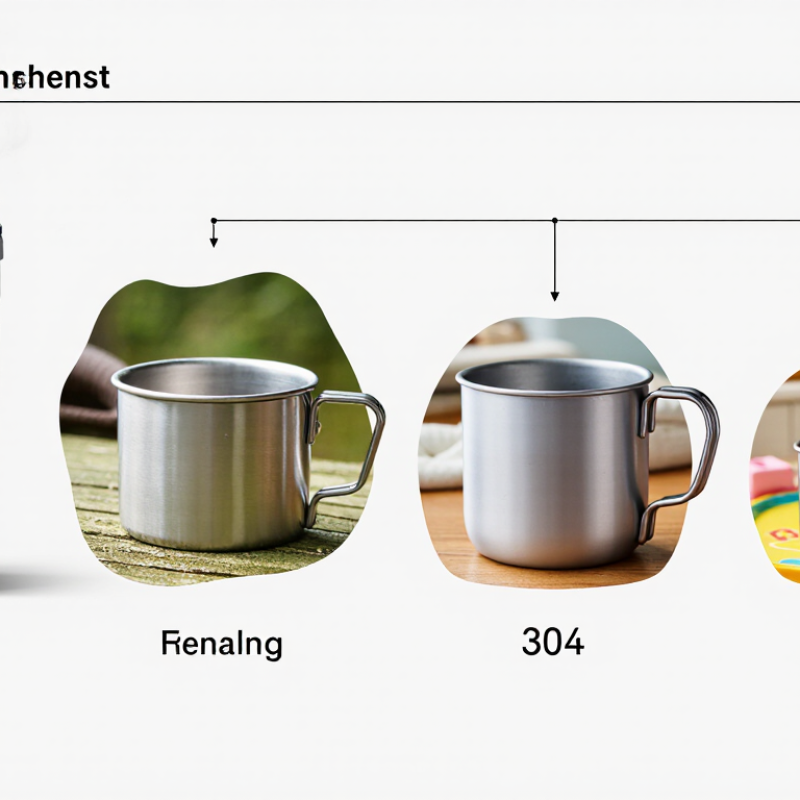
What Are the Top Types of 304 Stainless Steel Cups in 2026?
Single-wall cups are light and easy to pack, while double-wall cups reduce heat transfer to the hand. Travel tumblers often add lids and narrower shapes for cup holders. Whatever the design, check the steel grade rather than relying on appearance. Type 304 usually contains 18–20% chromium and 8–10.5% nickel. ASTM A240/A240M specifies these ranges for Type 304 flat-rolled stainless steel; the Nickel Institute’s Type 304 technical data also describes this familiar chromium-nickel composition. A cup made from sheet may use this material, but a product description alone does not verify its grade.
Chromium helps form a thin protective surface layer when exposed to oxygen. That is useful around water and everyday food contact, but it does not make a cup immune to staining or damage. Salt residue, harsh cleaners, and scratches can still affect its surface. I once assumed every “304” label meant the same level of traceability. It doesn’t. Ask whether the seller can provide material documentation, especially for large orders.
Tips: For a practical check, inspect the rim, seams, and interior finish under bright light. Rinse away salty drinks and dry the cup before storing it. A smooth surface helps, but it is not proof of composition.

Single-wall 304 stainless steel cups suit people who want a light, simple vessel for daily drinks. Their single layer keeps weight down and makes them easy to carry from the kitchen to a desk or picnic table. No bulky insulation. A cup can feel comfortable in the hand, even when a heavier travel tumbler feels awkward.
The trade-off is temperature transfer. Pour in hot tea, and the outer wall may warm quickly; iced water can leave condensation on a wooden table. These cups do not keep drinks hot or cold for long. That is not a defect, but it matters when choosing one. Check that the rim feels smooth and the interior has no rough seams that could trap residue. Rinse after acidic drinks, then wash with mild detergent and dry fully if water spots bother you. 304 stainless steel resists corrosion in ordinary use, but it is not immune to damage or neglect. I once assumed a metal cup needed little care. That was a bit too optimistic. Cleaning habits still count.
Double-wall vacuum tumblers are defined less by “304” alone than by the space between their walls. The inner and outer shells create an evacuated gap that limits heat transfer through air. That gap matters. But it is not magic: heat can still travel through the rim, base, and other metal connections. A narrow, well-sealed neck and consistent wall spacing can help reduce these thermal bridges. In daily use, this may mean a drink stays hot longer, even when the outside feels cool.
Euro Inox’s technical report, Stainless Steel: Tables of Technical Properties, lists 304 stainless steel’s thermal conductivity at about 15 W/m·K at room temperature. That figure describes the steel, not a finished tumbler’s performance. Construction details matter more than the number alone. A reflective inner surface can limit radiant heat transfer, while a poor seal can compromise the vacuum. Look for clear specifications on vacuum insulation and lid fit, rather than relying only on “double wall” wording. One limitation is easy to miss: cups may look identical, yet differ at the rim and base, where heat escapes. Performance claims also need test conditions to be meaningful. I would not treat a single-hour rating as a guarantee for every drink or room temperature.
What Are the Top Types of 304 Stainless Steel Cups in 2026? — Double-Wall Vacuum Tumblers: Insulation Depends on Wall Construction
| Cup Type | Wall Construction | Insulation Performance | Typical Advantages | Considerations | Best Suited For |
|---|---|---|---|---|---|
| Single-wall tumbler | One layer of 304 stainless steel; no sealed insulating cavity. | Little insulation. The drink temperature transfers readily through the steel. | Lightweight, simple construction, and generally easy to clean. | The exterior can become hot or cold to the touch; condensation may form with cold drinks. | Short-term serving and everyday use when temperature retention is not important. |
| Double-wall, non-vacuum tumbler | Two steel walls with an air space between them; the space is not evacuated. | Usually better than a single wall, but typically less effective than a vacuum-insulated design. | Provides a more comfortable exterior and some separation from the drink’s temperature. | Performance depends on the gap, materials, lid, and overall design; it should not be assumed to match a vacuum tumbler. | Casual use where moderate temperature buffering is sufficient. |
| Double-wall vacuum tumbler | Two walls enclose an evacuated space that reduces heat transfer through conduction and convection. | Generally strong temperature retention when the vacuum seal and lid design are effective. | Helps keep drinks hot or cold while the exterior remains more comfortable to hold. | Actual performance varies with wall design, lid fit, fill level, and use; the lid can be a significant path for heat loss. | Travel, commuting, and keeping drinks at temperature for longer periods. |
| Vacuum tumbler with a copper-coated layer | Double-wall vacuum construction with a thin reflective copper layer on a surface within the wall assembly. | The vacuum limits conduction and convection; the reflective layer can reduce radiant heat transfer. | Adds a design measure intended to improve thermal efficiency without changing the basic vacuum principle. | A copper layer does not replace the vacuum space, and its presence alone does not establish a specific retention time. | Users comparing enhanced vacuum-wall designs, subject to verified product testing. |
| Vacuum tumbler with a coated interior | Double-wall vacuum body with a food-contact coating applied to the inside surface. | Insulation comes primarily from the vacuum wall construction, not the interior coating. | The coating may change the drinking surface or make certain stains easier to remove, depending on its material and care instructions. | Coating durability and cleaning requirements vary; follow the product’s care guidance and avoid abrasive cleaning if advised. | Users who prefer a coated drinking surface while retaining vacuum-insulated construction. |
Note: “304 stainless steel” describes the steel grade, not the cup’s insulation performance. Temperature-retention results depend on the complete construction, lid, and test conditions; compare products using clearly stated, independently verifiable testing where available.
For a 304 stainless steel travel mug, the lid often matters as much as the cup body. A screw lid with a small sip opening helps limit splashes during a commute. A flip-top is quicker to open, but its hinge and seal need regular cleaning. Test the closure with cold water before carrying it in a bag. A snug fit is not a leak-proof guarantee.
Straw cups suit frequent, hands-free sipping. Their wide openings are convenient for ice, while the straw can make thick drinks easier to sip. But the straw, stopper, and gasket create extra cleaning points. Small detail. Check whether these parts detach without tools. Grand View Research estimated the global reusable water bottle market at USD 9.67 billion in 2023. That figure signals broad demand, not a proven preference for any particular lid style.
The International Stainless Steel Forum reported 58.4 million tonnes of stainless steel production in 2023. This industry scale does not verify the grade or construction of an individual cup. Look for clear 304 material specifications, smooth interior seams, and replaceable seals. I would not choose by lid appearance alone; a polished flip-top can be fiddly after a week of daily washing. Travel mugs prioritize controlled sipping and spill resistance, while straw cups prioritize easy access. The better fit depends on where and how you drink.
304 stainless steel cups come in simple single-wall forms, insulated double-wall cups, and lidded travel tumblers. Each suits a different routine. A single-wall cup is light and easy to clean, but hot drinks can make its sides uncomfortable to hold. Double-wall designs help reduce heat transfer and condensation, though their seams and lids deserve close inspection.
Check the stated steel grade, not just a polished finish. An “18/8” description commonly refers to chromium and nickel content associated with 304, but it is not a substitute for product-specific documentation. A magnet test is not proof; forming can affect how stainless steel responds to a magnet. Not proof. Match capacity to use: a compact cup fits a desk or small bag, while a larger tumbler may be awkward in a car holder. Ask for material details covering the cup and any lid, gasket, or coating. Read the fine print. Food-contact claims should be supported by relevant test reports or supplier documentation for the finished product. I would not choose by shine alone; it looks reassuring, but appearance tells you little about what touches your drink.
Representative capacity examples for popular cup formats—not market averages or fixed standards.
Capacities vary by product. When choosing a cup, check the stated capacity and look for documentation identifying the steel grade as 304 and supporting any food-contact claims; the grade alone does not verify a finished product’s compliance.

We have over 30 years of experience in designing complete hydraulic systems, repairs and distribution of fluid power equipment and parts.
FOLLOW US ON :
Address:
4020 SE 45th CT.
Ocala, FL 34480
Phone No:
Email:
sales@cunninghamfluidpower.com