

Top Bow Type Laying Up Machine Manufacturers for Global Buyers

Choosing a Bow Type Laying Up Machine is a production decision, not just a search for the lowest quoted price. These machines bring multiple wires or conductors together through a rotating bow, with tension control and take-up settings affecting the finished cable. Small differences matter. A line that runs smoothly with one conductor range may need adjustments for another.

For global buyers, manufacturer comparisons should focus on verifiable details: supported wire sizes, line speed, bow configuration, control-system options, and available service support. Ask suppliers for drawings, technical data, and references from installations with similar materials and output requirements. If possible, review a sample run or arrange a factory acceptance test. A polished brochure can still leave important questions unanswered.

This guide introduces manufacturers serving international markets and the practical points buyers can use to assess their fit. It considers machine capability alongside commissioning, spare-parts access, operator training, and communication after delivery. These factors can influence uptime as much as the equipment itself. Yet supplier claims are not always easy to compare. Specifications may use different test conditions, and a quoted maximum speed may not match steady production. Buyers should confirm assumptions in writing and check what is included in the offer. There is no universal best choice. The right machine depends on the cable design, plant layout, production targets, and the support a supplier can reliably provide.
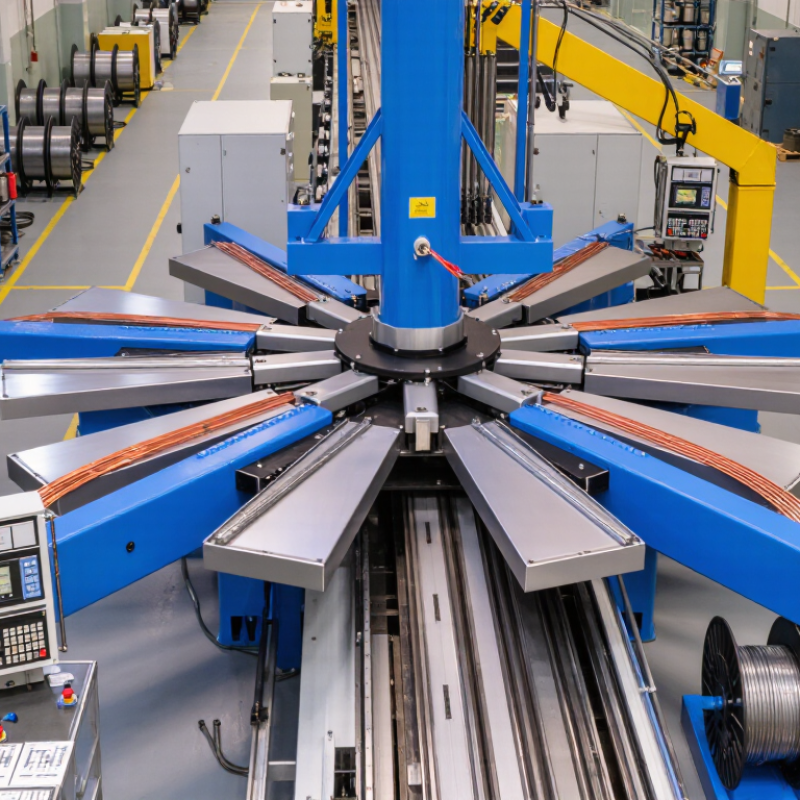
Top Bow Type Laying Up Machine Manufacturers for Global Buyers

What Is a Bow Type Laying Up Machine?

A bow type laying up machine combines several insulated wire cores into a cable assembly. Its rotating bow carries the cores around a central axis, while the machine controls their lay length and tension. The result is a consistent arrangement that can proceed to sheathing or another production stage. It is not simply a fast twisting device. Core size, material, and cable structure all affect the setup.

Operators typically adjust line speed, bow speed, and payoff tension to match the required lay pitch. For example, uneven tension may leave one core loose while another sits tightly against the bundle. A sample run helps reveal this before a full production shift. Even experienced teams can overlook small variations between wire reels; the setup is not always as repeatable as it looks. Machine capacity and tooling should also suit the intended core count and diameter.

Tips: Check core alignment and tension before increasing speed. Measure the lay pitch on a finished sample, not just from the control panel. Keep a record of settings, but verify them when materials change.

How Bow Type Laying Up Machines Work

How Bow Type Laying Up Machines Work

A bow-type laying-up machine combines several insulated wires or cable cores into one stable assembly. Each core unwinds from a separate pay-off reel and passes through guides toward a central gathering point. A rotating bow carries the cores around a central element, creating a consistent spiral lay. The assembled cable then moves through a capstan and onto a take-up reel.

The bow’s rotation and the cable’s forward speed determine the lay length. Operators adjust these settings to suit the cable design, while tension controls help prevent loose strands, stretching, or insulation damage. Sensors and alignment checks can reveal problems, but they do not replace careful setup. A small tension mismatch may still produce uneven winding. It takes observation.

Tips: Check reel alignment and brake tension before a run. Watch the first few meters for crossed cores, gaps, or a changing lay pattern. Record settings that work for each configuration. Core stiffness and reel condition can affect results, so a previous setup may need adjustment.

Key Applications Across the Cable Industry

Bow-type laying-up machines help cable makers combine insulated cores into stable, multi-core constructions. They are commonly used for power, control, and instrumentation cables, where consistent core positioning supports orderly downstream processes. In a production hall, operators may feed colored cores through guides, add fillers, and set the required lay length before the cable reaches sheathing.

The applications vary with cable design. Flexible cables need careful tension control to reduce stress on insulation during laying up. Larger power-cable constructions may require robust handling of heavier cores and fillers. A stable lay can help maintain roundness, but it cannot correct poor conductor quality or damaged insulation. One detail is easy to overlook: a setup that runs smoothly with one core combination may need adjustment for another. There is no universal recipe.

Tips: Check core tension, guide alignment, and lay length during setup. Review the finished cable for gaps, uneven lay, or visible insulation marks. Keep simple records of successful settings; they save time, though real production conditions still vary.

Top Bow Type Laying Up Machine Manufacturers for Global Buyers - Key Applications Across the Cable Industry

Cable Application Typical Cable Construction Relevant Laying-Up Operation Useful Machine Capabilities Buyer Considerations
Control and instrumentation cables Insulated conductors assembled into multiple cores or pairs, often with fillers and an overall sheath. Twists and lays insulated cores into a compact cable core while maintaining the specified lay length. Adjustable lay settings, stable tension control, synchronized take-up, and compatibility with the required number and arrangement of cores. Confirm conductor and finished-core size ranges, core-count requirements, and whether the cable design requires screening or taping on a separate process.
Low-voltage power cables Several insulated cores assembled around a central axis; fillers may be used to improve core roundness before subsequent processing. Groups and lays the insulated cores to form a cable core for downstream taping, armouring, or sheathing. Suitable rotating bow configuration, controlled payoff tension, core-forming options, and a take-up arrangement matched to the product. Check the permitted core diameter, conductor construction, production speed requirements, and compatibility with downstream equipment.
Flexible power and control cables Multiple insulated conductors assembled into a flexible core, with construction determined by the intended service and applicable cable specification. Assembles conductors with controlled tension and lay to support consistent cable geometry. Responsive tension control, repeatable lay adjustment, and handling suitable for the conductor and insulation materials being processed. Assess the required flexibility, conductor stranding, line layout, and process limits; the laying-up machine does not by itself determine finished-cable flexibility.
Instrumentation and signal cables Insulated cores or pairs laid into a cable core, sometimes combined with screening or wrapping operations elsewhere in the production line. Maintains the specified core or pair arrangement during assembly. Consistent rotational control, stable payoff, and repeatable settings for different cable constructions. Specify whether pairs must remain identifiable and whether screening, separator tape, or other operations are required in separate equipment.
Multicore industrial cables Multiple insulated cores laid together, with optional fillers or other components depending on the design. Combines the required number of cores into a uniform cable core. Configuration options for core count, adjustable lay length, reliable tension management, and suitable core-guiding components. Provide the core arrangement, insulation dimensions, target finished-core size, and expected product changeover frequency when evaluating a machine.
Armoured cable cores Insulated cores laid into a cable core that may subsequently receive bedding and metallic armour on separate production equipment. Prepares a stable, uniformly laid core for downstream bedding and armouring processes. Consistent core geometry, controlled tension, and coordination with the line’s downstream handling and take-up requirements. Confirm the boundary between laying-up and armouring operations, as armour application is generally a separate process.

Note: Bow-type laying-up machine configurations, achievable speeds, product ranges, and optional features vary by machine design and cable specification. Buyers should verify technical limits and applicable standards directly with prospective suppliers.

Leading Manufacturers and Global Market Regions

Leading Manufacturers and Global Market Regions

Leading bow type laying up machine manufacturers are not defined by output speed alone. Buyers should compare fabric-width range, bow correction accuracy, roller design, and control-system clarity. A sample trial can reveal more than a polished specification sheet. Watch how the machine handles a fabric roll with slight edge curl, and check whether operators can adjust settings without repeated stops. Small details matter.

Regional needs differ. In China and other Asian manufacturing centers, buyers may prioritize production capacity, local technical support, and integration with existing textile lines. European and North American facilities often examine process documentation, energy use, safety features, and service response times closely. These are tendencies, not fixed rules; individual factories have different constraints. Fast delivery is useful, but spare-part availability matters more after installation.

For markets with varied fabrics or limited floor space, ask manufacturers for verified operating ranges and layout drawings before ordering. Confirm which materials were tested, how bow correction is measured, and whether remote troubleshooting is available. Request clear training plans, too. A machine can look impressive in a showroom. Production conditions are less tidy, and buyers should allow time for adjustments during commissioning.

Global Market Context for Bow-Type Laying-Up Machines

GDP of selected economies across major buyer regions, 2023 (current US$ trillions)

These figures provide broad economic context for global industrial-equipment buyers; they are not bow-type laying-up machine sales, market shares, or a manufacturer ranking. Values are rounded. Source: World Bank, GDP (current US$), indicator NY.GDP.MKTP.CD.

How Global Buyers Can Evaluate Suppliers

Top Bow Type Laying Up Machine Manufacturers for Global Buyers

How Global Buyers Can Evaluate Suppliers

When comparing bow type laying up machine suppliers, check how their equipment handles your actual yarn, package size, and target production speed. Ask for working ranges, not just a maximum speed on a brochure. Confirm the usable laying width, bow configuration, tension adjustment, and compatibility with your existing take-up equipment. Small details matter. A difficult threading path or slow package change can interrupt a shift. Request a live or recorded trial using material similar to yours, and ask how operators adjust tension when the package diameter changes.

Supplier evaluation should include service capability as well as machine specifications. Ask for a sample maintenance schedule, recommended wear parts, training details, and realistic response times for remote support. Request references from installations with comparable materials and production demands. During a factory acceptance test, record speed, tension stability, noise, and changeover time instead of relying on general assurances. Run your own material. A polished demonstration may not reveal awkward routine adjustments. Still, no checklist is perfect; production conditions vary, and a promising trial cannot guarantee identical results on every shift. Compare written test records with the supplier’s stated operating limits before making a decision.

Share by: