

China’s Chlf Pump market includes manufacturers and suppliers serving water treatment, building services, light industry, and equipment distribution. A CHLF Pump is commonly presented as a horizontal multistage centrifugal pump, but product details can differ between brands. Buyers should verify the actual construction, operating limits, and certification for each model. A familiar model name does not guarantee identical performance.
Energy use makes careful selection important. The U.S. Department of Energy’s Improving Pumping System Performance: A Sourcebook for Industry reports that pumping systems account for nearly 20% of global electricity demand. The report is a useful industry reference, though it dates from 2006 and should not be treated as a current market forecast. For a specific purchase, compare flow rate, head, motor rating, wetted materials, and efficiency data against the real duty point. Small details matter. A stainless-steel housing, for example, does not by itself establish suitability for a particular fluid or operating environment.
This guide introduces China’s CHLF pump manufacturers and suppliers, with attention to product range, factory capability, quality controls, export experience, and after-sales support. Ask for test records, component specifications, and clear warranty terms—not just a polished catalog. Supplier claims still need checking. That step can take time, and published information is sometimes incomplete. A balanced comparison helps buyers distinguish a capable manufacturer from a reseller and identify questions that deserve follow-up before placing an order.
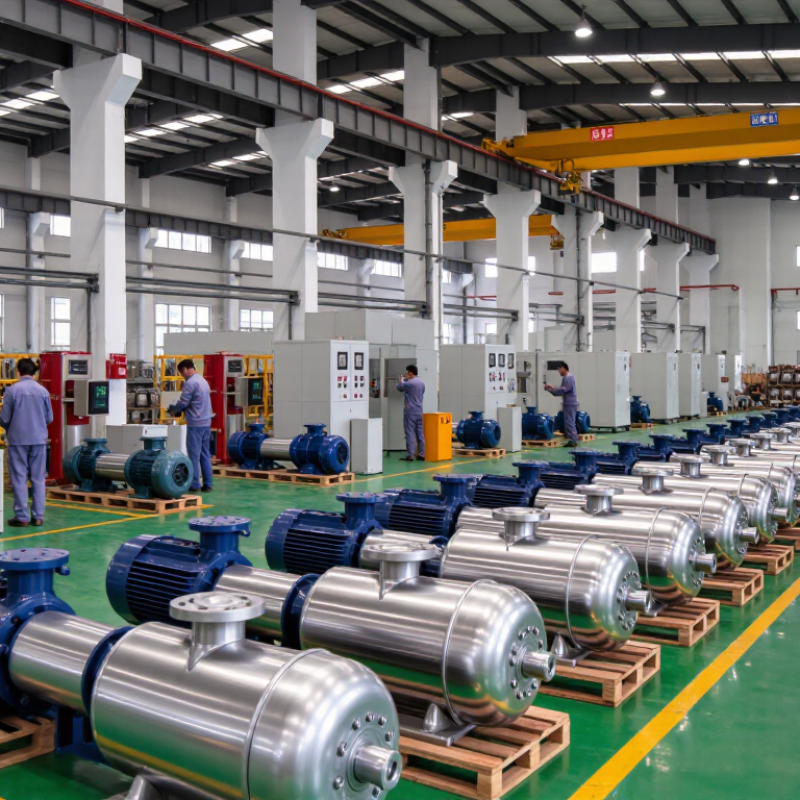
A CHLF pump commonly refers to a horizontal, multistage centrifugal pump used for clean water and circulation. Water enters the pump and meets a rotating impeller, which increases its velocity. The casing then converts much of that motion into pressure. More impellers add pressure in successive stages. The exact CHLF designation is not universal, so check the pump’s nameplate and performance curve. That label can mislead.
At start-up, the pump must be filled and vented as specified by its manufacturer; trapped air can interrupt delivery. Match the selected flow and head to the piping system, not just the outlet size. The U.S. Department of Energy’s Improving Pumping System Performance: A Sourcebook for Industry reports that pumping systems account for nearly 20% of global electricity use. That figure covers pumping systems broadly, not CHLF pumps alone, but it shows why correct sizing matters. A pump running far from its best-efficiency point may waste energy and wear faster.
Tips: Check water temperature, suction conditions, and the duty point before installation. Listen for unusual rattling after start-up. A quiet pump is not proof of correct sizing.

CHLF pumps are commonly used where clean water needs steady pressure and a moderate flow rate. In apartment buildings, they can support domestic water supply on upper floors, especially when incoming pressure varies during busy morning hours. They are also found in small commercial buildings, where they feed wash stations, boilers, or cooling circuits. The exact duty depends on the pump model and system layout.
In workshops, these pumps may circulate water through light industrial equipment or supply rinse and cleaning lines. Greenhouses and small farms can use them for irrigation, though suitability depends on the required flow, pipe length, and elevation. Not every site.
Water temperature, inlet conditions, and the presence of grit matter; fine debris can wear internal parts or affect performance. A technician should compare the pump curve with the real operating conditions, rather than relying on the connection size alone. That step is easy to overlook.
In practice, pressure may fluctuate when several outlets open at once, so a properly sized control system can make operation more stable.
When evaluating CHLF pump manufacturers in China, start with evidence, not catalogue claims. The U.S. Department of Energy’s Improving Pumping System Performance sourcebook reports that pumping systems use nearly 20% of global electricity. That makes verified efficiency data important, even for compact multistage pumps. Request a curve showing flow, head, efficiency, and power at your duty point. Ask whether the test follows ISO 9906, and check that the certificate identifies the tested model and acceptance criteria. A polished catalogue is not proof.
Review the details that affect service life: wetted-part materials, shaft sealing, motor rating, pressure testing, and spare-parts availability. Ask for production traceability and sample inspection records. If possible, compare a factory test report with an independent test or a witnessed run. Small details matter. A supplier may provide a strong curve, yet leave uncertainty about operation near the curve’s limits; that deserves a follow-up question.
Tips: Send each supplier the same operating conditions, including liquid temperature, required flow, total head, and installation constraints. Compare like for like. Request written confirmation of the operating range, warranty terms, and delivery schedule. Keep one point in mind: paperwork can be complete while field performance still varies, so plan commissioning checks and record actual pressure and flow.
Chinese CHLF pump manufacturers and suppliers serve building services, water circulation, and light industrial applications. CHLF units are generally horizontal multistage centrifugal pumps, but configurations can differ between suppliers. Check the operating point, not just the model label. Flow rate, head, liquid temperature, and available installation space should match your system. A pump that looks suitable on paper may perform poorly if its duty point is wrong.
Tips: Ask for a performance curve, material details, and motor data. Confirm whether the quoted price includes a base, fittings, or export packaging. Small omissions matter.
When comparing Chinese suppliers, review their production capabilities, inspection procedures, and experience with similar operating conditions. Request test records for the specific pump configuration, and clarify spare-part availability and warranty terms in writing. For corrosive or hot liquids, verify wetted materials and seal options before ordering. I would not rely on a catalogue image alone; specifications can be brief, and a few details may need follow-up. A sample inspection or third-party test can add confidence when the project is critical.
Choosing a CHLF pump supplier starts with matching the pump to your actual operating conditions, not just the catalogue description. Share the required flow rate, total head, fluid temperature, installation space, and daily operating hours. If the liquid contains solids or additives, describe them clearly. Small details matter. A supplier should explain how its proposed model meets those requirements and provide a performance curve, material information, and motor data. Ask for evidence, not broad assurances.
Check how the supplier handles selection, delivery, and support after installation. Can its team review your operating point and explain limits such as minimum flow or inlet conditions? Are spare parts available, and are lead times stated in writing? Clear answers are useful; vague promises are not. Compare quotations on the same specifications, including testing, documentation, and warranty terms. Numbers matter. A low purchase price may not reflect maintenance needs or energy use over time. Still, even a detailed checklist cannot predict every site condition. Confirm the final selection with an engineer familiar with your system, and keep a record of any assumptions that remain uncertain.
Approximate water pressure-to-head conversion at 20°C. Use this relationship to compare supplier specifications stated in bar or metres of head.
How to use this chart: For water, 1 bar is approximately 10.2 metres of static head. Actual pump performance also depends on flow rate, elevation, pipe friction, and system conditions. Confirm the pump’s performance curve and operating point with the supplier.

We have over 30 years of experience in designing complete hydraulic systems, repairs and distribution of fluid power equipment and parts.
FOLLOW US ON :
Address:
4020 SE 45th CT.
Ocala, FL 34480
Phone No:
Email:
sales@cunninghamfluidpower.com