

Who Are the Top Extrusion Shapes Manufacturers in China?
China’s Extrusion Shapes manufacturers serve industries ranging from construction and transport to electronics and industrial equipment. Yet a polished catalogue reveals little about how a supplier handles tight tolerances, changing specifications, or repeat orders. Buyers need to look closer. A profile that appears simple on screen may require precise die design, stable process control, and careful finishing.
W. Edwards Deming, a quality-management expert, said, “It is not enough to do your best; you must know what to do, and then do your best.” His principle is not specific to extrusion, but it fits supplier evaluation well. Ask what alloys, dimensions, and finishes a manufacturer can reliably produce. Request drawings, inspection records, sample parts, and clear explanations of production limits. Details matter. A neat sample is useful; consistent batches matter more.
This guide examines leading Chinese manufacturers through practical buyer criteria, including technical capability, quality systems, customization, communication, and delivery reliability. It also considers the evidence behind supplier claims, rather than treating a long product list as proof of expertise. Some differences are hard to judge from a website alone. That is worth admitting. A factory visit or sample review may reveal issues that marketing materials miss. The aim is not to name one universal winner, but to help readers identify a manufacturer suited to their product, volume, and quality requirements.
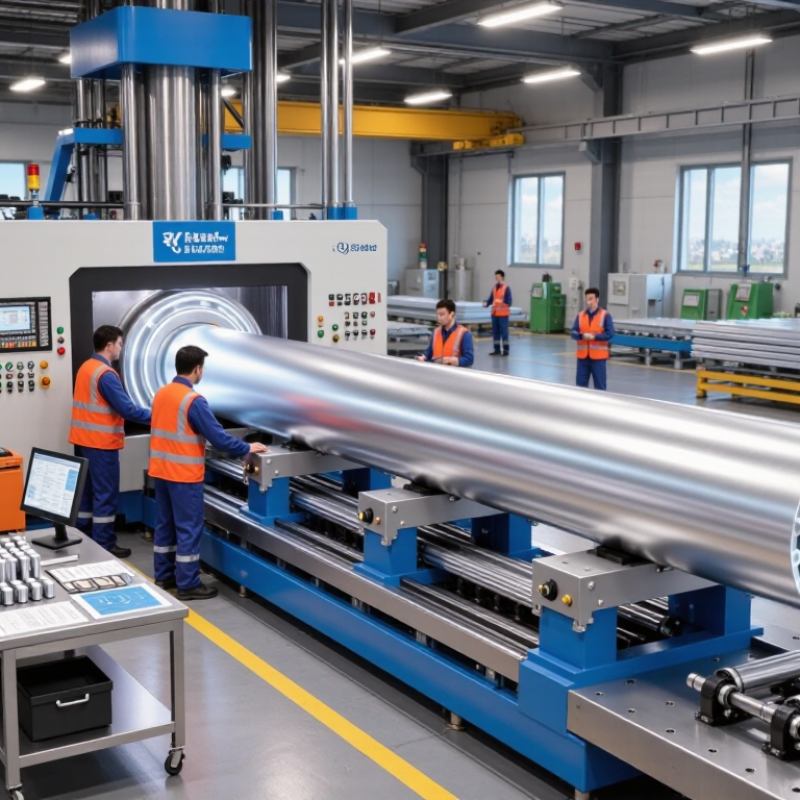
What Are Extrusion Shapes and How Are They Made?
Extrusion shapes are components formed with a continuous, consistent cross-section. They may be aluminum channels, plastic tubing, or structural profiles with ribs and slots. Their geometry comes from a shaped opening, called a die. Small changes in wall thickness can affect strength, weight, and fit.
For aluminum, a heated billet is pressed through the die by a powerful ram. The emerging profile is cooled, stretched straight, and cut to length. Depending on the alloy and intended use, it may then receive heat treatment or a surface finish. Plastic extrusion uses a different setup: a rotating screw melts and moves polymer through a die, followed by cooling and sizing. The details matter. Heat, pressure, and speed all influence dimensions and surface quality.
Manufacturers in China may offer different alloys, polymers, tooling options, and finishing services. Buyers should compare more than price: review sample dimensions, tolerances, material records, and how the factory checks each production run. A clean sample is useful, but it does not prove every batch will match. Ask how die wear is monitored and how defects are recorded. The process is not perfectly tidy; even a well-set line may need adjustments when material or order size changes.
Who Are the Top Extrusion Shapes Manufacturers in China? - What Are Extrusion Shapes and How Are They Made?
Extrusion shapes are long profiles made by forcing heated or unheated material through a shaped opening in a die. The table below summarizes common profile types, materials, production methods, applications, and practical criteria for evaluating manufacturers in China. It does not rank or identify individual companies.
| Profile or topic | Typical material | How it is made | Common applications | Useful supplier checks |
|---|---|---|---|---|
| Solid profiles Bars, rods, and flat strips | Aluminum alloys such as 6061 or 6063 | A billet is pushed through a die opening to create a continuous cross-section, then cooled, cut, and often heat-treated. | Frames, supports, rails, and general structural components | Confirm alloy and temper, dimensional tolerances, straightness requirements, and inspection records. |
| Hollow profiles Tubes and multi-chamber sections | Commonly aluminum alloys including 6063 and 6061 | A specialized die forms an enclosed or partly enclosed cross-section. Die design and process control affect wall thickness and internal features. | Window and door systems, enclosures, heat sinks, and equipment frames | Ask how wall thickness, seam quality where applicable, and cross-section dimensions are checked. |
| Custom profiles Application-specific cross-sections | Selected to meet strength, corrosion, weight, and finishing requirements | The customer drawing is reviewed, a die is designed and made, and sample profiles are produced for dimensional and functional checks. | Transport, construction, machinery, electronics, and renewable-energy equipment | Review drawing capability, die ownership terms, sample approval process, and change-control procedures. |
| Aluminum extrusion process | Aluminum billet | Typical stages include billet preparation, heating when required, pressing through a die, cooling, stretching or straightening, cutting, and optional heat treatment or surface finishing. | Produces consistent, continuous profiles in a wide range of cross-sections | Check process controls, traceability between material batches and orders, and the availability of requested finishing steps. |
| Material and temper selection | 6063 is commonly selected for architectural profiles and surface finishing; 6061 is often used where higher strength is needed. Suitability depends on the design and specification. | Alloy is selected before extrusion; temper and any heat treatment are specified to achieve required properties. | Applications vary with mechanical, corrosion-resistance, and appearance requirements. | Request the exact alloy and temper designation and verify them against the applicable product specification. |
| Manufacturer evaluation | Depends on the project specification | Assess the full order route, from material sourcing and die design through extrusion, finishing, inspection, and packing. | Helps match production capability to the part’s intended use and delivery requirements. | Compare documented quality controls, relevant certifications, sample results, production capacity, lead-time commitments, and export documentation. |

We have over 30 years of experience in designing complete hydraulic systems, repairs and distribution of fluid power equipment and parts.
FOLLOW US ON :
Contact Details
Address:
4020 SE 45th CT.
Ocala, FL 34480
Phone No:
Email:
sales@cunninghamfluidpower.com