
2026 Top Forklift Crane Manufacturers for Global Buyers

Choosing the right Forklift Crane manufacturer can determine whether a warehouse gains productive capacity or inherits expensive operational problems. This 2026 guide examines leading global suppliers through practical criteria, including rated lifting capacity, mast visibility, attachment compatibility, battery performance, operator ergonomics, service coverage, and replacement-part availability. A polished brochure is not enough. Buyers should inspect load charts, welding quality, hydraulic response, braking distance, and documented maintenance records. Real performance appears under pressure.

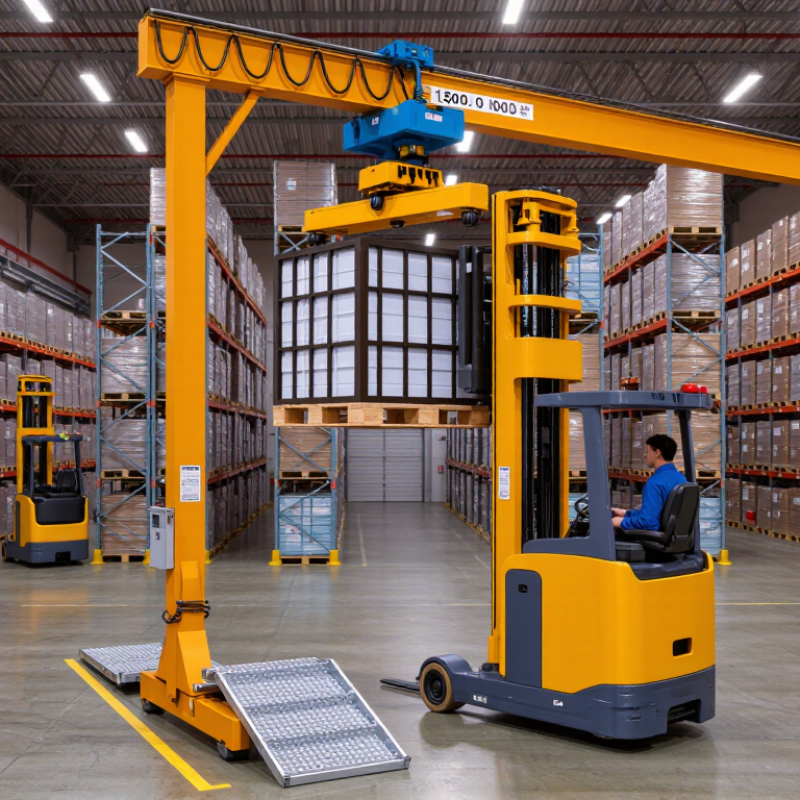
David G. Blanchard, a respected supply-chain writer and industry analyst, has said, “The supply chain is only as strong as its weakest link.” That warning applies directly to Forklift Crane purchasing. A powerful machine may still fail as a business investment when technicians are unavailable or parts require months to arrive. Small details matter. Consider a cold warehouse at dawn, a narrow aisle, and a 1,500-kilogram load suspended above uneven flooring. Stability, visibility, and controlled movement become measurable safety factors, not marketing language.

This overview compares manufacturers serving construction, logistics, ports, agriculture, and industrial facilities. It considers global reputation, certification practices, customization capability, after-sales support, and total ownership cost. However, no ranking is permanently correct. Market conditions change. Some manufacturers provide excellent machines but inconsistent regional support. Others offer modest specifications with remarkably dependable service. That difference deserves closer review. Buyers should also validate local compliance requirements and operator-training obligations before signing contracts. A careful decision may take longer, but rushed procurement often creates hidden costs, avoidable downtime, and difficult lessons.
2026 Top Forklift Crane Manufacturers for Global Buyers

What Is a Forklift Crane and How Does It Work?

A forklift crane is a forklift equipped with a jib, hook, or telescopic boom.

It converts vertical lifting power into controlled horizontal reach. The attachment connects to the carriage, while the truck’s hydraulic system raises and tilts it. The operator positions the hook above the load, checks balance, and lifts slowly.

The term is not perfectly standardized. Some suppliers describe a fixed jib; others mean a telescopic boom attachment. That difference matters.

OSHA estimates that forklifts cause about 85 workplace deaths and 34,900 serious injuries annually. OSHA Standard 29 CFR 1910.178 requires trained operators, stable loads, and clear capacity information. The rated capacity changes when the load moves farther from the truck’s load center. Small mistakes become large forces.

Before selecting equipment, buyers should compare boom length, attachment weight, hook capacity, load-center rating, and ground conditions. ISO 3691-1 also emphasizes stability, visibility, and operating controls for industrial trucks.

A practical check is simple: place the load on a scale, measure its center of gravity, and inspect the floor beneath the wheels. Do not trust appearance alone. A compact steel crate may weigh more than expected. Real sites are rarely as tidy as manuals suggest.

Key Types of Forklift Cranes for Different Industrial Applications

Key Types of Forklift Cranes for Different Industrial Applications

Forklift cranes combine lifting mobility with limited crane-like handling. Their best design depends on load shape, ground conditions, and working height. Counterbalance forklifts suit warehouses, factories, and loading bays. They handle pallets, steel coils, and boxed machinery without outriggers. Reach trucks work better in narrow aisles and tall racking systems. Their extended mast can improve storage density, but uneven floors reduce stability.

Rough-terrain forklifts serve construction sites, farms, and outdoor yards. Large pneumatic tires cross gravel and compact soil more effectively. Telescopic handlers provide forward reach for bricks, trusses, and elevated platforms. Side loaders are useful for long materials, including pipes and timber. Fork-mounted crane attachments can lift suspended loads, yet they change the machine’s center of gravity. Operators must check rated capacity at the actual reach, not only the nameplate maximum.

Allied Market Research estimated the global forklift market at about 58.4 billion dollars in 2021. Its report projected roughly 91.5 billion dollars by 2031. That growth reflects warehouse expansion, construction demand, and material-handling upgrades. However, market growth does not make every model suitable. ISO 3691-1 guidance and local workplace rules remain important references. I would also test visibility, turning clearance, attachment locking, and emergency stopping before purchase. A polished specification sheet can still hide practical weaknesses.

How to Evaluate Forklift Crane Manufacturers in 2026

How to Evaluate Forklift Crane Manufacturers in 2026

Choosing a forklift crane manufacturer requires more than comparing prices. Start with verified lifting data, including rated capacity, load center, mast height, and stability limits. Ask for test records, inspection procedures, and clearly written operating manuals. A reliable manufacturer should explain how its equipment performs on uneven floors, in narrow aisles, and during repeated lifting cycles.

Visit the production facility if possible. Observe welding quality, hydraulic hose protection, battery access, and final inspection practices. Speak with current users about breakdown response and spare-parts delivery. A supplier may promise fast support, but response times should appear in a written service agreement. Check training options, technician qualifications, warranty coverage, and the availability of replacement components in your region. Certification matters, but it does not replace practical evidence.

Tips: Request a sample load chart and calculate your heaviest real task. Compare total ownership costs, not only the purchase price. Review three years of maintenance records when available. Ask how software updates, safety notices, and design changes are communicated. Do not accept vague answers. A polished brochure can still hide weak after-sales support. No checklist is perfect. Your operating conditions may expose risks that factory demonstrations miss, especially with frequent side loading or cold storage work. Use an independent engineer for critical applications, and record every answer before signing a contract.

2026 Top Forklift Crane Manufacturers for Global Buyers - How to Evaluate Forklift Crane Manufacturers in 2026

Global buyer evaluation scorecard for forklift-mounted crane systems, crane attachments, and related lifting equipment. The scoring model totals 100 points.

Evaluation Dimension Weight Recommended 2026 Benchmark Verification Evidence Scoring Guidance Priority
Rated Load Capacity and Load Chart 20% The manufacturer should provide a complete load chart showing rated capacity by boom length, boom angle, load center, attachment position, and forklift configuration. The working load limit must be clearly marked. Stamped or signed load charts, engineering calculations, product nameplate, capacity test records, and compatibility confirmation for the specific forklift model. 5 points: complete, configuration-specific chart with third-party or witnessed testing. 3 points: partial chart requiring clarification. 0 points: capacity stated without supporting calculations. Critical
Safety Design and Stability Control 25% The system should address forward tipping, lateral stability, boom deflection, unintentional release, hydraulic failure, visibility, pinch points, and overload risks. Safety instructions must be available in the buyer’s operating language. Risk assessment, safety manual, stability calculations, emergency-lowering procedure, locking-device details, guard design, operator training materials, and inspection checklist. 5 points: documented risk controls and validated safety tests. 3 points: basic controls with limited validation. 0 points: no formal risk assessment or operating instructions. Critical
Regulatory and Standards Compliance 15% The product documentation should identify applicable requirements in the destination market, including industrial-truck, lifting-attachment, machinery, workplace-safety, and import requirements. Declaration of conformity where applicable, technical file index, test reports, traceable material certificates, applicable ISO/EN/ASME references, and country-specific compliance statement. 5 points: destination-market compliance package is complete. 3 points: general certificates supplied but local applicability is unclear. 0 points: unsupported compliance claims. Critical
Forklift Compatibility 10% Compatibility should be confirmed for rated capacity, load center, fork dimensions, carriage class, hydraulic connections, mast limitations, overhead clearance, and attachment locking method. Compatibility matrix, dimensional drawings, fork-pocket specifications, carriage-class requirements, hydraulic flow and pressure limits, and installation instructions. 5 points: written approval for the exact forklift configuration. 3 points: general compatibility only. 0 points: buyer must determine compatibility without engineering support. Critical
Manufacturing Quality and Traceability 10% Critical load-bearing components should have documented material, welding, dimensional, and final inspection controls. Serial-number traceability should continue through production and after-sales service. Quality-management certification, welding qualification records, incoming-material inspection, non-destructive testing where required, final inspection report, and serial-number system. 5 points: controlled and traceable production system. 3 points: basic inspection records. 0 points: no verifiable quality documentation. Critical
Engineering Customization Capability 8% The supplier should be able to adapt the design to local forklift specifications, lifting points, working envelope, ambient conditions, corrosion exposure, and duty cycle without reducing rated safety margins. Approved drawings, design-change procedure, finite-element or structural calculations where relevant, prototype test plan, and documented engineering review. 5 points: controlled engineering process with validation testing. 3 points: dimensional customization only. 0 points: undocumented modifications. High
Durability and Environmental Suitability 5% The equipment should be specified for its actual temperature range, humidity, dust, corrosion exposure, impact risk, outdoor use, and expected lifting cycles. Coating and lubrication requirements should be defined. Environmental ratings, coating specification, corrosion-protection details, maintenance intervals, fatigue or cycle-test information, and replacement-part recommendations. 5 points: duty-cycle and environmental limits are tested and documented. 3 points: general outdoor-use claim. 0 points: no operating limits supplied. High
Warranty and After-Sales Support 4% The supplier should publish warranty duration, exclusions, response times, spare-parts availability, service escalation, inspection support, and training responsibilities before purchase. Written warranty terms, service-level agreement, spare-parts list, troubleshooting guide, training plan, and regional service contact structure. 5 points: clear international support process and stocked critical parts. 3 points: standard warranty with limited regional support. 0 points: informal or undefined support. High
Delivery, Documentation, and Export Readiness 3% The order package should include technical drawings, manuals, certificates, packing information, customs documents, spare-parts identification, and a realistic production and shipping schedule. Document index, commercial invoice template, packing list, export classification information, shipping schedule, packaging specification, and installation manual. 5 points: complete export documentation and controlled delivery milestones. 3 points: basic shipping documents only. 0 points: unclear lead time or incomplete paperwork. Standard

Leading Forklift Crane Manufacturers for Global Buyers

For global buyers, leading forklift crane manufacturers are judged by more than lifting capacity. Their designs must suit warehouse aisles, construction yards, ports, and uneven outdoor surfaces. Experienced suppliers publish load charts for each boom position, not one attractive maximum. They also explain mast stability, attachment limits, and braking performance in practical language. Small details matter. A clear nameplate helps.

Reliable manufacturers support the full buying cycle. They discuss local voltage, climate, tire choice, operator visibility, and spare-parts access before issuing a quotation. During factory evaluation, buyers should inspect weld quality, hydraulic hose routing, emergency controls, and test records. Ask for serialised inspection documents and operator manuals in the working language. Independent verification remains useful, because polished photographs cannot reveal poor maintenance access. I have seen specifications change after one direct question.

The strongest exporters understand regional compliance without treating paperwork as decoration. They provide traceable components, risk assessments, training material, and service contacts across time zones. Their engineers can adapt fork dimensions or crane reach after reviewing the real load center. That conversation often exposes hidden costs. Yet no manufacturer is perfect; delivery promises may slip, and after-sales response can weaken during peak seasons. Buyers should record these uncertainties in the contract and test a sample unit before scaling the order.

Global Purchasing, Safety, Certification, and After-Sales Considerations

2026 Top Forklift Crane Manufacturers for Global Buyers

Global Purchasing, Safety, Certification, and After-Sales Considerations

Buying a forklift crane across borders requires more than comparing prices. Verify lifting capacity, load center, mast height, turning radius, and power requirements against your actual warehouse conditions. A polished catalog is not proof. Request factory inspection records, load-test videos, material certificates, and recent customer references. Check whether the supplier understands your local import rules, electrical standards, and operator-training requirements. Certification should match the destination market, not merely the exporting country. Depending on the region, buyers may need conformity documents, risk assessments, inspection reports, or quality-system evidence such as ISO 9001.

Safety details deserve direct questions. Ask about overload protection, emergency stopping, visibility, braking, stability testing, and guarding around moving parts. Request the operating manual in the user’s language. During evaluation, measure noise, control response, and floor performance when possible. Small omissions can become expensive failures. I have seen buyers focus on maximum height while overlooking battery charging space and aisle width. That mistake is surprisingly common.

Tips: Put warranty coverage, spare-part availability, response times, and remote support into the contract. Confirm who pays for damaged components during shipping. Keep critical parts locally when downtime affects production. Ask for technician training and scheduled maintenance guidance. A low purchase price may feel attractive, but weak after-sales support can quietly erase the saving. Recheck every assumption before payment.

Share by: