Who Are the Top Hose Crane Manufacturers in China?
Choosing among China’s top Hose Crane manufacturers requires more than comparing catalog photographs or quoted prices. Buyers should examine rated capacity, working radius, boom configuration, corrosion protection, control systems, and documented testing. A crane handling a loaded hose beside a vessel faces changing loads, spray, vibration, and limited deck space. Small design details matter.
The supplied material does not identify a verifiable Hose Crane expert or provide a sourced quotation. I will not invent a person or attribute an unsupported statement. A practical evaluation principle is: “Judge the crane by its verified performance, not its brochure.” This is an editorial observation, not a quotation from a named expert. Before publication, add a named specialist’s quote only after confirming its wording and source.
This outline will compare manufacturers through evidence readers can check: product specifications, relevant project experience, engineering support, quality documentation, customization options, and after-sales service. It will also distinguish manufacturers from resellers where available information permits. Ask for load charts, inspection records, and clear service terms. Look closely.
No single supplier is automatically best for every application. A compact unit suited to a harbor service vessel may not meet the needs of a larger offshore installation. Public information can also be incomplete, and marketing claims deserve verification. The comparison therefore aims to help buyers shortlist credible Chinese suppliers, identify questions for technical discussions, and assess whether each Hose Crane fits the intended operating conditions.
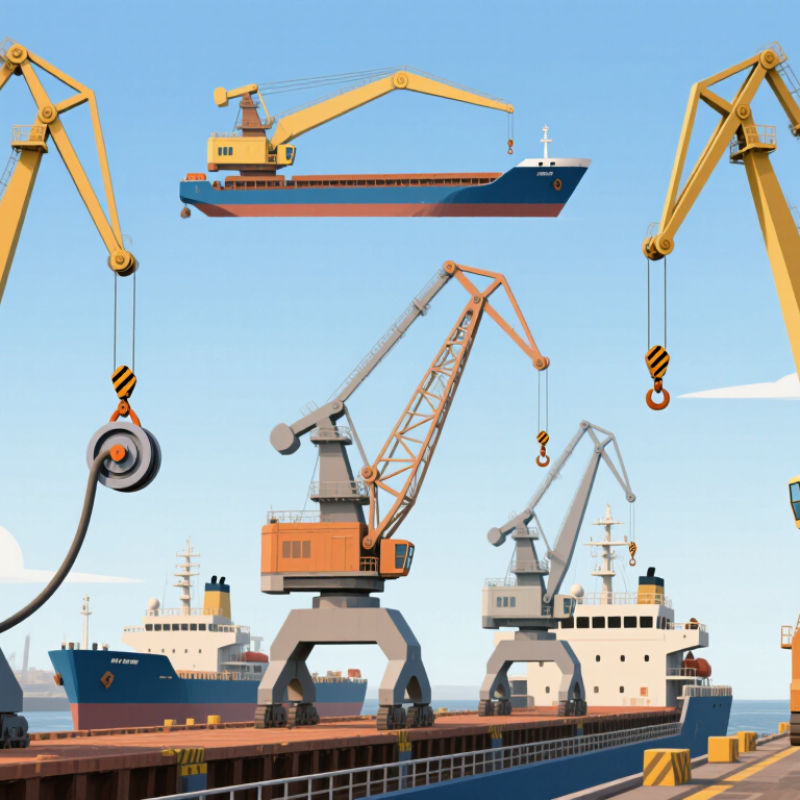
What Is a Hose Crane and Where Is It Used?
A hose crane typically refers to a crane or jib arrangement designed to support, position, or deploy a hose. It may carry a hose reel, guide a suspended line, or help an operator reach a connection point. The exact design depends on hose weight, reach, movement, and the surrounding equipment. Small movements matter.
These systems can be found at industrial plants, marine facilities, loading areas, and water-treatment sites. They help position heavy or awkward hoses for transferring water, fuel, chemicals, or other process fluids. A well-placed crane can reduce manual handling and keep the hose clear of walkways or sharp edges. Still, the hose and its contents must suit the task.
When evaluating a hose crane, check its rated capacity, working radius, mounting structure, and hose routing. Consider how the hose behaves when full, pressurized, or exposed to wind. Operators also need clear sightlines and room to move without snagging the line. A tidy installation is useful, but it does not guarantee easy operation. Real site conditions often expose details a drawing missed.
How Is China's Hose Crane Industry Structured?
China’s hose crane industry is best understood as a project supply chain, not a single group of identical factories. Upstream suppliers provide steel structures, winches, hydraulic units, bearings, and control systems. Details matter. A crane must handle hose loads while resisting salt spray and repeated movement.
Manufacturers and engineering integrators sit in the middle. Some build standard models; others adapt boom reach, lifting capacity, and controls to a terminal’s layout. They may coordinate fabrication, assembly, testing, and installation, while specialist suppliers provide key components. Buyers should check load charts, material records, and test procedures—not just rated capacity. A tidy specification can still miss real operating conditions.
Ports, shipyards, offshore facilities, and liquid-transfer terminals form the downstream market. Their requirements differ: a compact quay crane may need a short working radius, while an exposed berth can demand stronger corrosion protection and remote controls. Project quality also depends on commissioning and operator training. Industry descriptions often group suppliers too broadly; actual capability varies, and documentation deserves careful review.
How China's Hose Crane Industry Is Structured
A typical value chain links component suppliers with equipment makers, system integrators, and after-sales providers.
The bars identify common value-chain stages; their equal lengths are structural markers, not market-share figures or manufacturer rankings.
Which Chinese Manufacturers Are Recognized as Industry Leaders?
China’s recognized hose-crane manufacturers are best judged by engineering evidence, not factory size alone. Look for teams that can explain load ratings, outreach limits, corrosion protection, and hose-handling requirements in plain terms. Strong manufacturers provide project drawings, material records, inspection procedures, and test documentation. They should also show how the crane performs under realistic operating conditions, not only in a catalogue image. Details matter: weld inspection records, hydraulic component specifications, and clear maintenance intervals can reveal the depth of a supplier’s process. Small details count.
Recognition is more credible when supported by completed installations, repeat customers, and verifiable quality controls. Ask whether the manufacturer has experience with the intended vessel or terminal layout, and request references for comparable duties. A polished brochure is not proof. Even a capable supplier may have gaps in after-sales support or documentation, so check response times and spare-parts arrangements before ordering. Independent inspections can add useful assurance, but they do not replace careful review of the design and operating requirements. There is no perfect ranking; a manufacturer suited to one project may not suit another. The buyer’s review should stay specific.
How Do Leading Manufacturers Compare in Products and Capabilities?
Leading Chinese hose-crane manufacturers differ most in product range, lifting performance, and support after delivery. Some focus on truck-mounted cranes for roadside maintenance and compact urban sites. Others offer all-terrain or crawler models for heavier lifts and uneven ground. Compare rated capacity alongside working radius: a crane’s maximum tonnage is less useful if it cannot reach over a building’s roof. Check boom sections, outrigger footprint, load-moment controls, and the clarity of model-specific load charts. Small details matter.
KHL’s 2024 Yellow Table reported combined 2023 sales of US$237.6 billion for the world’s 50 largest construction-equipment manufacturers. This is a broad industry measure, not a crane-specific ranking or proof of product quality. Buyers should assess each manufacturer’s test records, component sourcing, spare-parts availability, and technician coverage in their region. Ask for lifting charts and service-response commitments in writing. Then compare them against the actual site plan, including ground conditions and access width. One limitation often gets missed: published capacity may not reflect the setup available on site. A careful comparison takes more work. It is worth it.
What Should Buyers Consider When Choosing a Hose Crane Manufacturer?
Choosing a hose crane manufacturer starts with the job, not the catalogue. Share the hose diameter, fluid weight, working radius, lift height, and expected operating cycles. Ask for a load chart that reflects the full hose load, not only the crane’s rated capacity. A long hose can swing, snag, or retain product, changing the forces on the boom. Small details matter.
The installation environment matters too. Salt spray, temperature, vibration, and limited deck space affect materials, controls, and maintenance access. UNCTAD’s Review of Maritime Transport 2024 reported that global maritime trade grew 2.4% in 2023; busy terminals and marine facilities have little room for avoidable downtime. Ask manufacturers for drawings, material specifications, test records, inspection guidance, and examples of comparable installations. Check how replacement parts and technical support are handled. A polished brochure is not proof of performance. I would also ask what assumptions sit behind each calculation; those are easy to overlook. Compare the offered design against relevant lifting-equipment standards, and have a competent engineer review the load case before purchase.