

Hosiery production depends on precise engineering, not just knitting speed. Hosiery Knitting Machines must form consistent heels, toes, ribs, and patterned sections while maintaining reliable stitch quality. On a factory floor, small differences matter: needle selection, cylinder diameter, gauge, yarn feeding, and electronic controls can affect output and reject rates. A fast machine is not always the best fit.
Industry reports offer useful context. Textile Exchange’s Materials Market Report 2024 estimates that global fiber production reached 124 million tonnes in 2023. That figure does not measure hosiery demand, but it illustrates the scale of the textile supply chain that manufacturers serve. ITMF’s International Textile Machinery Shipment Statistics provides a further reference for machinery investment, including broad circular-knitting equipment categories. Its classifications are not hosiery-specific, so buyers should avoid treating them as a direct ranking of sock-machine makers.
This guide reviews leading hosiery knitting machine manufacturers worldwide and the factors that distinguish their equipment. It considers machine range, automation, customization, technical support, and suitability for different production needs. Details vary by model and market. Buyers should verify specifications, sample quality, service coverage, and parts availability directly with suppliers. A brochure alone is not enough. Even established brands may differ in practical performance, and public data can be incomplete. That limitation deserves attention.
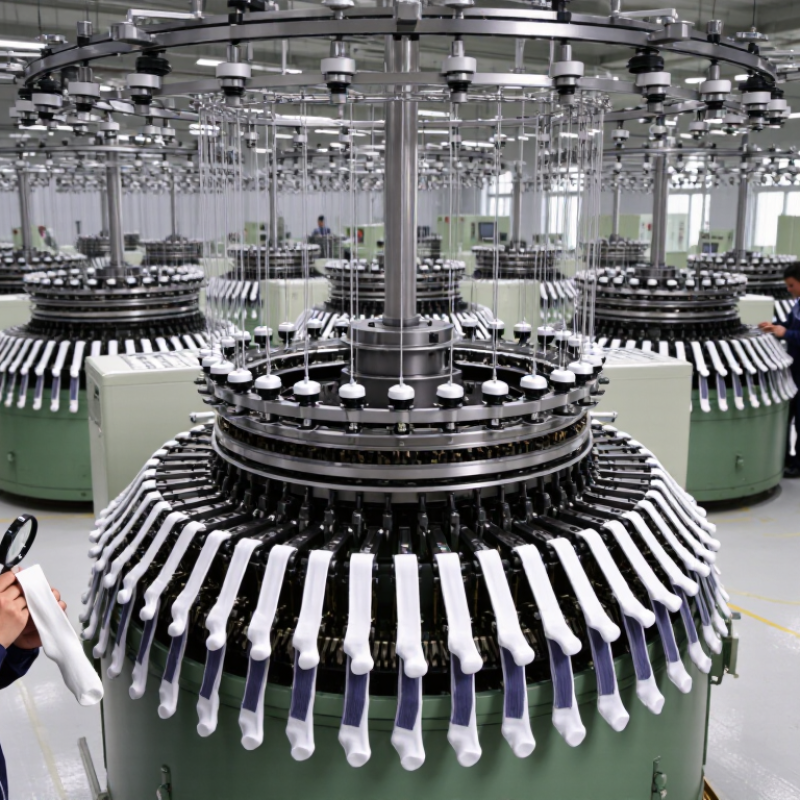
Hosiery knitting machines are often grouped by how they form fabric, but the categories can overlap. Circular machines use a needle cylinder to produce a continuous tube, making them common for socks and tights. Needle gauge, cylinder diameter, and feeder count affect fabric density, pattern options, and output. On the production floor, yarn tension and lint around the sinkers can influence stitch consistency. Small details matter. Test heel and toe shaping, not just a smooth section of the leg.
Flat knitting uses needles arranged on beds to create shaped panels or specialized components. It is less typical for standard sock production, but can suit products requiring specific shaping. Seamless systems can knit a sock with fewer sewn joins; some close the toe during knitting. This may reduce finishing steps, though programming and setup can be less forgiving. Seamless does not mean defect-proof. Check sizing, elastic recovery, toe comfort, and wash performance across several yarn lots. A sample that looks perfect on the bench may twist after washing. I would not judge a machine by speed alone; maintenance access and operator skill matter, too.

Typical construction formats differ by how the knitted fabric or garment is formed.
How to read this chart: The horizontal axis uses category codes, not measured performance: 1 = shaped panels, 2 = tubular fabric, and 3 = integrated seamless garment construction. Circular machines commonly knit tubular fabric; flat machines form fabric in flat panels; specialized seamless systems produce garments with fewer or no sewn seams. Machine capabilities vary by model and setup.
On a hosiery knitting machine, gauge, marked as E, describes the number of needles arranged per inch around the cylinder. A higher E generally means closer needle spacing and finer potential fabric. It does not guarantee a softer or better sock. Yarn size, stitch length, and machine setup matter too. Small changes show.
Cylinder diameter affects the circumference available for needles. As a rough estimate, needle count equals gauge multiplied by cylinder circumference, though machine designs and specifications can vary. For example, a larger cylinder at the same gauge usually carries more needles and can produce a wider knitted tube. More needles are not automatically better; the target sock size and construction should guide the choice.
When comparing specifications, check gauge and needle count together, then ask for a sample made with a similar yarn and stitch structure. A label such as 168 needles means little without the cylinder size and intended fabric. I would also verify how the manufacturer defines gauge, because catalog wording is not always perfectly consistent. The swatch tells the truth. Feel its thickness, stretch it gently, and inspect the stitches under steady light before settling on a machine configuration.
RPM is easy to compare, but it does not tell the whole production story. A 180-rpm machine producing one course per revolution makes 180 courses per minute. If a pair requires 1,200 courses, theoretical output is 216 pairs in 24 hours. At 85% operating efficiency, that falls to about 184 pairs. This is an example, not a universal benchmark; sock length, stitch structure, yarn changes, and machine stoppages all affect the result. Small details matter. A few minutes spent rethreading can erase the apparent advantage of a higher speed.
The ITMF International Textile Machinery Shipment Statistics 2023 reported 24,190 shipments of large circular knitting machines worldwide, down 17% from 2022. That figure indicates market activity, not hosiery-machine productivity, and should not be mistaken for a direct output comparison. When assessing manufacturers, request measured courses per minute and completed pairs per 24 hours under the same product and yarn conditions. Ask whether the daily figure includes setup, maintenance, and rejected fabric. One weakness in many comparisons is unclear testing methodology. A quoted RPM without a course count or uptime figure is incomplete. For a fair evaluation, compare production logs from a full shift, not just the machine’s fastest setting.
Worldwide hosiery knitting machine manufacturers differ in product breadth, automation, and after-sales coverage. Strong portfolios span single- and double-cylinder machines, fine-gauge models, and electronic jacquard systems. Buyers should also check whether toe-closing, boarding, and inspection equipment integrate smoothly with the knitting line. Small details matter: a poorly matched yarn feeder can mean recurring stops and uneven fabric.
Automation increasingly shapes purchasing decisions. Electronic pattern control, automatic yarn feeding, fault alerts, and stored machine recipes can reduce manual adjustments between styles. The ITMF’s 46th International Textile Machinery Shipment Statistics reported that global shipments of large circular knitting machines fell 28%, from 37,800 in 2022 to 27,200 in 2023. This category is broader than hosiery equipment, so it signals investment conditions, not hosiery-machine demand alone. That distinction matters.
Service reach deserves equal scrutiny. Ask how quickly technicians can respond, whether common spare parts are stocked regionally, and whether remote diagnostics support the installed machine. Request training details and a sample maintenance schedule, not just a service promise. Reach is uneven. A highly automated machine may still underperform if operators lack practical training or replacement parts take weeks to arrive. The best comparison weighs output, changeover time, repair access, and the factory’s actual product mix.
| Anonymous Manufacturer Profile | Typical Product Lines | Automation and Controls | Production Strengths | Service and Support Reach |
|---|---|---|---|---|
| Computerized hosiery-machine specialist | Single-cylinder sock and hosiery machines; models may be configured for different sock lengths, patterns, and yarns. | Electronic pattern selection, programmable machine settings, and automated operation; functions depend on the model. | Flexible production of patterned socks and repeat designs, with setup and output influenced by the specification and yarn. | Support may include installation, operator training, spare parts, and remote troubleshooting through regional or distributor networks. |
| High-volume sock-machine producer | Standard sock and sports-sock machines, often offered in multiple configurations for different product requirements. | Automated knitting cycles and electronic controls; some configurations support monitoring or production-data functions. | Designed for repeatable production runs. Actual throughput varies with machine setup, pattern complexity, and material. | Service is commonly delivered through a combination of factory technicians, local agents, and parts supply arrangements. |
| Fine-gauge hosiery equipment supplier | Machines for fine hosiery and lightweight products, with options determined by cylinder, needle, and product specifications. | Electronic patterning and precise stitch or feed control may be available on computerized models. | Suitable for fine fabrics and detailed designs; fabric quality depends on machine settings, yarn, and finishing processes. | Technical assistance may cover commissioning, maintenance, and process adjustments; coverage varies by sales region. |
| Technical and compression-hosiery equipment provider | Specialized hosiery configurations used for selected technical, graduated-pressure, or performance applications. | Programmable settings can support controlled knitting structures; product requirements may call for application-specific setup. | Production depends on the required fabric structure, pressure profile, material, and applicable product standards. | Application engineering and customer training may be important parts of support; service availability is supplier-dependent. |
| Small-diameter circular knitting machine maker | Small-diameter circular machines used for socks and related tubular knitted products. | Available automation ranges from mechanical or semi-electronic controls to computerized pattern and cycle management. | Offers a platform for tubular knitting; end-product range depends on machine diameter, gauge, attachments, and configuration. | Parts, maintenance guidance, and technical support are typically arranged through the manufacturer or its authorized channel. |
Note: This table presents anonymized industry profiles, not company-specific claims. Product availability, automation, output, and service coverage vary by machine model, configuration, and sales market.
When comparing hosiery knitting machines, test them with the yarns you actually plan to run. A machine suited to fine nylon may not handle covered elastane or coarser cotton equally well. Check yarn-count ranges, feeder tension, needle gauge, and changeover time. Ask for a sample run using your own yarn cones, then inspect the fabric for dropped stitches, laddering, and uneven pressure. Small flaws matter. Record accepted pairs per hour, not just the machine’s advertised speed. A fast cycle means little when frequent adjustments interrupt production.
Energy use needs a comparable measure. The International Energy Agency’s Energy Efficiency 2023 report estimates that industry accounts for about 37% of global final energy consumption, making efficiency a practical purchasing concern. For each machine, measure kilowatt-hours over a full shift and divide by saleable pairs. Include idle time, compressor demand, and rejected output where possible. Then calculate output cost per pair using yarn, labor, electricity, maintenance, and waste. The result may be less tidy than a supplier’s quotation. That is useful. Production conditions differ, so request the test duration and yarn specification behind every claimed output figure before comparing machines.

We have over 30 years of experience in designing complete hydraulic systems, repairs and distribution of fluid power equipment and parts.
FOLLOW US ON :
Address:
4020 SE 45th CT.
Ocala, FL 34480
Phone No:
Email:
sales@cunninghamfluidpower.com