
What Are the Top PVD Coating Equipment Suppliers?

Choosing among PVD Coating Equipment suppliers takes more than comparing chamber sizes or headline prices. The right system must match the part, coating material, production volume, and quality targets. A small fixture for decorative components has different needs from a line coating cutting tools all day. Details matter.

Donald M. Mattox, author of Handbook of Physical Vapor Deposition (PVD) Processing, is a recognized authority in this field. A practical paraphrase of his published work is that coating performance depends on the process, not merely the deposited material. That distinction is easy to overlook. A polished brochure cannot prove stable results.

This guide examines what separates leading suppliers: process options, chamber design, automation, technical support, and documented performance. Ask for evidence from applications similar to yours, including coating uniformity, batch consistency, and maintenance requirements. Look closely at substrate preparation and recipe control, too. These affect the finished surface.

A credible supplier should explain trade-offs plainly, rather than promise one machine for every job. Request a sample run when possible. Check what training and spare parts are available after installation. And be cautious with claims that lack test conditions or measurable results.

There is no perfect shortlist for every buyer. Even careful comparisons leave questions. Use the sections ahead to assess suppliers against your actual production needs, then verify key claims before making a decision.
What Are the Top PVD Coating Equipment Suppliers?

Understanding PVD Coating Equipment and Its Industrial Uses

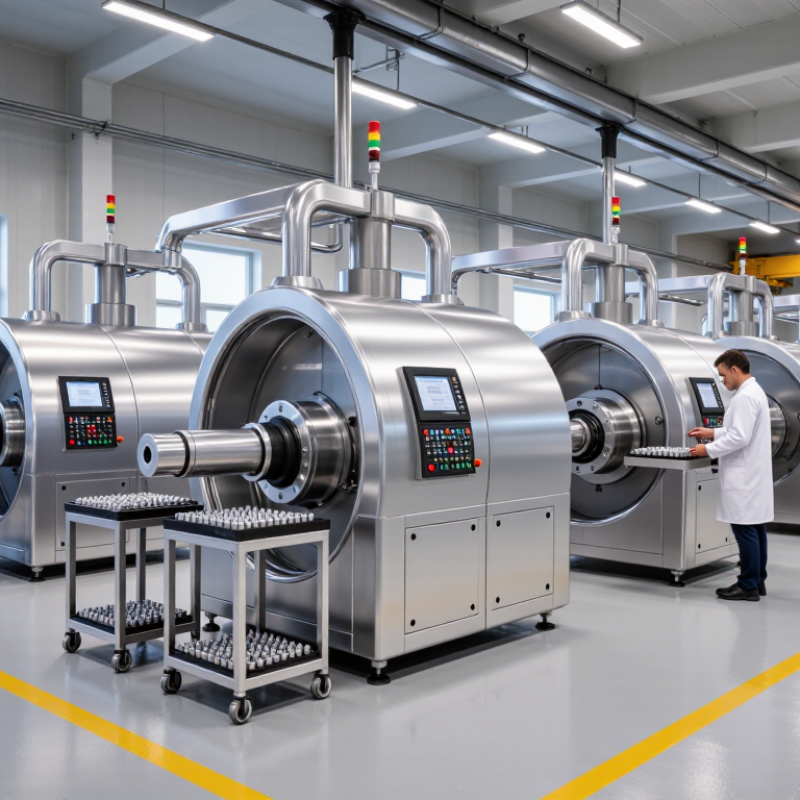
PVD coating equipment deposits thin films inside a vacuum chamber. The system may use magnetron sputtering or evaporation to turn solid material into a vapor, then condense it onto a component. Pumps remove air; fixtures rotate parts so coating reaches more surfaces. The setup is precise, but not magic. Poor cleaning can leave spots or weak adhesion.

PVD coatings serve cutting tools, automotive components, medical instruments, and electronics. A hard, low-friction film can help a drill resist wear, while a reflective layer may suit optical parts. Grand View Research estimated the global PVD market at USD 22.65 billion in 2023 and projected 6.5% annual growth from 2024 to 2030. This is a market estimate, not a count of equipment sales. It signals demand, but does not guarantee savings for every factory.

Tips: Match the process to the part material, shape, and production volume. Ask suppliers for sample coatings and adhesion tests. Check chamber size, maintenance needs, and film uniformity before choosing a system. A glossy finish alone proves little.

What Are the Top PVD Coating Equipment Suppliers? - Understanding PVD Coating Equipment and Its Industrial Uses

Supplier Profile Typical Equipment or Process Common Industrial Uses Key Selection Considerations Typical Strengths
Industrial production-system supplier Automated batch or inline vacuum coating systems, commonly configured for arc evaporation, sputtering, or both Cutting tools, automotive components, decorative hardware, and high-volume manufactured parts Chamber size, loading method, cycle time, coating uniformity, automation, and local service support Designed for repeatable production and integration with established manufacturing workflows
Tool-coating equipment specialist Arc evaporation or sputtering systems configured for hard, wear-resistant coatings Drills, milling cutters, taps, dies, and forming tools Tool-fixture design, temperature control, coating adhesion, batch capacity, and process consistency Equipment and process options tailored to the geometry and performance needs of industrial tools
Optical and precision-coating system supplier High-vacuum thermal or electron-beam evaporation and magnetron sputtering systems Optical filters, lenses, glass, display components, and precision electronic parts Film-thickness control, layer repeatability, substrate handling, contamination control, and process monitoring Suitable for controlled deposition of thin functional or optical film stacks
Research and pilot-scale equipment supplier Compact or modular sputtering, evaporation, and other configurable vacuum deposition systems Materials research, process development, university laboratories, and pilot production Configuration flexibility, available sources, chamber access, measurement options, and upgrade paths Supports experimentation and small-batch development before production-scale deployment
Large-component coating-system supplier Large-chamber vacuum systems with fixtures and handling arrangements suited to bulky or heavy parts Automotive and aerospace components, decorative panels, and industrial components Usable chamber volume, part rotation, fixture capacity, temperature limits, and loading requirements Can accommodate larger substrates or complex part loads when the chamber and fixtures are appropriately specified
Advanced sputtering-system supplier Magnetron sputtering, with some systems configured for high-power impulse magnetron sputtering (HiPIMS) Functional coatings for electronics, precision components, tools, and research applications Power-supply compatibility, target arrangement, process control, substrate requirements, and operating expertise Offers process options for depositing thin films; specific film properties depend on materials and process conditions

Note: This is a category-based comparison, not a ranked list of named companies. Actual system capabilities vary by configuration, coating materials, substrate geometry, and process requirements.

Main PVD Processes and Equipment Configurations

PVD systems use several processes, and each creates a different coating environment. Magnetron sputtering ejects material from a target using plasma. It offers steady control over film thickness and works well for many decorative and functional coatings. Evaporation heats a source until its material condenses on parts. It can deliver high deposition rates, though complex shapes may receive uneven coverage. Cathodic arc deposition produces highly ionized material and dense films, but droplets can leave small surface defects.

Equipment configuration matters as much as the process. A batch chamber suits varied parts and shorter production runs. Fixtures often rotate components to expose more surfaces, but hidden areas can still receive less coating. In-line systems move parts through successive treatment zones. They support higher throughput, yet need consistent part sizes and careful process control. Small details matter.

A practical system includes a vacuum chamber, pumps, power supplies, gas controls, and substrate fixtures. Some applications also need heating or bias control to improve adhesion and film properties. Compare usable chamber volume, loading time, coating uniformity, and maintenance access—not just maximum capacity. A larger system is not automatically better. I would also test representative parts before choosing: samples can reveal shadowing or adhesion issues that equipment specifications may not show.

Criteria for Comparing PVD Equipment Suppliers

When comparing PVD coating equipment suppliers, start with the parts you actually plan to coat. Record their dimensions, materials, batch sizes, and required coating thickness. A chamber that looks spacious in a brochure may not fit your fixtures or production schedule. Ask for usable chamber dimensions, not just external measurements. Measure twice.

Check whether the system supports your process needs, such as reactive gas control, substrate heating, and multiple coating sources. Ask how uniformity and repeatability are measured, and request sample results on parts similar to yours. A polished demonstration sample is useful, but it cannot replace documented test conditions. Small details matter. Sometimes, specifications still leave questions.

Service deserves the same scrutiny as technical performance. Find out where technicians are based, how quickly they respond, and which spare parts are stocked locally. Ask about operator training, preventive maintenance, and software updates. These details affect downtime after installation. Request a clear acceptance test before purchase, including agreed targets for coating uniformity, cycle time, and system availability.

Compare the full operating cost, not only the quoted price. Include installation, utilities, consumables, maintenance, and expected service needs. Speak with existing users whose production demands resemble yours. Their experience can reveal practical limitations that a sales meeting may miss. I would still keep some uncertainty: actual performance depends on process setup, part geometry, and operator skill.

Leading Suppliers and Their Equipment Specialties

PVD coating equipment suppliers often specialize in particular processes, production scales, or part geometries. Some design batch systems for tools, decorative components, and small precision parts. Others focus on in-line equipment that moves larger volumes through a controlled coating cycle. Magnetron sputtering systems suit applications needing uniform, carefully controlled thin films. Arc evaporation equipment is often selected when hard, wear-resistant coatings are the priority. Ion plating combines several process steps in one chamber. Details matter.

A supplier’s specialty should match the parts, not just the coating name. Ask how the chamber handles your largest component, how fixtures expose complex surfaces, and whether recipes can be repeated across production runs. Review practical features such as pump-down time, temperature control, monitoring, and maintenance access. These shape daily operation. A technical discussion should include sample parts and target film properties, rather than broad promises. Service matters, too: training, spare-part availability, and troubleshooting support can affect uptime. One limitation is easy to overlook: a system optimized for one coating or part size may not adapt neatly to another. Compare equipment around your real production needs, and verify performance through documented trials.

PVD Equipment Specialties: Typical Deposition Pressure

Different PVD systems are designed around different process environments. The chart shows representative pressure ranges during deposition—not supplier rankings or fixed equipment specifications. Actual operating conditions vary by coating, chamber design, and process recipe.

How to Match a Supplier to Production Requirements

What Are the Top PVD Coating Equipment Suppliers?

How to Match a Supplier to Production Requirements

The right PVD supplier is the one whose system fits your parts, process, and production schedule—not simply the one with the largest chamber. Define substrate size, coating materials, target thickness, allowable variation, and daily output before comparing proposals. For example, a line coating small steel components may need fast batch turnover, while large optical panels demand consistent thickness across a broad surface. Ask suppliers to test representative parts and share thickness maps, adhesion results, defect counts, and cycle times. Numbers are context.

Capacity projections can help frame investment decisions, but they are not a substitute for process trials. SEMI reported that global semiconductor manufacturing equipment sales reached $117.1 billion in 2024, up 10% from 2023, and forecast $125.5 billion for 2025. These figures cover equipment categories beyond PVD, so they indicate broader industry activity rather than PVD demand alone.

Compare suppliers on chamber configuration, recipe control, maintenance access, spare-parts availability, and local technical support. A polished demonstration may not reveal downtime during a full shift; request references from operations with similar substrates and production volumes. Fit matters more. A supplier’s written acceptance criteria should match your own, though real production rarely behaves as neatly as a test run.

Share by: