Top 10 Restaurant Coolers for Commercial Kitchens
A busy kitchen reveals its refrigeration problems in small moments: a warm door gasket, a crowded shelf, or milk sitting near the threshold. A dependable Restaurant Cooler protects ingredients, supports safe service, and helps staff work without constant temperature checks. Yet “best” depends on the menu, delivery schedule, floor space, and local service access. No single model suits every kitchen.
The National Restaurant Association’s 2024 State of the Restaurant Industry report describes ongoing cost pressures for operators. That makes purchase price only part of the decision. Energy use, usable capacity, cleaning needs, and repair access matter over time. ENERGY STAR’s commercial refrigeration guidance can help buyers compare efficient models, while the FDA Food Code provides a practical cold-holding benchmark: 41°F (5°C) or below. Small details count. A refrigerator that looks spacious may lose usable room to bulky shelves or poor airflow.
Food-safety specialist Dr. Ben Chapman has often reminded consumers, “You can’t tell if food is safe by looking at it, smelling it, or tasting it.” Temperature control matters. It does not replace careful handling, cleaning, or routine monitoring. This list compares ten Restaurant Cooler options for commercial kitchens, focusing on capacity, cooling performance, efficiency, durability, and everyday usability. Specifications deserve a second look; marketing language can make a weak fit sound convincing. And this comparison has limits: kitchen layouts, climates, and workloads differ. Use it as a starting point, then confirm dimensions, electrical requirements, warranty terms, and service availability before buying.
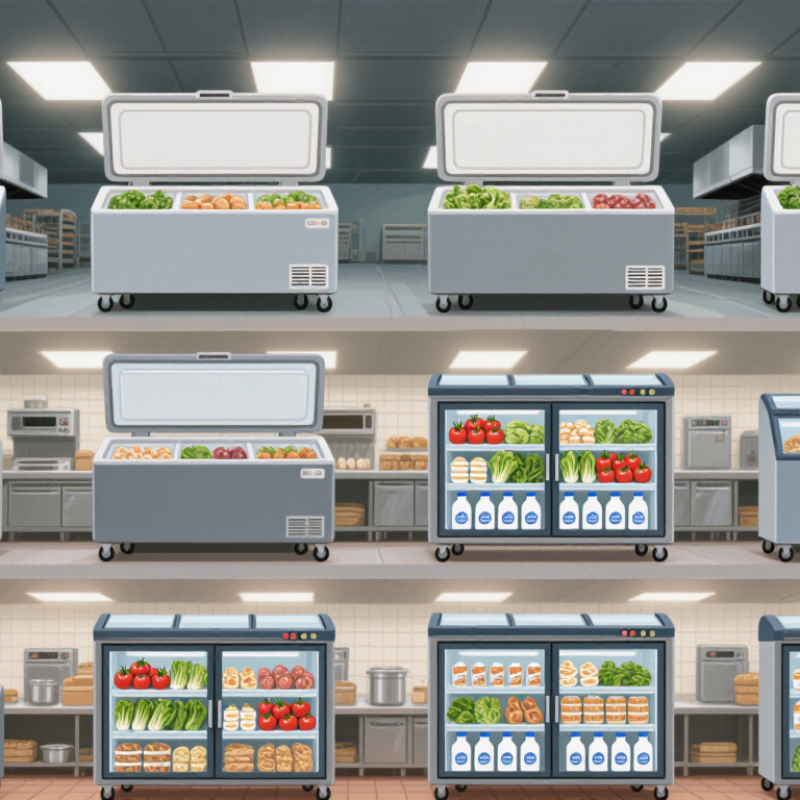
Commercial Cooler Types for Restaurant Kitchens: Reach-In, Undercounter, and More
Reach-in coolers suit kitchens that need dependable, easy-to-find storage near cooking stations. One-, two-, and three-section models vary in capacity, but door swing and aisle clearance matter as much as shelf space. Check whether pans and food containers fit without blocking airflow. A crowded cabinet can cool unevenly. Small detail, big effect. Measure the route from delivery door to cooler, too; bulky units can be difficult to move into older kitchens.
Undercounter coolers keep frequently used ingredients close to prep staff, while refrigerated prep tables combine chilled storage with a work surface. They save steps, though drawers and doors need enough clearance during busy service. Walk-in coolers handle larger inventories and deliveries, but require organized shelving and clear temperature checks. Glass-door display coolers may suit front-of-house drinks or desserts, not every back-of-house task. Match the cooler type to how food moves through the kitchen, rather than choosing by capacity alone. A floor plan can look tidy on paper and still feel awkward at dinner rush. Recheck the layout after installation; real workflows sometimes surprise you.
How to Rank the Top 10 Coolers by Capacity, Temperature, and Energy Use
Ranking the top 10 restaurant coolers starts with usable capacity, not the biggest number on a specification sheet. Record interior volume in cubic feet, then check shelf spacing, door swing, and whether standard food pans fit. A cooler that holds more but blocks daily access may slow a busy prep line. Small detail. Measure the kitchen doorway too; delivery-day surprises happen.
Temperature performance matters just as much. The FDA Food Code sets 41°F (5°C) as the maximum for cold-held time/temperature control foods, so compare each unit’s stated operating range and recovery after frequent door openings. ENERGY STAR’s commercial refrigerator guidance reports that certified models use at least 20% less energy than standard models. Compare listed annual energy consumption in kWh, using the same product category and test conditions. Then weigh energy use against usable capacity, since a larger cabinet may consume more overall. The U.S. Department of Energy’s commercial refrigeration standards provide useful context for efficiency comparisons. Still, a tidy ranking can miss real kitchen habits: door openings, hot deliveries, and crowded shelves affect performance. I would leave room for that uncertainty.
Food-Safety Benchmark: FDA Food Code Sets Cold Holding at 41°F (5°C) or Below
For commercial kitchens, cooler performance is not just a matter of keeping drinks cold. The FDA Food Code sets a benchmark for cold holding time/temperature control for safety food: 41°F (5°C) or below. The Food Code is a model, so operators should confirm which requirements their local authority has adopted. That number matters. A display showing 40°F does not guarantee that food on a crowded shelf is equally cold.
When comparing reach-in, undercounter, prep-table, or walk-in coolers, consider how staff will use them during a busy shift. A prep-table lid may open dozens of times in an hour; warm ingredients and frequent access can affect food temperatures. Keep an accurate probe thermometer available, check food itself, and record readings at consistent times. Calibrate the thermometer according to its instructions. Looks can mislead. Leave space for air to circulate, avoid loading warm food into a packed unit, and investigate repeated readings above 41°F promptly. A cooler’s built-in gauge is useful, but it is not the whole story. Even experienced teams sometimes trust the display too much; that habit deserves a second look.
Sanitation and Build Standards: What NSF/ANSI 7 Covers for Commercial Refrigerators
NSF/ANSI 7 sets sanitation and performance requirements for commercial refrigerators and freezers. It addresses materials, design, construction, and temperature performance. The goal is practical: food-contact areas should resist corrosion and allow effective cleaning. Check corners, shelf supports, and interior seams. Grease and moisture collect there.
The standard also evaluates refrigeration performance under defined test conditions. That helps buyers compare equipment, but it does not promise steady temperatures in every kitchen. Frequent door openings, crowded shelves, and a hot room can affect cooling. Real kitchens are messy. A unit that passes testing still needs sensible loading and regular temperature checks.
When comparing restaurant coolers, verify that the exact model is certified to the applicable standard. Look beyond a label: inspect gasket fit, removable shelves, and access for cleaning. Certification does not replace correct installation or daily maintenance. I would not treat it as a shortcut. Staff should wipe spills promptly and check seals for cracks; small details can undermine good sanitation practices.
Installation and Maintenance: Airflow, Door Seals, and Temperature Checks
A commercial cooler can lose performance long before its display shows a problem. Leave clear space around air intakes and outlets, and avoid stacking cartons against the evaporator. ASHRAE’s Handbook—Refrigeration explains that heat removal depends on effective airflow and heat transfer. In practice, a blocked grille can create warm spots, even when the control panel looks normal. Small gaps matter. During installation, check that doors swing freely and the unit sits level; a tilted cabinet may not seal evenly.
Inspect door gaskets for tears, hardened sections, and crumbs that prevent contact. A simple paper test helps: close the door on a strip of paper, then pull gently. If it slides out with little resistance, inspect the seal. The FDA’s 2022 Food Code specifies cold holding at 41°F (5°C) or below for time/temperature control foods. Check product temperature with a calibrated probe, not just the cabinet display, and record readings at consistent times. Keep a dated log. A rushed shift can still miss a check, so assign responsibility and review gaps rather than assuming every reading was taken. Follow applicable local requirements.