

2026 Top Sinker EDM Machining Suppliers Worldwide

Choosing a sinker EDM supplier is not just a matter of comparing hourly rates. In 2026, buyers need to assess electrode capability, machine condition, inspection methods, and experience with difficult materials. A deep cavity in hardened tool steel can reveal more than a polished brochure. Ask how the shop controls electrode wear, verifies corner radii, and reports surface finish. Small details matter.

W. Edwards Deming, a recognized manufacturing quality expert, said, “Quality is everyone’s responsibility.” That principle fits Sinker Edm Machining: consistent results depend on skilled operators, sound process controls, and clear communication—not equipment alone. Yet a supplier’s claims still need evidence. Request sample inspection records, realistic lead times, and details about how revisions are handled. This guide compares worldwide suppliers through practical criteria, including precision, production flexibility, technical support, and transparency. No ranking can replace a part-specific trial. A supplier that excels at tiny medical components may not suit a large, deep mold cavity. That distinction is easy to overlook. The sections ahead will help buyers ask sharper questions and identify the trade-offs behind each supplier’s capabilities.
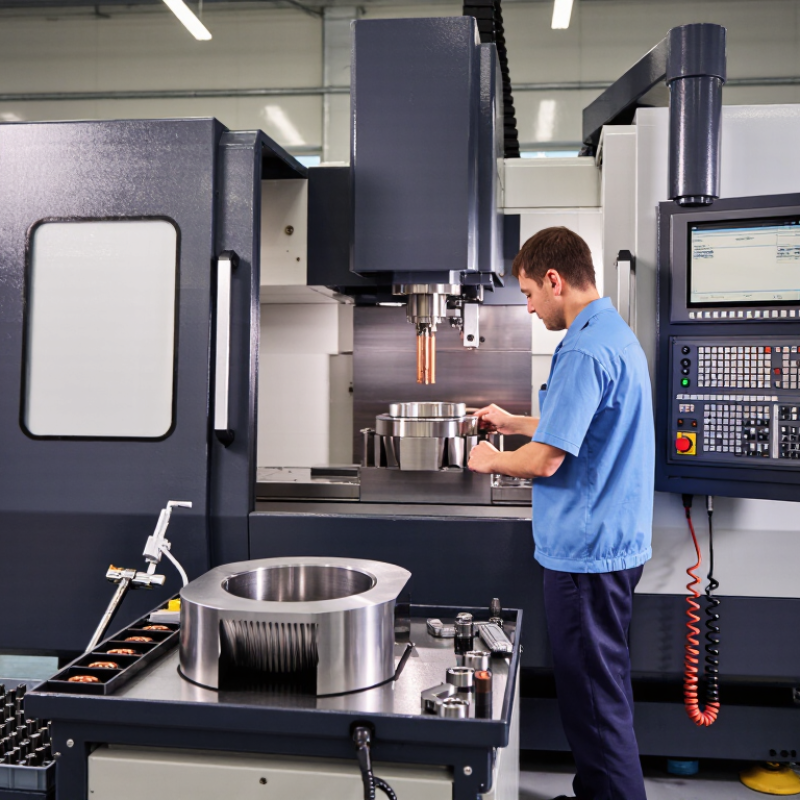
2026 Top Sinker EDM Machining Suppliers Worldwide

Sinker EDM Fundamentals: Typical 0.01–0.05 mm Spark Gaps

For sinker EDM, a 0.01–0.05 mm spark gap is a useful working range, not a fixed machine setting. That equals 10–50 micrometres. The actual clearance shifts with pulse energy, electrode shape, dielectric condition, and flushing. Ho and Newman’s peer-reviewed 2003 review in the International Journal of Machine Tools and Manufacture describes how discharge conditions govern material removal and machining stability. The ASM Handbook, Volume 16, also treats EDM as a controlled thermal process rather than simple tool-to-workpiece contact. In practice, a narrow gap can support fine detail, but only when debris is cleared reliably.

Picture a copper electrode sinking into a steel cavity: a slight change in flushing can leave debris near a corner and trigger unstable discharges. Operators therefore check the finish, wear, and cycle stability—not just the nominal gap. Kunieda and colleagues’ 2005 CIRP Annals review discusses the roles of discharge and dielectric behavior in EDM. These references explain the process; the 10–50 micrometre figure is a practical guide, not a universal specification. That distinction matters. A stated gap may look precise on paper, yet the real discharge zone varies during machining. Even experienced shops can misread it.

Industry Benchmarks: ±2–5 μm Accuracy and Ra 0.1–0.4 μm Finish

A ±2–5 μm accuracy target and Ra 0.1–0.4 μm finish describe demanding sinker EDM work, not a guaranteed shop-floor result. The CIRP review by Ho and Newman, “State of the art electrical discharge machining” (2003), discusses how discharge conditions, electrode wear, and flushing affect machining performance. In practice, a supplier should verify dimensions on the actual part, after finishing and cleaning—not rely only on the machine’s positioning specification. Small details matter.

For a buyer, request a measured sample with the electrode material, workpiece alloy, cavity depth, and finishing settings recorded. Ra should be checked with a suitable instrument and stated cutoff; ISO 21920-2:2021 provides the framework for specifying surface-texture parameters. A mirror-like cavity can still hide corner rounding or taper. That is easy to miss. Treat ±2–5 μm and Ra 0.1–0.4 μm as acceptance goals to validate on representative geometry, since thin ribs, deep cavities, and flushing limits can shift results. Even a careful report may not predict every production run. That caveat belongs in the quotation.

2026 Top Sinker EDM Machining Suppliers Worldwide — Industry Benchmarks: ±2–5 μm Accuracy and Ra 0.1–0.4 μm Finish

Illustrative industry benchmark ranges, not a supplier ranking or guaranteed capability. Achievable results vary with material, geometry, machining conditions, and measurement method.

2026 Global Suppliers: GF, Sodick, Mitsubishi Electric, Makino and FANUC

The 2026 global sinker EDM field includes established Japanese, Swiss, and other international machine builders. Compare suppliers by more than advertised accuracy. Ask for test cuts in your actual tool steel, electrode wear data, and measured cavity finish. Check whether local technicians can diagnose servo alarms and source filters, pumps, and control parts quickly. Small details matter. A machine may hold a fine finish in a showroom, yet struggle with deep ribs or unattended night shifts.

Grand View Research’s Electrical Discharge Machining market report estimated the global market at about US$6.3 billion in 2023, with projected growth through 2030. This figure covers EDM broadly, not sinker machines alone, so it should not be treated as a sinker-specific forecast. For buyers comparing leading global suppliers, request cycle-time records, repeatability results, and service-response commitments from comparable jobs. Inspect a finished cavity under consistent lighting. Ask how operators manage flushing when debris gathers in narrow corners. One gap remains: published market estimates rarely reveal real factory uptime. That makes reference visits valuable, though a single visit can still give an incomplete picture.

Comparing Leading Machines by Automation, Axis Control and Electrode Wear

For a 2026 review of sinker EDM suppliers worldwide, compare shop-floor performance, not brochure claims. Automation should cover electrode changes, workpiece setup, and unattended cycle monitoring. Ask suppliers to demonstrate a repeatable job, such as machining a deep cavity with several electrode changes. Note how often an operator must intervene. Small differences matter.

Axis control affects accuracy on angled features and complex cavities. Check the machine’s positioning repeatability under realistic cutting conditions, not only its listed resolution. Electrode wear also matters: request measured wear data from a sample job, along with surface-finish results and machining time. A smooth finish can hide excessive electrode consumption.

Tips: Use the same workpiece material, cavity depth, and finish target when comparing machines. Record electrode dimensions before and after machining. Then review the results with the supplier’s process engineer. One comparison weakness is that a showroom test may not reflect a busy production floor. Ask how automation handles alarms, tool changes, and overnight interruptions. If possible, run a sample using your own geometry; it may reveal compromises that standard demonstrations miss.

Selecting a Supplier by Part Size, Application and Service Coverage

Choosing a sinker EDM supplier starts with the part, not the machine catalog. Record the largest workpiece dimensions, cavity depth, electrode access, and required surface finish. A compact mold insert may fit a standard tank, while a tall die may require added Z clearance and stable fixturing. Check the usable work envelope, not only the advertised maximum. Small difference, big consequence.

Application matters just as much. Deep ribs, sharp internal corners, and thin walls place different demands on electrode design and flushing. Ask how the supplier controls wear, monitors the dielectric, and verifies critical features. Request a sample inspection report or discuss a representative part before committing. A polished demonstration piece is useful, but it may not reflect your hardest geometry. That distinction is easy to miss.

Service coverage affects real production schedules. Confirm who handles programming questions, preventive maintenance, spare parts, and urgent repairs in your region. Ask for typical response times and what support is available remotely. If inspection or electrode-making services are needed, clarify whether they are performed in-house. No supplier fits every job perfectly; compare these details against your part mix, tolerance needs, and delivery risks. Some answers may remain uncertain until a trial run.

2026 Top Sinker EDM Machining Suppliers Worldwide - Selecting a Supplier by Part Size, Application and Service Coverage

Compare supplier capability profiles rather than treating this as a company ranking. Sinker EDM is used to machine electrically conductive materials with a shaped electrode; actual work envelope, accuracy, finish and lead time depend on the machine, setup and job requirements. Confirm specifications directly when requesting a quotation.

Supplier Capability Profile Part Size and Job Fit Common Applications Relevant Sinker EDM Capabilities Service Coverage to Check Questions to Ask Before Ordering
Precision and Micro-Feature EDM Shop Small components, fine details and jobs where cavity geometry or electrode access is more important than high material-removal volume. Small dies, precision inserts, narrow slots, fine ribs and detailed cavities in conductive metals. Fine-electrode machining and close feature control may be available. Minimum feature size and achievable finish depend on electrode geometry, material, flushing and process settings. Check engineering support for electrode design, inspection reporting, sample approval and repeat orders. What are the minimum feature and corner-radius limits for this geometry? Which inspection methods and reports are included?
Mold and Die EDM Shop Small-to-large tooling components, subject to the shop’s machine travel, tank dimensions, workpiece weight limit and handling equipment. Injection-mold cavities, die-casting tooling, stamping dies, hardened tool steel and repair of worn tooling features. Can produce cavities and contours that may be difficult to mill, including features in hardened conductive materials. Internal corners are affected by electrode shape and cannot be sharper than the electrode geometry permits. Check support for electrode manufacture, tool-room coordination, fitting, polishing and urgent repair work. Can the complete workpiece be mounted and handled? Are electrode design, polishing or fitting included in the quoted scope?
Large-Workpiece EDM Provider Large or heavy components that require a suitably sized tank, adequate machine travel and lifting capacity. Large dies, substantial mold bases, industrial tooling and components with deep or widely spaced cavities. Capacity is determined by the specific machine and workholding setup. Deep cavities may require careful flushing and process planning to manage debris and maintain stable machining. Confirm collection and delivery options, lifting arrangements, packaging, cross-border shipping and responsibility for transit insurance. What are the maximum workpiece dimensions and weight? Can the part be positioned to reach every required feature?
Production and Repeat-Job EDM Provider Recurring parts or batches where process consistency, scheduling and documented inspection are important. Repeat tooling inserts, production dies and components with established cavity designs and inspection requirements. May offer controlled process plans, electrode wear compensation and repeatable setup methods. Batch capacity and lead time should be confirmed for the specific job. Check capacity planning, order tracking, change control, repeat-order records and the procedure for handling nonconforming parts. How are revisions, setup records and inspection results maintained between orders? What batch size and delivery schedule can be supported?
Engineering-Led or Prototype EDM Provider One-off parts, first articles and designs that may need engineering review before machining. Prototype tooling, design validation, specialty cavities and development work with evolving requirements. Can review electrode access, cavity depth, material suitability and likely process constraints before production. Sinker EDM requires electrically conductive work material. Check design-for-manufacture feedback, prototyping support, engineering communication and approval steps before cutting. Can the supplier review drawings and identify risks before quoting? Which file formats, tolerances and material certifications are accepted?
Regional or Cross-Border Service Provider Jobs for customers who prioritize local coordination or are prepared to manage international shipment of tooling and components. Tooling, replacement inserts and specialty machining where shipping time, customs or on-site support affect the project. Machining capability must be assessed independently of location. Compare the offered work envelope, material experience, inspection capability and documented process controls. Verify service area, quotation currency, delivery terms, customs documentation, shipping responsibility, communication hours and after-delivery support. Who handles freight and customs? What are the delivery terms, expected transit time and process for resolving quality issues?
Share by: