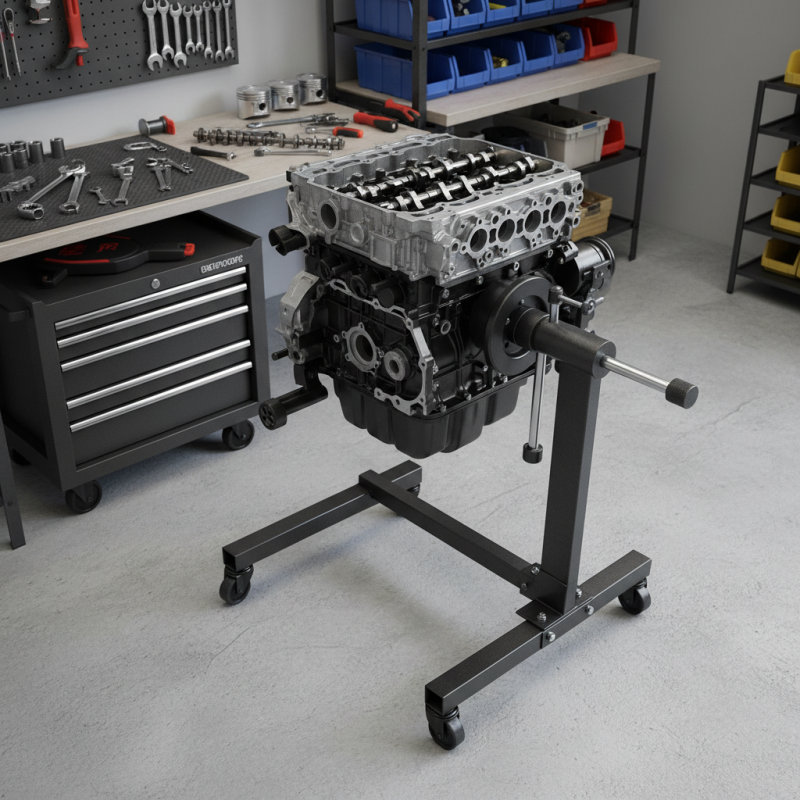
Top 5 Tips for Choosing the Best Car Engine Stand?
Choosing the right car engine stand can significantly impact your engine rebuilding experience. A high-quality stand provides stability, making it easier to work on the engine safely. However, the selection process can feel overwhelming due to the numerous options available.
When picking a car engine stand, consider factors like weight capacity, material, and adjustability. These elements are crucial in ensuring the stand meets your project needs. Often, buyers overlook these aspects, leading to frustration during engine work. It’s common to rush this decision and regret it later.
Moreover, investing time in research pays off. For instance, a stand that doesn’t provide adequate support might compromise your repairs. Reflecting on your choices can help ensure a smoother experience. Ultimately, choosing the right car engine stand is key to efficient engine maintenance.
Understanding the Purpose of a Car Engine Stand
Understanding the purpose of a car engine stand is essential for both professionals and enthusiasts. An engine stand provides a secure and stable platform for accessing, rebuilding, or replacing an engine. According to industry reports, approximately 70% of DIY mechanics use engine stands for this very reason. This tool saves time and reduces the risk of injury during heavy lifting.
When choosing the best car engine stand, consider the weight capacity. Most engines weigh between 400 to 600 pounds. Ensure the stand can handle the weight of your specific engine. A common mistake is underestimating the load, which can lead to accidents.
Another tip is to check the mobility features. Some stands come with wheels for easy movement. This flexibility is key when working in a tight garage space. Make sure the wheels lock securely. It's frustrating to have a stand that shifts unexpectedly. Remember, a good engine stand enhances your working efficiency while providing peace of mind. Choose wisely!
Key Features to Look for in an Engine Stand
When choosing an engine stand, consider its weight capacity carefully. A stand must support your engine's weight without buckling. Many stands have a rating of 1,000 to 1,500 pounds. If your engine is heavier than average, look for a sturdier option. Stability is also crucial. Four-wheel designs often provide better balance compared to three-wheeled versions. Assess the construction material too; a robust steel frame offers more durability over time.
Think about adjustability, especially if you work with different engine sizes. Some stands feature height adjustments or swiveling mounts. This flexibility can enhance your workflow significantly. Mobility matters as well. Stands with locking wheels are easier to move around your workspace and can be securely held in place when necessary.
Finally, consider the ease of assembly. Complicated instruction manuals can lead to frustration. Look for stands that require minimal tools and effort to put together. A poorly assembled stand could lead to accidents. It's vital to reflect on what features align best with your needs. Not every stand suits every user, and your specific projects should guide your choice.
Evaluating Load Capacity and Stability Requirements
When selecting a car engine stand, evaluating load capacity is crucial. It is not just about the engine's weight but also its size and shape. An inadequate capacity may lead to instability. Too much weight can compromise the stand’s integrity. It's essential to choose a stand that easily supports the engine.
Stability is equally important. A wobbly stand can cause accidents. Look for wider bases or adjustable features to enhance stability. Some stands may appear sturdy but lack solid construction. Pay attention to the materials used. If you doubt its quality, it’s wise to reconsider your choice.
Test the stand if possible. A small shake can reveal flaws in design. Remember, spending more time evaluating could save plenty of trouble later. Keep safety at the forefront of your decision-making process. Making the right choice requires careful consideration of both load capacity and stability.
Material Considerations: Steel vs. Aluminum Engine Stands
When selecting an engine stand, material plays a crucial role. Steel and aluminum are the two main options. Steel stands are generally more durable; they can withstand heavier loads without bending or breaking. However, they can be quite heavy themselves. If portability matters to you, consider an aluminum engine stand.
Aluminum stands are lightweight and easier to move around. They are less likely to rust, making them suitable for outdoor use. However, they may not support as much weight as steel. Think about what you plan to do. If you work on heavy engines, steel could be the best option.
Here are a few tips for choosing the right stand:
- Check the weight capacity of the stand.
- Look at its stability. A wide base is usually better for balance.
- Inspect the build quality. Poorly made stands may fail when under stress.
- Consider how often you will use it. Investing in a sturdy stand is often worth it.
Budgeting for Your Engine Stand: Costs and Value Comparison
When budgeting for an engine stand, it's essential to understand the cost versus value balance. Typically, a decent engine stand may range from $100 to $500. Reports show that investing more money often leads to better features and durability. A stand with a higher weight capacity ensures steady support and less risk.
Some tips for choosing the best car engine stand include examining the material quality. Steel stands are generally more robust than aluminum ones. Also, consider the height adjustability for better ergonomic use during engine repairs. Many mechanics suggest testing the stand's stability before a purchase.
Look for user reviews and ratings. They provide valuable insights into real-life performance. Pay attention to common complaints or praises. Understanding these details can help avoid potential regrets later. An engine stand isn't just a tool; it’s a crucial investment for your workspace. Allocate your budget wisely to avoid compromising safety for savings.