

China Top 10 Vacuum Coating Machine Manufacturers

China’s vacuum equipment sector includes manufacturers serving electronics, optics, automotive, packaging, and decorative-product markets. This guide introduces ten Chinese vacuum coating machine manufacturers and offers a practical starting point for comparing their capabilities. The list should not be treated as a universal ranking; supplier suitability depends on the product, coating process, budget, and production goals.

A vacuum coating machine can apply thin functional or decorative layers inside a controlled chamber. Depending on the configuration, it may use processes such as PVD, evaporation, or sputtering. Buyers should compare chamber dimensions, substrate capacity, coating uniformity, cycle time, control systems, and automation. Details matter. A glossy sample is useful, but it cannot prove consistent performance across a full production run.

Manufacturer information can change, and published specifications may not show the whole picture. Review technical documents, request references for similar applications, and ask how installation, operator training, spare parts, and maintenance are handled. Ask direct questions. If possible, discuss a sample test using your own material and coating requirements. This overview highlights factors worth checking alongside each company’s product range and experience. It cannot replace technical evaluation, and some comparisons may need closer scrutiny. Use it to build a shortlist, then verify each supplier’s current capabilities before making a decision.
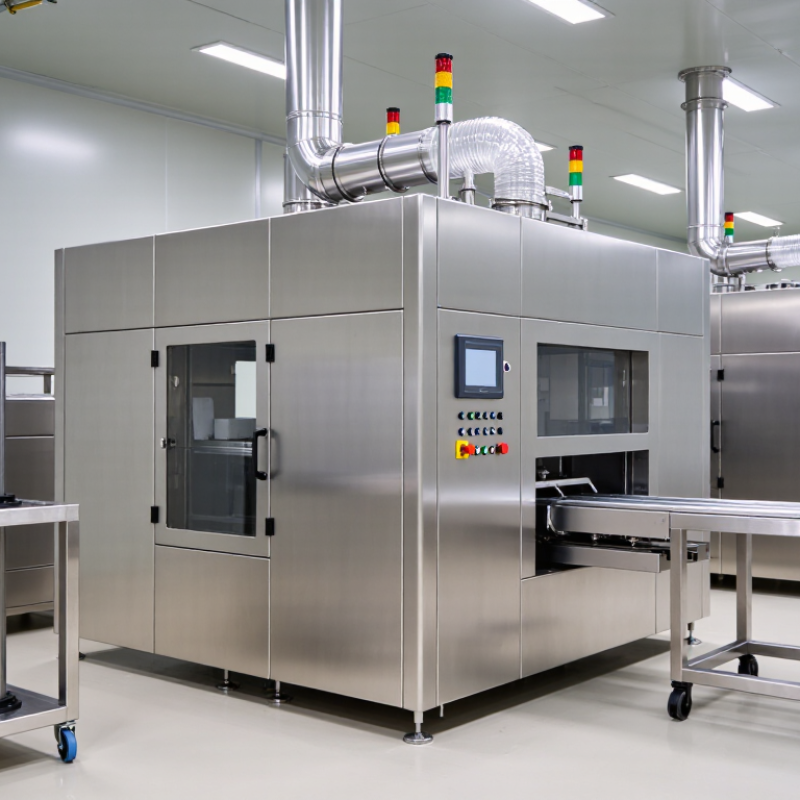
China Top 10 Vacuum Coating Machine Manufacturers

Vacuum Coating Machines: Definition and Core Functions

A vacuum coating machine applies a thin layer of material to a part inside a sealed chamber. Pumps reduce the air pressure, creating a controlled environment for coating. The chamber is not completely empty. Depending on the process, a source material is vaporized or sputtered into fine particles, which travel toward the workpiece and form a film. Common substrates include glass, metal, and selected plastics.

It sounds simple. It isn’t.

The machine’s core functions include controlling pressure, heat, power, gas flow, and coating time. These settings influence film thickness, adhesion, hardness, reflectivity, and appearance. Fixtures may rotate parts to improve coverage, while sensors help operators monitor the process.

A practical detail matters: recessed areas and sharp edges can receive less coating than flat surfaces. Real parts are rarely ideal. A neat specification can still hide a weak point, so test samples and routine equipment checks are useful before production runs.

Results also depend on substrate preparation and material compatibility; one recipe will not suit every component.

How Vacuum Coating Processes Work

Vacuum coating builds a thin, functional layer inside a sealed chamber. Parts are cleaned, loaded, and exposed to low pressure. A source then releases coating material by evaporation or sputtering; its atoms travel through the chamber and condense on the part. That matters. Surface cleanliness and even gas flow help determine whether the film bonds evenly.

Operators control pressure, temperature, power, and deposition time to tune thickness and finish. A quartz-crystal monitor can track deposited material in real time, but it does not reveal every defect on a complex part. The awkward part: a shiny surface can still hide poor adhesion.

SEMI’s 2024 mid-year equipment forecast projected global semiconductor equipment sales of $109 billion. This is not a vacuum-coating market figure, but it shows the scale of investment in precision manufacturing tools.

Tips: Check the chamber’s base pressure and clean the substrate before coating. Log each batch’s settings. A small setup drift can change the result.

Main Machine Types and Their Industrial Applications

Vacuum coating machines use different methods to place thin films on parts. Thermal evaporation heats a source until its material vaporizes and settles on cooler surfaces. It is common for decorative plastic trim, reflectors, and some optical components. Operators monitor source temperature and part spacing. Poor loading can leave pale edges. Small details matter.

Magnetron sputtering uses plasma to release atoms from a target, creating dense, uniform films. Manufacturers use it for architectural glass, electronic components, and wear-resistant tools. It may run more slowly than evaporation for certain materials, but can provide strong film adhesion. Ion plating adds energetic ions during deposition and suits cutting tools and industrial fixtures. Clean surfaces are essential; oil or dust can weaken a coating, whatever the machine.

Plasma-enhanced chemical vapor deposition forms films through reactions involving process gases. It is used for protective or functional layers on electronics, glass, and temperature-sensitive components. Each method has limits. Part shape, substrate heat tolerance, coating thickness, and production volume all affect the choice. A practical trial on representative parts can reveal uneven coverage or adhesion problems before a full production run. There is rarely a perfect setup. Some adjustments remain necessary.

China Top 10 Vacuum Coating Machine Manufacturers - Main Machine Types and Their Industrial Applications

No. Machine Type Common Coating Process Typical Workpieces Industrial Applications
1 Thermal Evaporation Coating Machine Resistive heating evaporates a source material, which condenses as a thin film on the substrate. Glass, polymer films, and small electronic components. Decorative metallization, research coatings, and selected optical or electronic thin films.
2 Electron-Beam Evaporation System An electron beam heats and evaporates high-melting-point coating materials in a vacuum chamber. Optical glass, wafers, and precision components. Optical coatings, research and development, and thin-film materials used in electronics.
3 Magnetron Sputtering Coating Machine Plasma ions bombard a target, ejecting atoms that deposit on the workpiece; reactive gases may form compound films. Glass panels, metal parts, wafers, and flexible substrates. Architectural glass, display and electronic films, decorative finishes, and functional coatings.
4 Multi-Arc Ion Plating Machine Cathodic arc evaporation generates ionized coating material, often combined with reactive gases. Cutting tools, molds, hardware, and machine components. Wear-resistant and decorative PVD coatings, including hard coatings on tools and dies.
5 PECVD Coating System Plasma-enhanced chemical vapor deposition forms a film from gaseous precursors at comparatively low substrate temperatures. Semiconductor wafers, glass, and temperature-sensitive substrates. Semiconductor passivation and dielectric films, protective layers, and selected solar-cell processes.
6 Atomic Layer Deposition (ALD) System Alternating, self-limiting precursor reactions build conformal films one atomic layer at a time. Wafers and components with high-aspect-ratio or complex surfaces. Semiconductor devices, MEMS, and applications requiring precise, conformal ultrathin films.
7 Roll-to-Roll Vacuum Web Coating Machine Continuous unwinding, vacuum deposition, and rewinding of a flexible web, commonly using evaporation or sputtering. Plastic films and other flexible web materials. Flexible packaging, barrier films, flexible electronics, and metallized film production.
8 Optical Multilayer Coating Machine Evaporation or sputtering deposits controlled stacks of thin films to modify reflection or transmission. Lenses, optical filters, mirrors, and precision glass components. Cameras, lighting, laser optics, sensors, and optical instruments.
9 Vacuum Metallizing Machine Metal is evaporated in a vacuum and deposited as a thin reflective layer, often on a pretreated surface. Plastic parts, films, paper, and lightweight decorative components. Packaging, consumer goods, automotive trim, and reflective decorative finishes.
10 Batch PVD Coating Machine for Decorative Parts Batch vacuum deposition, commonly using arc evaporation or sputtering, produces thin decorative or functional films. Faucet components, handles, watch parts, and other metal or plastic items. Sanitary hardware, consumer products, automotive interiors, and decorative components.

Note: This table describes common vacuum-coating equipment categories and typical applications; it is not a verified ranking of manufacturers.

Criteria for Evaluating Chinese Vacuum Coating Manufacturers

When comparing Chinese vacuum coating machine manufacturers, start with the parts your process actually needs. Ask whether the chamber can fit your largest substrate, not just a sample coupon. Check the stated coating uniformity, deposition rate, and repeatability against test conditions.

Numbers without context can mislead.

Request a demonstration using a representative material and coating recipe. Watch the pump-down sequence, temperature readings, and control interface. Ask for recent maintenance records and clear explanations of consumable replacement intervals.

Look closely. A polished brochure is not enough. Independent test data and a practical acceptance plan make performance claims easier to verify.

Also evaluate engineering support, operator training, spare-part availability, and response times in writing. A machine may run well in a factory trial but behave differently in your production environment. Discuss installation requirements, utilities, and software updates before ordering. No supplier is perfect. Even so, vague answers about troubleshooting deserve a second look. Factory visits, reference checks, and consistent documentation can help buyers judge reliability beyond the sales presentation.

Profiles of 10 Leading Vacuum Coating Machine Manufacturers in China

China’s vacuum-coating manufacturers serve industries ranging from decorative hardware to optical components. These ten profiles highlight different strengths buyers can assess, without assuming that one machine suits every production line.

One manufacturer type specializes in compact batch coaters for small parts. Another builds large chambers for architectural glass. A third focuses on optical layers, where thickness control matters.

A fourth develops roll-to-roll systems for flexible films. A fifth serves automotive suppliers with coating lines designed for repeatable finishes.

The remaining profiles cover makers of laboratory-scale equipment, metallization systems for packaging, precision coaters for electronics, custom chambers for unusual workpieces, and automated production lines.

Their differences show up in practical details: chamber dimensions, fixture design, pump-down time, and how easily operators can change recipes. Ask for a sample run. Inspect coating uniformity across the center and edges of a part. Request maintenance intervals and spare-parts information, too.

A polished brochure is not proof of dependable uptime. Actual performance depends on the substrate, coating material, process settings, and operator skill. Compare documented test results with your own requirements; even a strong supplier may not be the right fit.

Share by: