

Top 10 Welded Tantalum Tube Manufacturers Worldwide

Welded Tantalum Tube production demands more than specialized equipment. It calls for disciplined control of material purity, weld consistency, dimensional tolerances, and surface condition. A tube may look flawless under bright inspection lights, yet still require careful evaluation of its seam, wall thickness, and performance under service conditions. Small details matter.

This overview of the Top 10 Welded Tantalum Tube Manufacturers Worldwide is intended to help engineers and procurement teams compare suppliers with practical criteria in mind. The discussion considers manufacturing capabilities, product range, quality assurance, technical support, and experience serving demanding industries. These indicators can help narrow a shortlist, but they do not replace reviewing current specifications, test documentation, and project requirements directly with each manufacturer. Rankings also involve judgment. A supplier’s fit depends on the application, not merely its place on a list.

A named industry expert’s quotation should be verified against a reliable source before publication. No attributable quotation was provided for this draft, so I will not invent one or place unverified words in a specialist’s name. That limitation is worth stating plainly. Readers should treat this guide as a starting point, then confirm weld inspection practices, traceability, available sizes, and delivery commitments with shortlisted suppliers.
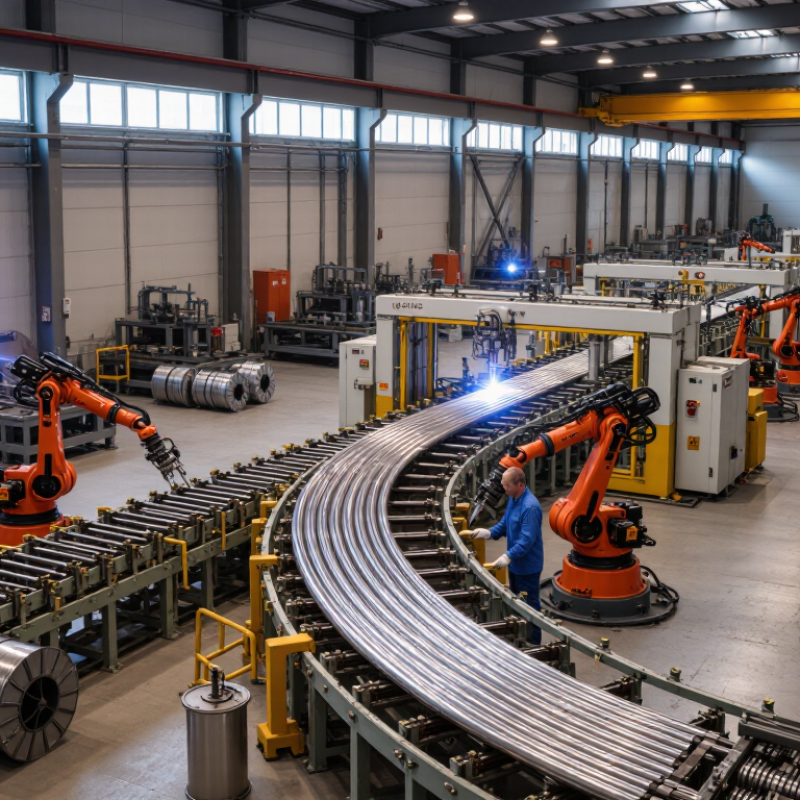
Top 10 Welded Tantalum Tube Manufacturers Worldwide

Welded Tantalum Tubes: Definition, Properties, and Common Uses

Welded tantalum tube is formed from tantalum sheet or strip, rolled into a cylinder and joined along a longitudinal seam. The metal melts at about 3,017°C and resists many corrosive chemicals because a stable oxide layer protects its surface. It is also dense and workable, but its performance depends on material grade, weld quality, and service conditions. A sound-looking seam is not proof of a sound tube.

Common uses include chemical-process equipment, heat exchangers, and protective sleeves exposed to aggressive fluids. These applications value corrosion resistance more than low weight or low cost. The U.S. Geological Survey’s Mineral Commodity Summaries 2024 estimated global tantalum mine production at 2,300 metric tons in 2023. That figure describes mined supply, not welded-tube output, but it highlights the material’s limited feedstock base. Buyers should specify dimensions, wall thickness, grade, and inspection requirements rather than relying on “tantalum” alone.

Tips: Ask for traceable material certificates and weld-inspection records. Check compatibility at the actual temperature and chemical concentration. One detail is easy to overlook: a weld can behave differently from the parent metal, especially after forming or repeated thermal cycling.

How Welded Tantalum Tubes Are Manufactured and Tested

Welded tantalum tubes start as sheet or strip, selected for chemistry, thickness, and surface condition. The material is formed into a cylinder, then joined along its length using a controlled welding process, often in an inert atmosphere to limit contamination. The weld seam matters. Even small flaws can become leak paths in corrosive service. ASTM B521 covers seamless and welded tantalum tubes, providing a specification framework for material and product requirements. The USGS Mineral Commodity Summaries 2025 estimates global tantalum mine production at about 2,300 metric tons in 2024, a reminder that careful material traceability matters throughout fabrication.

After welding, manufacturers check dimensions, surface finish, and seam integrity. Depending on the order and tube geometry, inspection may include visual examination, eddy-current testing, radiography, or leak testing. Chemical analysis can verify alloy composition, while tensile tests assess mechanical properties using representative samples. Results should be recorded against the purchase specification, not treated as a generic pass. A clean-looking seam is not proof of a sound tube. Testing choices also vary; this part can be easy to under-document.

Tips: Ask for the applicable ASTM B521 grade, material test reports, and the inspection method used on the weld. Confirm test coverage and acceptance criteria before production begins.

Welded Tantalum Tubes: Manufacturing Context

Approximate melting points of selected refractory metals (°C)

Tantalum melts at approximately 3,017°C. Its high melting point is an important consideration in tube production, where forming and seam welding require carefully controlled conditions. Finished tubes may be checked for dimensions, weld integrity, and material quality; specific manufacturing and inspection procedures vary by product and applicable standard.

Criteria for Evaluating Tantalum Tube Manufacturers

When evaluating welded tantalum tube manufacturers, look beyond a polished brochure. Ask for material certificates that identify the tantalum grade, chemistry, and heat or lot number. Traceability matters. It connects a finished tube to its source material and inspection records. Review stated limits for outside diameter, wall thickness, ovality, and length, then compare them with your drawing and operating conditions.

The weld deserves close attention. Request details on seam preparation, welding controls, and inspection methods, such as eddy-current testing where suitable. A sample inspection report can show whether results are recorded clearly, not merely promised. Check how the manufacturer prevents surface contamination during handling and packaging; tantalum’s performance can suffer if cleanliness is overlooked, especially in demanding service. Small details count. No supplier is flawless, and a long capability list cannot replace evidence from a relevant production run. Ask how deviations are documented, who reviews them, and whether corrective actions are shared with customers. Clear answers, consistent records, and realistic lead times often reveal more than impressive claims. Some buyers may still prioritize price too heavily. That choice can prove costly when a tube’s fit, weld quality, or documentation does not meet the job’s needs.

Top 10 Welded Tantalum Tube Manufacturers Worldwide - Criteria for Evaluating Tantalum Tube Manufacturers

Use these ten criteria to compare suppliers. This is an evaluation framework, not a ranked list of manufacturers; supplier capabilities and compliance should be verified against the purchase specification.

No. Evaluation Criterion What to Assess Evidence to Request
1 Product-standard compliance Whether the offered welded tantalum tube is specified and inspected to the applicable edition of ASTM B521 or to the buyer’s agreed product specification. ASTM B521 covers tantalum and tantalum-alloy seamless and welded tubes. A compliance statement identifying the standard and edition, applicable grade, product condition, and any agreed deviations.
2 Material grade and traceability Whether the material grade and chemistry meet the order requirements, and whether each finished tube can be traced to its raw-material heat or lot. Material test reports or certificates, heat or lot identifiers, and a documented traceability link to the supplied tubes.
3 Weld-process control How the supplier controls the longitudinal seam, including process consistency, joint preparation, and protection from contamination during welding. A process overview, applicable work instructions, and weld qualification or process-validation records relevant to the product.
4 Dimensional capability Ability to meet the required outside diameter, wall thickness, length, straightness, and tolerances. Confirm that the requested dimensions are achievable for the chosen grade and production route. A dimensioned product drawing, agreed tolerance schedule, and inspection results for the ordered dimensions.
5 Weld and tube inspection Whether inspection methods are appropriate to the tube dimensions, intended service, and purchase specification, with acceptance criteria defined before production. The inspection and test plan, method descriptions, acceptance criteria, and product-specific inspection reports.
6 Surface condition and cleanliness Whether internal and external surfaces meet the agreed finish, cleanliness, and defect limits for the application, including any requirements for cleaning or passivation. Surface-finish requirements, cleaning procedures where applicable, and visual-inspection records or agreed sample photographs.
7 Mechanical and application testing Whether required mechanical tests and any application-specific tests are defined for the product. Test selection should follow the governing specification and the service conditions rather than an assumed universal test set. Test methods, sampling frequency, acceptance limits, and reports for tests required by the order.
8 Quality-system controls Whether documented quality controls cover purchasing, production, inspection, nonconforming product, corrective action, and record retention. Treat certification as supporting evidence, not as a substitute for product qualification. Current quality-system certificates where applicable, audit information, and examples of production and inspection records.
9 Production capacity and lead time Whether available equipment, material sourcing, batch size, and schedule can support the required dimensions, quantity, and delivery window. A quotation with a stated production and delivery schedule, capacity assumptions, and any minimum-order or batch-size constraints.
10 Packaging and documentation Whether packaging protects the tubes from handling damage and contamination in transit, and whether the supplier can provide the documentation required for receipt and traceability. Packaging details, shipping marks, inspection and material certificates, and a proposed document package for the order.

Top 10 Welded Tantalum Tube Manufacturers Worldwide

The top 10 welded tantalum tube manufacturers worldwide may differ more in process control than in headline capacity. Compare material traceability, weld consistency, available diameters, and delivery reliability. Tantalum’s corrosion resistance makes it useful in demanding chemical equipment, but a sound tube still depends on careful fabrication. Ask whether the supplier can provide chemistry reports, dimensional records, and weld inspection results. Public specifications are not always directly comparable, so a ranked list can be imperfect.

Tips: Share the fluid, temperature, pressure, tube dimensions, and service conditions before requesting a quote. Confirm the applicable ASTM B521 requirements and edition. Small details matter.

For a practical review, request a sample or documented inspection plan for the actual product. Check wall thickness at several points, then examine the weld area for visible irregularities. Ask how the manufacturer controls contamination during cutting and welding. A low price may reflect a different inspection scope, not better value. I would also verify lead times for repeat orders; custom tubing can take longer than expected. Keep the evaluation tied to measurable evidence, rather than broad claims about quality.

Comparing Suppliers by Quality, Customization, and Delivery

Choosing among the top welded tantalum tube manufacturers takes more than comparing catalog prices. Ask how each supplier controls wall thickness, weld consistency, and surface condition. A close look at sample tubing can reveal uneven seams or rough edges that a specification sheet may miss. Request material traceability and inspection records, then check that the documents match your required dimensions and tolerances. Quality claims need evidence.

Tips: Send the same drawing and operating conditions to every supplier. Ask about available diameters, wall thicknesses, cut lengths, and practical limits on custom orders. Confirm how welds are inspected, and whether testing can be documented for your application. Get the expected lead time in writing, including sample approval and production.

Delivery comparisons should include more than the quoted shipping date. Clarify production capacity, packaging, and how the supplier handles schedule changes. A low quote may exclude testing or custom tooling; a fast estimate may also be provisional. Even careful buyers can miss these details. I would compare a small qualification order before committing to a larger run, though that adds time and cost. The best fit is the supplier whose quality evidence, customization range, and delivery plan align with the actual job.

Share by: