

China Top PVC Shoe Mould Manufacturers Who Can You Trust?
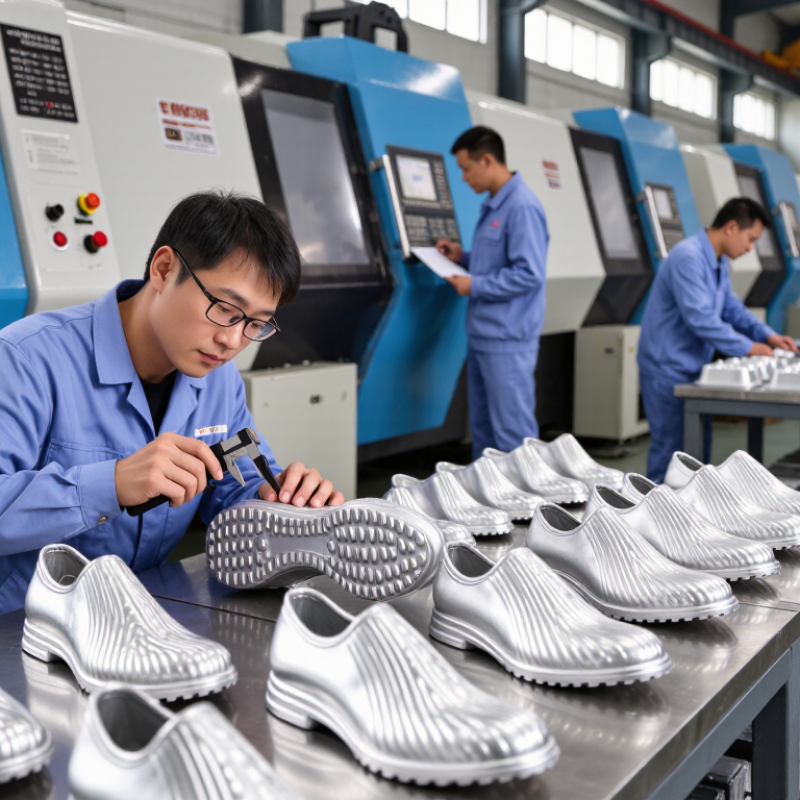
Finding China’s top Pvc Shoe Mould manufacturers requires more than comparing prices or factory photographs. A trustworthy supplier should demonstrate practical experience, controlled machining, and consistent production results. The mould must produce accurate shoe sizes, clean textures, stable thickness, and reliable demoulding.
Small details matter.
Footwear tooling specialist David Chen says, “A reliable mould is not judged by shine alone; it must repeat the same sole detail under production pressure.” This observation reflects a real manufacturing concern. A polished sample can look impressive, yet poor cooling channels may cause warping during continuous production. Experienced buyers should request trial samples, dimensional reports, material details, and photographs of actual workshops. They should also ask how the manufacturer handles design changes, repairs, and replacement parts.
Trust develops through evidence.
The strongest Pvc Shoe Mould manufacturers usually explain their process clearly. They discuss aluminum or steel selection, CNC precision, surface finishing, ventilation, and testing procedures. They do not hide behind vague promises. Communication also matters, especially when a sports sole includes deep grooves, sharp logos, or flexible anti-slip patterns. Still, no supplier is perfect. Even a capable factory may miss a deadline or misunderstand a drawing. That is why written specifications, sample approval, and staged inspections remain essential. This guide examines manufacturers through experience, technical ability, product consistency, and customer reliability. Some conclusions may need reconsideration after direct factory visits. That uncertainty is worth admitting. It encourages better questions before placing a serious mould order.
PVC Shoe Moulds in China: Types, Materials, and 2024 Market Indicators
China Top PVC Shoe Mould Manufacturers Who Can You Trust?
PVC shoe moulds in China cover several practical categories. Injection moulds suit sandals, slippers, soles, and lightweight casual shoes. Rotary moulds support continuous production, while larger boot moulds need deeper cavities and stronger cooling control. Some factories also develop interchangeable mould inserts for seasonal designs. This reduces storage pressure. It also lowers replacement costs.
Mould steel matters. P20 steel offers a reasonable balance for standard production, while 718 steel supports better polishing and longer service. H13 can help with demanding temperature conditions, but its cost requires careful justification. A reliable manufacturer should explain steel certificates, cavity tolerances, surface treatment, and cooling-channel design. Ask for a trial report, not only attractive photographs. Measure the first samples. Small flash lines can reveal poor alignment.
The 2024 market showed steady interest in PVC footwear for casual, outdoor, and value-focused segments. Buyers also requested faster sampling, multi-colour production, and more recyclable material options. These trends increased pressure on mould accuracy and delivery planning. Digital design tools improved communication, yet they did not remove production mistakes. In my experience, a clear drawing prevents many disputes, but it cannot replace an on-site mould test. Export orders also faced changing freight costs and uncertain schedules. A trustworthy supplier should provide traceable revisions, realistic lead times, and responsive technical support after delivery. Reliability is proven during adjustments, not promised during a sales call.
China Top PVC Shoe Mould Manufacturers Who Can You Trust? - PVC Shoe Moulds in China: Types, Materials, and 2024 Market Indicators
Technical and procurement reference table for evaluating PVC shoe mould suppliers without relying on company or brand names.
| Evaluation Dimension | Common Data or Specification | Why It Matters for PVC Shoe Moulds | Supplier Verification Point | 2024 Market Indicator |
|---|---|---|---|---|
| Mould Type | Single-colour injection mould; direct-injection shoe mould; two-colour or multi-colour mould; compression mould; rotational mould. | The correct mould structure depends on the shoe construction, PVC formulation, outsole geometry, production volume, and required surface finish. | Request samples showing the same sole profile, material hardness, colour arrangement, and production process. | Direct injection and multi-colour designs remain relevant where manufacturers seek fewer assembly steps and more integrated footwear designs. |
| Typical Mould Material | P20 pre-hardened steel is commonly used for general production; H13 hot-work steel is used for higher thermal and wear resistance; 420 stainless steel is selected where corrosion resistance and polished surfaces are important; aluminium is used mainly for prototypes or short runs. | Material selection affects mould life, polishing quality, dimensional stability, corrosion resistance, machining time, and total cost. | Ask for the actual material grade, hardness report, heat-treatment record, and certificate traceable to the mould components. | Buyers increasingly compare lifecycle cost rather than only the initial mould quotation, especially for repeat production and export orders. |
| PVC Processing Temperature | PVC injection processing is formulation-dependent; many rigid and flexible PVC applications are processed within an approximate melt-temperature range of 160–210 °C. | PVC is sensitive to overheating and prolonged residence time. Excessive temperature can cause degradation, discoloration, gas generation, and surface defects. | Check whether the mould design includes balanced filling, adequate venting, and cooling suitable for the selected PVC compound. | Energy control, stable processing windows, and reduced scrap are important purchasing criteria as production costs remain under pressure. |
| Mould Surface Finish | Common finishes include high polish, matte texture, leather grain, fabric grain, anti-slip texture, logo relief, and decorative engraving. | Surface texture directly influences appearance, grip, demoulding behaviour, and the visibility of flow or weld marks. | Approve a physical texture sample or master pattern before final machining and confirm the allowable texture deviation. | Functional outsole textures and visually distinctive patterns continue to support product differentiation without changing the basic PVC process. |
| Cavity Configuration | Typical configurations include one cavity for sampling, two to four cavities for flexible production, and higher cavity counts for large-volume standardised products. | More cavities can increase output but also raise requirements for filling balance, temperature control, mould alignment, maintenance, and machine capacity. | Verify cavity-to-cavity weight variation, dimensions, colour consistency, and the required injection-machine tonnage. | Flexible cavity planning is useful because footwear demand can change by season, size range, colour, and export destination. |
| Mould Cooling System | Water channels are normally arranged around thicker sections and high-heat areas; baffles, bubblers, or conformal cooling may be used where conventional drilling is insufficient. | Uniform cooling helps reduce cycle-time variation, shrinkage differences, warpage, and inconsistent sole dimensions. | Request a cooling-layout drawing and confirm pressure testing, accessibility for cleaning, and leak prevention. | Shorter and more stable cycles are increasingly valued because they improve output per machine and reduce energy consumption per pair. |
| Venting and Gas Control | Vents are placed at likely air-trap locations, including the toe, heel, tread ends, deep textures, and parting-line areas. | Insufficient venting may cause burn marks, short shots, flow marks, trapped gas, and incomplete detail transfer. | Inspect vent dimensions, vent-cleaning access, and trial-run records using the intended PVC compound. | Consistent appearance and lower rejection rates are important indicators of process maturity in export-oriented footwear production. |
| Dimensional Control | Critical dimensions normally include outsole length, width, heel height, tread depth, wall thickness, parting-line position, and fitting features. | Accurate dimensions support consistent sizing, fit, assembly, packing, and interchangeability between production batches. | Require a dimensional inspection report based on an agreed drawing, 3D model, tolerance table, or approved master sample. | Digital inspection, 3D scanning, and documented first-article approval are increasingly used to reduce communication errors across borders. |
| Expected Mould Service Life | Service life varies widely with steel grade, PVC additives, mould maintenance, cycle conditions, surface treatment, and production volume; it should be specified as an agreed shot or cycle target rather than a generic promise. | PVC formulations containing abrasive fillers or pigments can accelerate wear, while poor cleaning and corrosion can shorten usable life. | Ask for a written maintenance schedule, spare-part policy, repair procedure, and measurable life guarantee. | Total cost of ownership, repairability, and after-sales technical support are stronger trust indicators than a low initial price alone. |
| Quality Documentation | Useful documents include approved drawings, 3D files, steel certificates, hardness results, trial reports, inspection records, packing lists, and maintenance instructions. | Complete documentation improves repeatability, troubleshooting, ownership transfer, and future modification work. | A trustworthy supplier should provide controlled revision numbers and retain records for mould changes and corrective actions. | Traceability and transparent quality evidence are increasingly important for international buyers managing multi-site production. |
| Trust and Procurement Criteria | Relevant indicators include technical response quality, sample approval accuracy, realistic lead-time planning, inspection transparency, secure packaging, spare-part availability, and clear warranty terms. | These factors reveal whether a supplier can support the complete mould lifecycle rather than only manufacture a one-time tool. | Use a technical checklist, signed specifications, staged approval, trial samples, and acceptance criteria before final payment. | In 2024, supplier selection increasingly emphasised reliability, delivery visibility, production efficiency, sustainability-related requirements, and responsive technical service. |

We have over 30 years of experience in designing complete hydraulic systems, repairs and distribution of fluid power equipment and parts.
FOLLOW US ON :
Contact Details
Address:
4020 SE 45th CT.
Ocala, FL 34480
Phone No:
Email:
sales@cunninghamfluidpower.com