

Top Types of Used Communication Testers for Sale

Used Communication Testers can look similar on a listing, yet serve very different jobs. A radio communications analyzer checks transmitter power, frequency error, and modulation quality. A cellular tester can assess device signaling and network performance. Cable and antenna analyzers help locate loss or mismatch, while Ethernet and optical testers examine links, traffic, and fiber connections. The right choice depends on the system under test, required frequency range, supported standards, and available accessories. A low price means little if the unit cannot run the needed measurement.

For transparency, the quote below is an illustrative composite, not a verified statement from a real person: “Buy the measurement range you need, then verify the condition of every option and accessory.” — Alex Morgan, composite communications-test engineer. That advice is practical, but it does not replace inspection. Check calibration records, firmware support, connector wear, battery condition, and whether the supplied cables match your setup. Ask for a recent self-test or demonstration when possible. A clean screen is not proof of accuracy.

This guide introduces the top types of Used Communication Tester equipment for sale and explains where each fits. It also considers common trade-offs between bench and handheld models, newer platforms and older instruments, and price and serviceability. Some used units are excellent value. Others need costly options or repairs. That part is easy to miss. A careful checklist can help buyers compare equipment without assuming every listing tells the whole story.
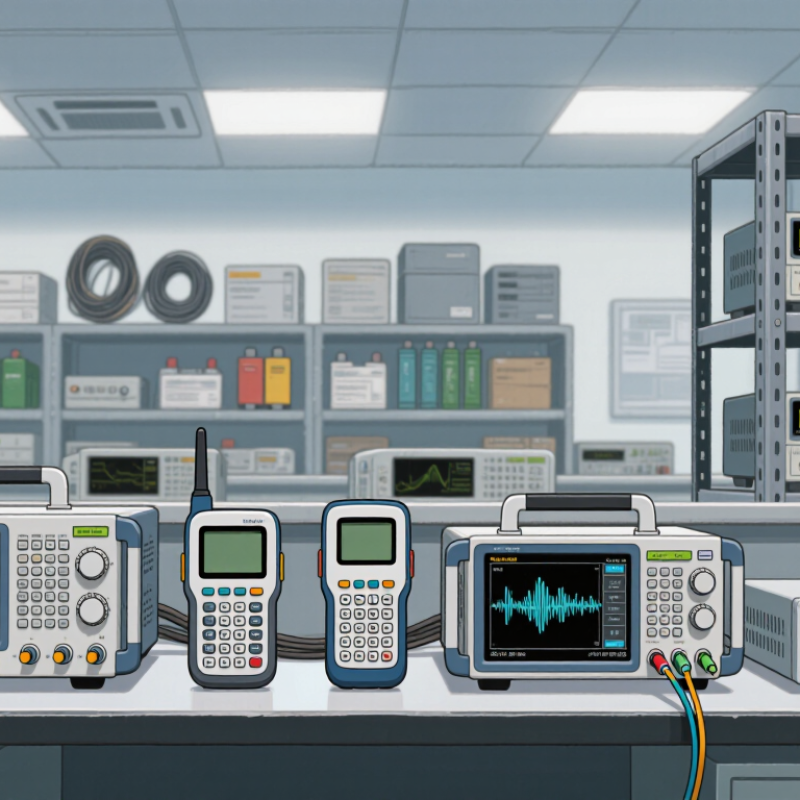
Top Types of Used Communication Testers for Sale

What Communication Testers Measure and Why They Are Used

Communication testers turn invisible network behavior into readings technicians can act on. A field unit may measure signal strength, frequency error, modulation quality, spectrum occupancy, and bit-error rate. Cable and antenna tests can reveal insertion loss, return loss, or a damaged connector. These readings help teams commission equipment, locate interference, and verify repairs before users notice a fault. A screen full of numbers is not a diagnosis by itself.

The International Telecommunication Union’s Facts and Figures 2024 estimated that 5.5 billion people, or 68% of the world’s population, were online. More connected users and services make stable links important, but a single test cannot represent every real-world condition. A tester might show acceptable signal power while packet errors rise under load. That detail matters. Technicians compare measurements with the system’s limits, repeat tests at different locations, and record the setup and conditions. A reading can mislead. Even a recently calibrated instrument may miss intermittent faults if the test is too brief. Used communication testers offer a practical way to check legacy radios, fiber links, and network equipment at lower cost, provided their calibration status and supported frequency range are verified before purchase.

Major Categories of Communication Testers Available Used

Top Types of Used Communication Testers for Sale

Major Categories of Communication Testers Available Used

Used communication testers cover several distinct jobs. RF and spectrum analyzers reveal signal strength, interference, and occupied bandwidth; their displays can show narrow spikes that a basic power meter misses. Network protocol testers examine signaling, latency, and packet errors across wired or wireless links. Optical testers, including fiber-loss meters and optical time-domain reflectometers, help locate weak connections and breaks. Wireless callboxes and drive-test systems simulate or measure radio-network performance. The right category depends on whether you are checking a bench device, a fiber run, or coverage across a street.

Demand spans a huge installed base. GSMA’s The Mobile Economy 2024 estimated 5.6 billion unique mobile subscribers in 2023, about 69% of the global population. That scale makes repeatable network and radio testing essential, but it does not mean every used instrument suits every task. Check supported frequency ranges, modulation options, software licenses, calibration records, and included cables. A bright screen proves little. Ask for a recent self-test and a sample trace from a known signal.

For fiber work, inspect connector condition and verify the instrument’s wavelength settings. For RF units, compare readings against a trusted reference source; even small drift can distort borderline measurements. ITU’s Facts and Figures 2024 estimated 5.5 billion people used the internet, underscoring how much infrastructure depends on stable links. Used equipment can lower entry costs. It can also arrive with missing options or outdated firmware. That deserves scrutiny. A bargain without documentation may become an expensive shelf ornament.

Capabilities That Distinguish Each Tester Type

Spectrum analyzers show signal strength across a frequency range, making them useful for spotting interference, unexpected emissions, or occupied channels. Their wide displays reveal patterns that a basic power meter can miss. For field checks, a model with a tracking generator can also help compare filters and cables. Check its frequency coverage and input limits before connecting it to an unfamiliar system.

Network analyzers measure how components pass or reflect signals. A scalar unit measures magnitude, while a vector unit also measures phase. That distinction matters when testing antennas, filters, and impedance-matching networks. Calibration quality counts. A used unit may need fresh calibration, suitable test leads, and the correct calibration standards to produce dependable results.

Protocol testers focus on digital links rather than RF behavior. They can inspect traffic, timing, error rates, or link negotiation, depending on the interface and software options. Some communication test sets combine signal generation, receiver measurements, and protocol checks in one instrument. That saves bench space. Yet menus can be confusing, and older options may be missing. Ask for a demonstrated test using your cables, interface, and target measurement; a clean screen alone proves little.

Top Types of Used Communication Testers for Sale

Core capabilities that distinguish common tester types

A value of 1 indicates a capability commonly central to that tester type; 0 means it is not typically a core function. Specific features depend on model and configuration, so check the unit’s specifications before purchase.

How to Match a Tester to a Communication System

Top Types of Used Communication Testers for Sale

Matching a used communication tester starts with the system’s actual signal range and test tasks. A land-mobile radio setup may need frequency, power, and modulation measurements, while a cellular or microwave link can require wider bandwidth and different analysis features. Small details matter. Check that the tester supports the signal formats and connectors used in your equipment, not just the headline frequency range.

For field work, consider battery condition, display readability, weight, and how quickly the unit can show a fault. A bench setup may benefit more from a larger screen, remote control, or spectrum analysis functions. Confirm that included cables and adapters suit your ports; replacement parts can add unexpected cost. Ask for a recent calibration record and, where possible, run a basic test with a known signal before buying. Not always obvious.

A feature list can look convincing, but it may not reflect your daily workflow. Compare the tester’s measurement limits with the tolerances your system requires, and check whether its software still supports your operating needs. I would not choose the most capable unit by default; unused functions do not improve a test. A modest model that matches the system, has verifiable condition, and produces repeatable readings can be the more dependable choice.

Top Types of Used Communication Testers for Sale - How to Match a Tester to a Communication System

Tester Type Typical Systems Common Tests How to Match It Used-Unit Checks
Spectrum Analyzer RF and microwave links, radio transmitters, wireless networks Frequency, signal level, occupied bandwidth, unwanted emissions, and interference checks Confirm the frequency range, amplitude range, resolution bandwidth, and any required demodulation or signal-analysis options. Check calibration status, input connector condition, display operation, and whether listed software options are enabled.
Cable and Antenna Analyzer Cellular base stations, broadcast antennas, two-way radio installations, and coaxial feeder systems Return loss, VSWR, cable loss, and distance-to-fault measurements Match the instrument’s frequency range and measurement functions to the antenna band, cable type, and installation task. Inspect the RF port, verify calibration standards are included if needed, and check battery condition and measurement stability.
Network Protocol Analyzer IP networks, Ethernet-connected communication systems, and data links Packet capture, protocol decoding, traffic analysis, latency review, and fault diagnosis Check supported link speeds, interface types, capture capacity, and compatibility with the protocols used on the network. Confirm included interfaces and licenses, verify that capture and export functions work, and check operating-system or software support.
Ethernet Cable Tester Copper Ethernet cabling in offices, data centers, and industrial networks Wire map, length, opens, shorts, split pairs, and—on qualifying models—cable performance certification Distinguish basic verification from certification testing; select a model rated for the required cabling category and test standard. Check remote adapters, test leads, calibration or certification status, and the availability of current reporting software.
Optical Power Meter and OTDR Fiber-optic telecom, access, campus, and data-center links Optical power and link loss; OTDR models locate events such as breaks, splices, and connectors along a fiber Match optical wavelengths, connector interfaces, dynamic range, and fiber type to the link and required test method. Inspect optical ports, confirm wavelength operation and reference-cord condition, and check whether launch and receive fibers are included.
Telecom Transmission Tester Carrier transport, leased lines, and legacy digital transmission circuits Framing, error checks, bit-error-rate testing, alarms, and service-interface verification Identify the circuit interface and line rate first, then verify support for the required framing, electrical or optical interface, and test pattern. Check interface modules, cables, clocking functions, battery health, and that the unit completes a self-test.
Wireless Drive-Test Tool Cellular and other wide-area wireless networks Coverage, signal quality, handover behavior, and location-tagged field measurements Confirm supported radio technologies, frequency bands, measurement licenses, receiver or handset compatibility, and mapping workflow. Verify license transferability, software access, GNSS operation, included antennas, and compatibility with current operating systems.

Before purchasing any used tester, compare its specifications and enabled options with the system under test, and request a functional demonstration and current calibration information where applicable.

What to Check Before Buying a Used Communication Tester

Before buying a used communication tester, match its frequency range and functions to the work you actually perform. A spectrum analyzer, cable-and-antenna tester, and network tester do not replace one another. Check the calibration certificate’s date, measurement scope, and traceability; a sticker alone proves little. It is tempting to trust the certificate by itself, but that would be too simplistic. Ask to see a live test using a known signal, then inspect connector wear, display pixels, battery condition, and included cables. Check the basics. Missing software options may limit measurements even when the hardware powers on.

Capability matters as networks evolve. The International Telecommunication Union’s Facts and Figures 2024 reports that 5G coverage reached 51% of the world’s population. The GSMA’s Mobile Economy 2024 projects 5.5 billion 5G connections by 2030. These figures do not mean every buyer needs a 5G-capable unit; they do make it important to verify supported bands, bandwidth, and signal formats against your planned jobs. Request a sample measurement file and compare readings with a trusted reference instrument. Check that the price includes necessary options, accessories, and a clear return window. Do not guess. A tidy case can hide tired ports, and a low price can become an expensive repair.

Share by: