Why Are Location Tracking Tags Important for Buyers?
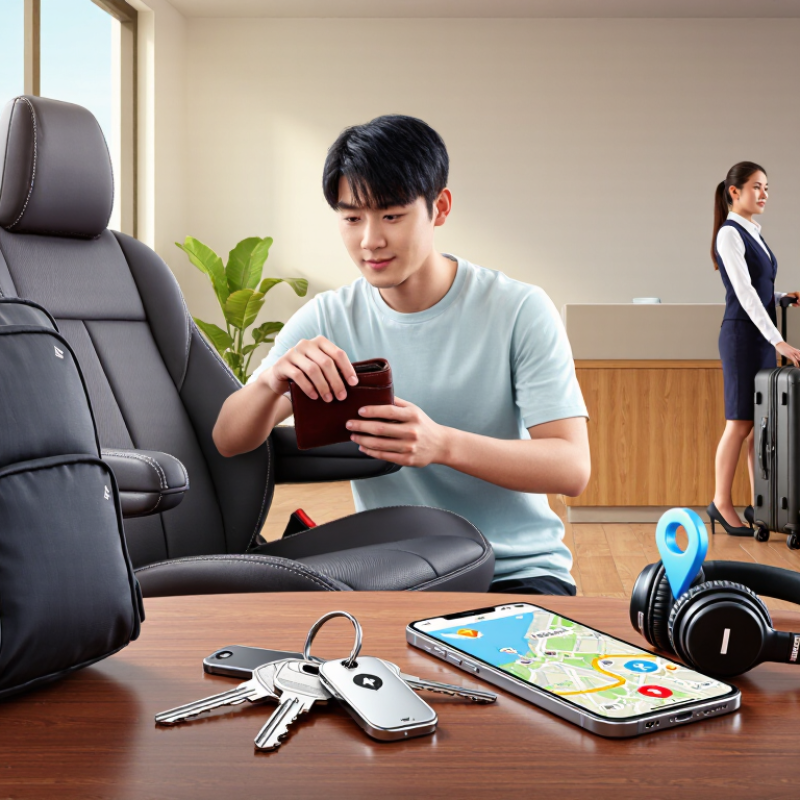
When a suitcase disappears behind a hotel desk, a small tag can turn uncertainty into a clear map. Location Tracking Tags use Bluetooth signals, mobile networks, or connected platforms to help buyers find keys, bags, bicycles, and other personal items. Their value is practical, not futuristic. A phone alert may reveal that a backpack remains in a taxi or that a wallet slipped beneath a car seat.
Industry data shows why this category continues to attract attention. The Bluetooth SIG’s 2024 Market Update projects 5.4 billion Bluetooth device shipments in 2024, rising to 7.6 billion annually by 2028. This expanding device ecosystem supports wider compatibility and stronger finding networks. GSMA’s Mobile Economy 2024 report also estimates 4.7 billion people used mobile internet in 2023. More connected users create more opportunities for community-based location services. Still, market growth does not guarantee a perfect buying experience.
Privacy matters. Accuracy varies indoors. Battery life can disappoint. A tag may identify a nearby location, but it cannot explain every movement. Buyers should examine range, network coverage, replaceable batteries, app security, alert speed, and compatibility with their phones. Independent testing, transparent privacy policies, and clear user controls deserve more attention than attractive packaging. This is where product claims require careful reflection. The cheapest tag may become expensive when its battery fails quickly. The most advanced model may feel unnecessary for a keyring. In real use, reliability often matters more than impressive specifications. A useful tag should quietly support daily routines, without creating new uncertainty.
What Location Tracking Tags Are and How They Work
Location tracking tags are small devices that help buyers find misplaced belongings. They can be attached to keys, luggage, backpacks, or equipment. Most tags do not create a complete location picture alone. Instead, they use Bluetooth to connect with a nearby phone or compatible network.
When a tag stays close to your phone, its location can update through Bluetooth. If it moves out of range, nearby participating devices may detect its signal and send an approximate location to the tag’s owner. Some advanced tags also include GPS or cellular functions, but these features usually require more power and may increase operating costs. They are not magic. Walls, crowded buildings, weak signals, and low batteries can reduce accuracy.
In practical use, buyers should check the tag’s range, battery design, alert speed, and water resistance. A useful tag may show a suitcase at an airport, but it may not identify the exact pocket immediately. That assumption can fail. Location data also depends on privacy settings, network coverage, and the number of nearby devices. Buyers should choose products with clear permission controls and secure data handling. Testing the tag at home is sensible: place it in another room, walk outside, and compare the displayed location with its real position. Small, but useful. Yet reliability comes from understanding its limits, not expecting constant precision.
Key Benefits of Location Tracking Tags for Buyers
Location tracking tags give buyers a practical way to find misplaced belongings. Attach one to keys, luggage, a wallet, or a bicycle. When an item disappears under a sofa, the tag can trigger a nearby alert. Some systems also show the last recorded location on a phone map. That detail can save time during busy mornings or crowded travel days.
The main benefit is everyday reassurance. Buyers can check whether a bag remains nearby before leaving a café or airport lounge. Many tags use low-energy connections, so their batteries may last for months. Replaceable batteries can also reduce maintenance costs. A compact design matters too. A bulky tag may annoy users and eventually stay in a drawer. Ease of setup is equally important for older users or people who dislike complicated apps.
No tag is perfect. Walls, metal cases, distance, and weak phone connections can reduce accuracy. Buyers should examine alert speed, battery access, sound volume, and privacy settings before purchasing. Location data should be shared only with trusted people and handled according to local privacy requirements. A useful tag supports a clear routine, but it cannot replace careful labeling or sensible storage. That limitation is easy to overlook.
Why Are Location Tracking Tags Important for Buyers?
Location tracking tags help buyers locate valuable items, reduce time spent searching, and choose the right tracking technology for their environment. Accuracy varies by positioning method, so understanding these differences is important before purchasing.
Typical open-air accuracy ranges are shown in metres; lower values generally indicate more precise positioning. Actual performance can vary because of buildings, obstacles, signal interference, satellite visibility, and nearby devices. Bluetooth tags usually provide proximity detection rather than independent GPS positioning.
Important Features to Compare Before Purchasing
Location tracking tags can turn a stressful search into a focused recovery. Buyers should compare practical features, not trust impressive packaging alone.
Location accuracy and update speed deserve close attention. A tag that refreshes slowly may show yesterday’s position. Look for clear maps, recent timestamps, and useful distance guidance. Indoor performance matters too. Test it near a sofa, parked bicycle, or crowded hallway. Bluetooth range can mislead. Some systems use nearby devices to extend coverage, while others depend on a separate network. Ask how each method works in ordinary places.
Battery life requires practical comparison. A replaceable battery may suit a suitcase used twice yearly. A rechargeable model may fit daily keys, but it needs charging. Check runtime, warning notifications, and charging methods. Small details matter. A quiet alert can disappear under cushions. Water and dust resistance help during rain or accidental spills. Privacy controls deserve equal attention. Compare unknown-tag alerts, account security, and sharing settings. Review what data is stored and for how long. Setup should take minutes, not an evening. I once judged convenience by the first five minutes; later, battery reminders mattered more. That mistake changed how I evaluate these devices. Replacement batteries, accessories, and subscription requirements can also change the real ownership cost.
Privacy, Security, and Legal Considerations
Why Are Location Tracking Tags Important for Buyers?
Privacy, Security, and Legal Considerations
Location tracking tags can help buyers find keys, luggage, bicycles, or other personal items. Their value depends on how safely they collect and share location data. Before purchasing, check whether tracking requires continuous location access, Bluetooth permissions, or an online account. Data collection should be limited to what the device genuinely needs.
Privacy matters at home and in public. Choose a tag with clear consent controls, encrypted communication, and unwanted-tracking alerts. Review its privacy policy carefully. Look for data retention periods, deletion options, and information about third-party access. A vague policy is a warning sign. Small details matter.
Security also depends on your habits. Use a strong, unique account password and enable multi-factor authentication when available. Keep the tag’s software updated. Avoid attaching it to another person’s belongings without clear permission. That could create serious privacy concerns. Laws differ between countries and regions, especially around personal data, location monitoring, and consent. Buyers should check local requirements before using a tag for employees, children, tenants, or shared property.
I once assumed a longer battery life always meant a better device. That is not necessarily true. A tag with weak privacy controls may create greater risks than convenience. Manufacturers should explain their safeguards plainly, but buyers must still read the settings. Mistakes happen. Careful setup reduces them.