

Why Choose a Multi Lane Powder Packing Machine?

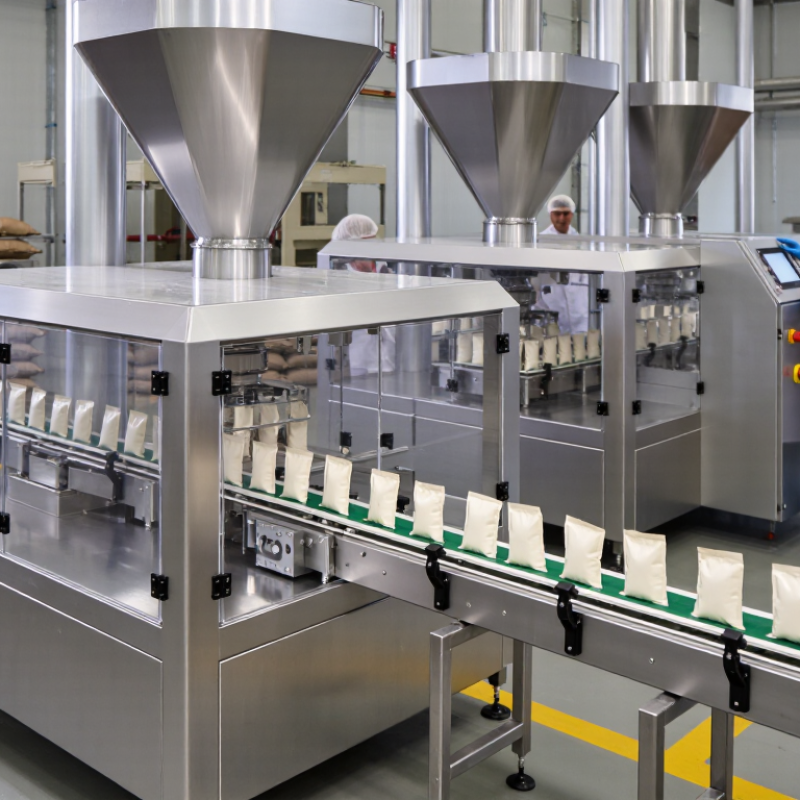
Choosing the right packing system can shape a powder operation’s speed, accuracy, and daily reliability. The Multi-Lane Powder Packing Machine is designed for manufacturers handling products such as flour, milk powder, spices, supplements, and other permitted dry materials. Instead of filling one pouch at a time, it forms, fills, and seals several lanes simultaneously. That difference can become significant during long production runs.

From practical plant-floor experience, lane count is only one part of the decision. Product flow, powder density, pouch size, sealing temperature, and cleaning access also affect performance. A well-configured machine can reduce labor pressure and improve output consistency. It may also create fewer interruptions when operators can monitor each lane clearly. Small details matter. A poorly adjusted auger can still cause weight variation.

Reliable manufacturers usually provide test data, operating guidance, spare-parts support, and training. These resources help production teams verify whether the equipment suits their material and packaging format. Independent checks of fill accuracy, seal strength, dust control, and changeover time are valuable before purchase. No machine is perfect. Even advanced equipment needs calibration, inspection, and disciplined maintenance.

The real question is not simply whether a Multi-Lane Powder Packing Machine runs faster. It is whether the system delivers stable results under actual factory conditions. Careful evaluation can reveal hidden costs, including cleaning time, rejected packs, and operator learning curves. When capacity, quality, safety, and service support are considered together, multi-lane packing may offer a practical path toward more controlled and scalable production.
Why Choose a Multi Lane Powder Packing Machine?

How 4–12 Lanes Increase Powder-Packing Throughput

Why Choose a Multi Lane Powder Packing Machine?

How 4–12 Lanes Increase Powder-Packing Throughput

A multi lane powder packing machine divides one dosing process across several synchronized lanes. Four lanes can produce 7,200 sachets hourly at 30 sachets per minute. Twelve lanes can reach 21,600 sachets hourly, under identical conditions. This calculation is useful, but factories are rarely identical.

Powder flow changes with humidity, particle size, and bulk density. Each lane needs accurate auger control, stable sealing pressure, and practical dust management. In production trials, operators should compare target weight, reject rate, cleaning time, and actual uptime. More lanes do not automatically mean more saleable packs.

The market supports this automation shift. PMMI’s 2024 State of the Industry report valued U.S. packaging machinery shipments at approximately $10.2 billion in 2023. It also identifies labor availability and automation as continuing investment drivers. Smithers’ The Future of Flexible Packaging to 2028 projects strong growth in flexible packaging demand, increasing pressure on efficient filling systems.

Speed is only one metric.

A four-lane system may outperform twelve lanes when powder bridging causes frequent stoppages. I would begin with verified product trials, not brochure capacity. Measure an entire shift, including sanitation and changeovers. That evidence often challenges the original throughput estimate.

Why Multi-Lane Machines Can Reach 30–120 Packs per Minute

Why Choose a Multi Lane Powder Packing Machine?

Why Multi-Lane Machines Can Reach 30–120 Packs per Minute

A multi-lane powder packing machine forms and fills several sachets at the same time. Each lane works in parallel, increasing output without demanding extreme speed from one filling station. Depending on the number of lanes, pouch size, powder flow, and sealing cycle, production may reach 30–120 packs per minute.

The real figure depends on the powder. Fine flour, seasoning, and similar materials can bridge, dust, or vary in density. An auger filler must measure each dose carefully. Accurate sensors, stable film tension, and controlled sealing temperature also matter. Small adjustments can prevent underfilled pouches and weak seals. Operators should check weight samples throughout the shift.

Practical testing is essential. I have seen machines perform well during trials, then slow down with humid powder or oversized packaging. The advertised maximum is not always the daily rate. A four-lane system may deliver dependable output near 30 packs per minute, while a larger setup can approach 120 under suitable conditions. However, cleaning, refilling, changeovers, and minor stoppages reduce actual production. This is easy to overlook. A machine should be selected around the target product, package size, and working schedule, not only its highest number.

How ±1% Fill-Weight Accuracy Reduces Powder Giveaway

A multi lane powder packing machine earns its value when every gram matters. In production trials, small overfills often hide inside acceptable-looking bags. A 500-gram target filled at 505 grams gives away 1% per pack. Across 20,000 packs, that becomes 100 kilograms of product. That loss is rarely visible on the line. It appears later in inventory reports.

With ±1% fill-weight accuracy, each lane can dose closer to the declared target. Stable auger timing, responsive load cells, and synchronized sealing reduce variation between lanes. More lanes also raise output without forcing one filler to run at extreme speed. The result is tighter giveaway control, steadier package appearance, and fewer manual adjustments. Less waste matters.

Accuracy is not automatic. Powder moisture, bulk density, bridging, and worn components can shift results during a long shift. Operators should verify test weights, inspect lane trends, and recalibrate after material changes. A machine may meet ±1% in a controlled trial, yet perform differently beside a dusty hopper. That is the part worth questioning. Real reliability comes from repeatable checks, clear records, and maintenance before drift becomes expensive.

Why Auger Dosers Suit Powders from 10 g to 1 kg

Why Choose a Multi Lane Powder Packing Machine?

For powders between 10 g and 1 kg, auger dosers offer controlled, repeatable filling. Their screw flight moves measured powder into each pouch or container. This suits flour, spices, nutritional powders, and other dry formulations with stable flow characteristics. Powders behave differently. Fine particles may cling to metal surfaces, while lighter materials can become airborne during filling.

A multi lane powder packing machine increases output by filling several packages at once. Each lane needs accurate synchronization, stable auger rotation, and carefully adjusted sealing time. In my experience, calibration should begin with the smallest target weight, such as 10 g. Small errors matter. The operator can then verify larger doses, including 500 g or 1 kg, without assuming every setting will transfer perfectly.

Reliable operation depends on more than the auger itself. Load cells, level sensors, dust control, and accessible cleaning points support consistent production. Changes in bulk density can affect the delivered weight, even when the screw speed remains unchanged. A cohesive powder may bridge above the auger. A fluffy powder may compress differently from one batch to another. This is where practical testing remains essential. No dosing system removes every variation, and overlooking this can create avoidable waste. Trial runs with real material provide stronger evidence than theoretical specifications alone.

Why Choose a Multi Lane Powder Packing Machine? - Why Auger Dosers Suit Powders from 10 g to 1 kg

Multi-lane powder packing machines use several synchronized filling lanes to increase output while maintaining controlled auger dosing. The figures below are typical engineering ranges; actual performance depends on powder density, flowability, moisture, particle size, package format, and product characteristics.

Evaluation Dimension Single-Lane Auger Packer Multi-Lane Auger Packer Why It Matters
Typical number of lanes 1 2–12, depending on machine layout and sachet width More lanes increase output without requiring a proportional increase in machine footprint.
Common powder dose range Approximately 10 g–1 kg with suitable auger tooling Approximately 10 g–1 kg per lane with suitable auger tooling Auger screws can be selected for both low-dose sachets and larger pouches or containers.
Dose adjustment method Auger revolutions, fill time, and product calibration Independent or coordinated auger control for each lane Fine control supports recipe changes and compensates for variations in bulk density.
Typical dosing accuracy Often within approximately ±1% to ±3% after calibration Often within approximately ±1% to ±3% per lane after calibration Accuracy depends on powder flowability, dose size, screw design, vibration, and weighing or checkweighing controls.
Best-suited powder characteristics Free-flowing, cohesive, fine, or mildly aerated powders The same powder categories, provided feeding and de-aeration are properly designed The rotating screw provides controlled volumetric feeding for powders that may not feed consistently by gravity alone.
Typical cycle speed Approximately 20–60 cycles per minute Approximately 20–60 cycles per minute per lane Actual speed is limited by dose weight, filling accuracy, sealing time, film properties, and product dust.
Illustrative output at 40 cycles/minute 40 packs/minute 80 packs/minute with 2 lanes; 160 packs/minute with 4 lanes Nominal output scales with lane count when all lanes run at the same cycle rate.
Suitable package formats Sachets, stick packs, pouches, bags, bottles, and jars Primarily sachets, stick packs, and small pouches arranged in parallel lanes The packaging film and sealing system must be matched to the number of lanes and pack dimensions.
Changeover requirements Usually simpler and faster for one product or pack format Requires coordinated adjustment of augers, feeders, forming parts, and sealing components Multi-lane systems provide higher capacity but benefit from standardized product and film specifications.
Dust-control considerations Extraction near the filling point may be required Extraction, enclosed transfer, and dust-resistant sealing are more important as lane count increases Fine powders can create airborne dust, contamination risks, and seal-area defects if not controlled.
Primary benefit Flexible and economical for lower or variable production volumes Higher throughput, consistent dosing, and better use of production-floor space The best choice depends on required output, dose range, product behavior, labor cost, and available floor space.

Why Auger Dosers Are Suitable for Powder Doses from 10 g to 1 kg

Dose Range Recommended Auger Approach Typical Applications Key Control Point
10–50 g Small-diameter or precision auger with short, controlled dosing cycles Seasonings, drink powders, nutritional sachets, and laboratory or household powders Minimize residual product and control powder aeration during feeding.
50–250 g General-purpose auger with recipe-based speed and fill-time settings Coffee, flour, cocoa, spices, detergent powder, and dry food ingredients Maintain a stable product level above the auger inlet to reduce dose variation.
250–500 g Larger-capacity auger with increased flight volume and robust hopper agitation when needed Protein powders, baking mixes, powdered ingredients, and cleaning products Prevent bridging and inconsistent bulk density through suitable hopper geometry and agitation.
500 g–1 kg High-volume auger with a rigid drive, larger hopper, and optional checkweighing Bulk food powders, industrial powders, construction additives, and refill pouches Verify torque, product compaction, package stability, and sealing performance at the target weight.
Engineering note: The stated ranges are general reference values rather than guaranteed machine specifications. A production trial should confirm dose accuracy, bulk-density variation, powder flowability, dust behavior, sealing quality, and achievable lane speed before final equipment selection.

How Servo Control Improves Changeovers and Product Consistency

Why Choose a Multi Lane Powder Packing Machine?

Servo control can make multi lane powder packing more predictable during product changeovers. Each lane can coordinate auger speed, film movement, and sealing timing with precise electronic signals. Operators can save several adjustment steps when switching between pouch sizes or fill weights. The result is often a shorter setup period and fewer rejected packs.

Consistency improves when the servo system follows stored motion parameters. A stable auger rotation helps control powder volume, while synchronized sealing reduces uneven pouch edges and weak seals. In practical production, however, servo control is not magic. Powder density, moisture, and flow behavior still affect accuracy. A recipe that works for fine sugar may need changes for protein powder or seasoning. Small differences matter.

Tips: Record actual settings after each successful run. Check fill weights at regular intervals, not only during startup. Clean the auger and hopper before testing a new powder. Train operators to adjust one parameter at a time. This makes faults easier to trace. It also prevents rushed corrections. Servo systems need calibration and maintenance, too. A worn coupling or inaccurate sensor can quietly damage consistency. Leaving no time for verification is a common mistake.ેણ

Share by: