

Global buyers rarely judge a drill by its motor alone. They examine the complete working system, especially Drill Accessories. A dependable bit, chuck, adapter, or hole saw can determine whether a job feels controlled or frustrating. On a busy construction site, the difference appears in small details: cleaner holes, fewer damaged fasteners, lower vibration, and less downtime. These details directly affect purchasing decisions.
Kenny Koehler, a power-tool testing specialist and editor at Pro Tool Reviews, states, “A drill is only as capable as the accessory doing the work.” His point reflects practical experience. Even a powerful cordless drill may perform poorly with a blunt bit or an unsuitable attachment. Global buyers therefore compare material quality, size accuracy, coating durability, packaging, and compatibility. They also consider whether replacement accessories remain available after the first shipment.
Reliable Drill Accessories support safer, more consistent work across different markets. They help wholesalers build complete product ranges instead of selling isolated tools. For professional users, standardized accessories simplify training and reduce interruptions. For retailers, clear specifications can lower returns and customer complaints.
Yet this topic deserves some caution. A premium accessory does not solve every drilling problem. Operator skill, surface material, speed settings, and maintenance still matter. Some buyers may focus too heavily on price, then discover hidden costs through breakage and delays. That mistake is common. It is also avoidable. A careful introduction to Drill Accessories should therefore connect product performance with real working conditions, not marketing claims alone.
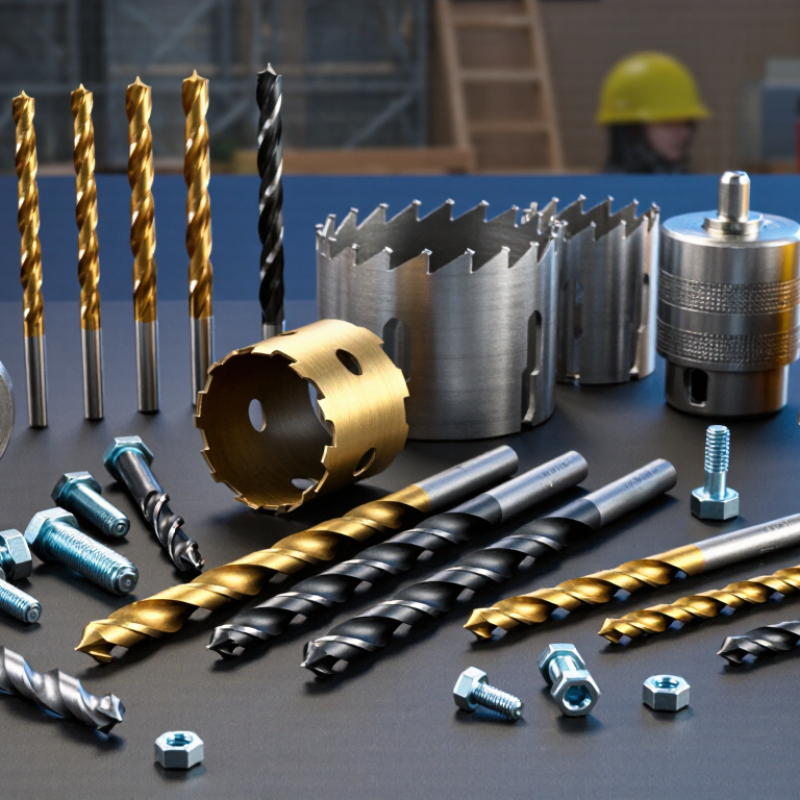
Drill accessories are the working parts that make drilling safer, cleaner, and more adaptable. They include drill bits, chucks, arbors, extensions, depth stops, guides, and dust-control attachments. Each item supports a different task. A masonry bit handles brick and concrete. A twist bit suits metal or wood. A hole saw creates wider openings for pipes, cables, or fittings.
From my experience reviewing drilling setups, compatibility matters more than appearance. Buyers should check the shank size, chuck system, working diameter, material, and required speed. A precise depth stop can prevent damage behind a wall. An extension reaches narrow spaces, while a guide helps keep holes straight on smooth surfaces.
Dust-control attachments also improve visibility and reduce loose particles around the work area. Small details matter.
Global buyers must also examine packaging, technical data, test reports, and replacement availability. Poor labeling can cause the wrong accessory to reach a job site. That mistake wastes time and may damage the workpiece. A reliable supplier should state tolerances clearly and explain suitable applications. In practice, no accessory performs perfectly in every material. Heat, pressure, vibration, and operator technique change results. I have found that even a durable bit can wear quickly when the speed is wrong. Buyers should test a small sample before placing a large order, especially when materials, drilling conditions, or local requirements differ.

Global buyers commonly need drill accessories that match their materials, machines, and maintenance habits. Twist bits suit wood, plastic, and light metal work. Masonry bits handle brick and concrete, but they need suitable impact settings. For clean circular openings, hole saws are practical. Step bits can simplify sheet-metal work. They are useful, though their edges wear quickly on thick steel.
A dependable purchasing list usually includes spare chucks, bit extensions, countersinks, and depth stops. Quick-change holders reduce downtime when operators switch between drilling and driving. Sanding drums and wire wheels support finishing tasks after holes are made. For workshop repairs, a magnetic bit holder can prevent dropped screws inside cabinets. Small details matter. An experienced buyer checks shank size, thread type, diameter range, and operating speed before ordering. Packaging should protect cutting edges from moisture and impact during international transport.
Large mixed sets appear economical, but they may contain unused sizes and weak storage cases. I have found that a smaller, task-based selection often performs better. Still, this judgment is not universal. Remote job sites may need extra duplicates because replacement delivery takes time. Buyers should also confirm material ratings, safety instructions, and local machinery requirements. One overlooked adapter can stop an otherwise complete order.
Global buyers commonly source accessories to support different materials, hole sizes, fastening tasks and working conditions. The chart compares major accessory groups by the number of common functions they cover.
Functional coverage count is based on common applications: drilling wood, metal, masonry, concrete, tile, large-hole cutting, fastening, extended reach, confined-space access, surface preparation and material removal. It is not a market-share estimate.
For global buyers, drill accessories are not minor add-ons. They control how force reaches the bit, material, and work surface. A properly matched chuck holds the tool firmly and reduces vibration during long cycles. Stable connection improves hole accuracy, especially in steel, concrete, or layered panels. The right adapter also prevents energy loss between different machines and accessories. That matters when a project uses mixed equipment across sites. Experienced operators check thread size, shank type, diameter range, and rated speed before ordering. They also confirm compatibility with the drilling method, not only the machine model. Small mismatch, expensive result. A worn sleeve can create visible runout. It may enlarge holes and damage fasteners.
Efficiency depends on more than speed. Cutting accessories with suitable geometry remove chips smoothly and reduce heat at the contact point. Cooling channels, dust extraction parts, and depth stops can keep work more consistent. In practical use, a depth stop helps prevent hidden pipes or cables from being struck. Protective guards and side handles improve control when torque changes suddenly. Operators should inspect threads, cutting edges, and retaining parts before every shift. Replace damaged components early. Yet accessory selection is not always perfect. A harder material may need slower speed, while a softer one may clog the cutter. Published ratings guide decisions, but real conditions still require judgment. Record wear, vibration, and hole quality from each job. Those simple notes often reveal a better setup than assumptions.
Choosing drill accessories globally starts with compatibility, not appearance. Check the shank type, diameter, length, and machine connection against the tool manual. A small mismatch can cause wobbling, heat, or damaged workpieces. Material matters too. Masonry, steel, wood, and composite panels require different cutting geometries and coatings. For repeated metal drilling, heat resistance and edge retention usually matter more than a low purchase price. For occasional maintenance, a simpler accessory may be more economical. It depends.
Buyers should compare operating speed, torque limits, vibration control, and expected service life. Ask for measurable specifications, inspection records, and clear tolerances. Reliable suppliers should explain testing methods instead of making vague claims. Packaging deserves attention during international shipping. Moisture barriers, protective caps, and readable labels can prevent damage before use. Confirm quantity, replacement availability, lead times, and technical support in the destination market. Total cost includes rejected parts, downtime, and disposal, not only the invoice.
Samples can reveal problems early. They are not a complete guarantee. Product decisions often focus heavily on price while overlooking operator comfort and dust control. That choice may look efficient on paper, yet create slower work and more maintenance. Buyers should review applicable safety requirements and documentation for each market. Requirements vary, and assumptions age quickly. A short trial with the actual machine, material, and operator often provides stronger evidence than a polished catalogue.
For global buyers, compatibility begins with the machine, not the catalogue photo. Check the chuck system, shank diameter, working length, rotation direction, and cooling method. SDS-plus, SDS-max, hex, and round shanks are not interchangeable. In field purchasing, a two-millimeter mismatch can create vibration, heat, and early breakage. Request dimensional drawings and sample tests before approving volume orders. Small details matter.
Quality needs evidence beyond polished packaging. Ask for material certificates, hardness data, runout measurements, and batch-level inspection records. DIN 338 remains a useful reference for many twist drills, but it does not prove every accessory suits every application. The U.S. Geological Survey reported about 81,000 metric tons of tungsten mine production in 2023, with China supplying roughly 63,000 tons. This concentration makes carbide material traceability worth checking. It also makes low prices suspicious sometimes. Not always, though.
Evaluate cost through total drilling output, not purchase price alone. Record holes per accessory, drilling time, rework, and operator changes. A cheaper bit that produces 30% fewer holes may cost more per completed hole. Supply reliability also requires evidence. The UNCTAD Review of Maritime Transport 2024 states that maritime shipping carries over 80% of global merchandise trade. Ask suppliers for safety-stock policies, monthly capacity, lead-time history, and backup production sites. One honest weakness should be noted: forecasts can fail during sudden freight, energy, or raw-material disruptions. Get commitments in writing, then test them with a small repeat order.
| Accessory Category | Typical Application | Compatibility Checks | Quality Indicators | Indicative Wholesale Cost (USD / Unit) | Expected Service Life (Normal Use) | Supply Reliability | Buyer Evaluation Priority |
|---|---|---|---|---|---|---|---|
| Twist Drill Bits | Drilling holes in steel, aluminum, wood, and general-purpose materials. | Confirm diameter, shank size, flute length, point angle, and material suitability. Standard round shanks fit most keyed or keyless chucks. | High-speed steel grade, accurate diameter, uniform edge geometry, concentricity, surface finish, and heat treatment. | $0.20–$8.00 | Approximately 50–500 holes, depending on material, coating, speed, feed, and cooling. | High | Check dimensional tolerances, batch consistency, coating adhesion, and packaging protection against corrosion. |
| Masonry Drill Bits | Drilling brick, concrete block, stone, and light concrete. | Match bit diameter and shank with the drill chuck. For impact drilling, verify that the bit is rated for hammer action. | Carbide tip alignment, braze strength, flute symmetry, wear resistance, and resistance to tip fracture. | $0.40–$12.00 | Approximately 20–300 holes, depending on aggregate hardness and impact settings. | High | Request impact-cycle testing, tip retention checks, dimensional inspection, and clear material-use instructions. |
| SDS-Plus Drill Bits | Impact drilling in concrete, reinforced masonry, and stone with compatible rotary hammers. | Confirm SDS-Plus shank profile, overall length, working length, and compatibility with the tool's chuck system. | Carbide head design, flute geometry, shank accuracy, vibration control, and weld or braze integrity. | $1.50–$25.00 | Approximately 30–600 holes, depending on concrete strength, rebar contact, and drilling technique. | High | Verify shank dimensions, runout, carbide retention, impact testing, and compliance with applicable safety requirements. |
| Hole Saws | Large-diameter holes in wood, plastics, drywall, and thin metal sheets. | Check arbor thread or quick-change system, pilot drill size, cutting diameter, and target material. | Tooth uniformity, bi-metal construction, weld quality, roundness, cutting-edge hardness, and arbor stability. | $2.00–$35.00 | Approximately 10–250 holes, depending on diameter, material, speed, and cooling. | Medium–High | Evaluate tooth wear, runout, arbor interchangeability, cutting speed, and availability of replacement pilots. |
| Step Drill Bits | Creating multiple hole sizes in sheet metal, electrical panels, plastics, and thin aluminum. | Confirm the diameter range, step increments, shank size, and maximum material thickness. | Uniform step dimensions, edge sharpness, surface hardness, low runout, and resistance to chipping. | $2.00–$30.00 | Approximately 30–500 holes in thin sheet materials. | Medium–High | Inspect step accuracy, coating adhesion, heat resistance, packaging, and performance at recommended speeds. |
| Screwdriver Bits | Driving Phillips, Pozidriv, slotted, Torx, hex, and other fastener types. | Match the bit profile and size to the fastener. Confirm holder compatibility, shank length, and impact rating where required. | Tip dimensional accuracy, torsional strength, hardness balance, wear resistance, and resistance to cam-out. | $0.05–$3.00 | Approximately 100–10,000 fasteners, depending on torque, fastener material, and bit design. | Very High | Prioritize profile accuracy, torque testing, corrosion protection, lot traceability, and consistent heat treatment. |
| Drill Chucks | Holding round-shank drill bits and accessories on compatible drills and drill presses. | Check mounting interface, capacity range, keyless or keyed design, spindle thread or taper, and maximum speed. | Low runout, jaw hardness, smooth clamping, balanced construction, corrosion resistance, and secure bit retention. | $5.00–$60.00 | Approximately 1,000–50,000 clamping cycles, depending on load and maintenance. | Medium–High | Request runout measurements, clamping-force tests, speed ratings, mounting drawings, and spare-parts information. |
| Arbors and Adapters | Connecting hole saws, sanding discs, polishing tools, and other accessories to drills. | Verify arbor thread, shank diameter, pilot bit size, locking method, and accessory interface. | Thread accuracy, shaft straightness, locking reliability, material strength, and balanced rotation. | $1.00–$20.00 | Approximately 500–10,000 operating cycles, depending on torque and accessory load. | High | Check interchangeability, maximum rated speed, torque resistance, dimensional drawings, and replacement-part availability. |
| Sanding and Polishing Attachments | Surface preparation, deburring, smoothing, polishing, and light finishing operations. | Confirm shank type, disc or pad diameter, backing-system compatibility, and maximum rotational speed. | Secure backing adhesion, balanced rotation, abrasive consistency, pad durability, and heat resistance. | $0.50–$15.00 | Approximately 1–50 hours of active use, depending on abrasive grade and surface material. | Medium | Evaluate balance, attachment security, abrasive uniformity, dust resistance, and packaging that prevents deformation. |

We have over 30 years of experience in designing complete hydraulic systems, repairs and distribution of fluid power equipment and parts.
FOLLOW US ON :
Address:
4020 SE 45th CT.
Ocala, FL 34480
Phone No:
Email:
sales@cunninghamfluidpower.com