2026 Top Hydraulic Piston Pump Manufacturers
Hydraulic piston pumps remain central to mobile machinery, industrial presses, and demanding process equipment. Their value is practical: steady flow, high operating pressure, and precise control in a compact package. Yet a pump’s nameplate rating cannot tell the whole story. Fluid temperature, contamination, duty cycle, and installation quality all shape performance.
Grand View Research valued the global hydraulic pumps market at USD 10.47 billion in 2023 and forecast a 5.3% compound annual growth rate from 2024 to 2030. The figure covers hydraulic pumps broadly, not piston pumps alone. Still, it signals continued investment in hydraulic equipment. This matters to buyers comparing manufacturers for 2026.
Fluid-power author John Watton’s published work offers a useful engineering perspective: pump selection should account for pressure, flow, control response, and the driven load together. That is a paraphrase of his technical approach, not a verbatim quotation. A useful reminder.
This guide examines leading Hydraulic Piston Pump manufacturers through product range, application fit, service support, and technical documentation. It also considers variable-displacement designs, noise, efficiency, and maintenance access. A strong specification sheet helps, but field reliability deserves equal weight. We should be candid: published market data rarely isolates piston pumps cleanly, and manufacturer claims are not always directly comparable. That makes careful verification essential. The best choice is not always the largest brand; it is the pump that matches the circuit, operating conditions, and support needs.
Hydraulic Piston Pump Basics: Axial and Radial Designs
Hydraulic Piston Pump Basics: Axial and Radial Designs
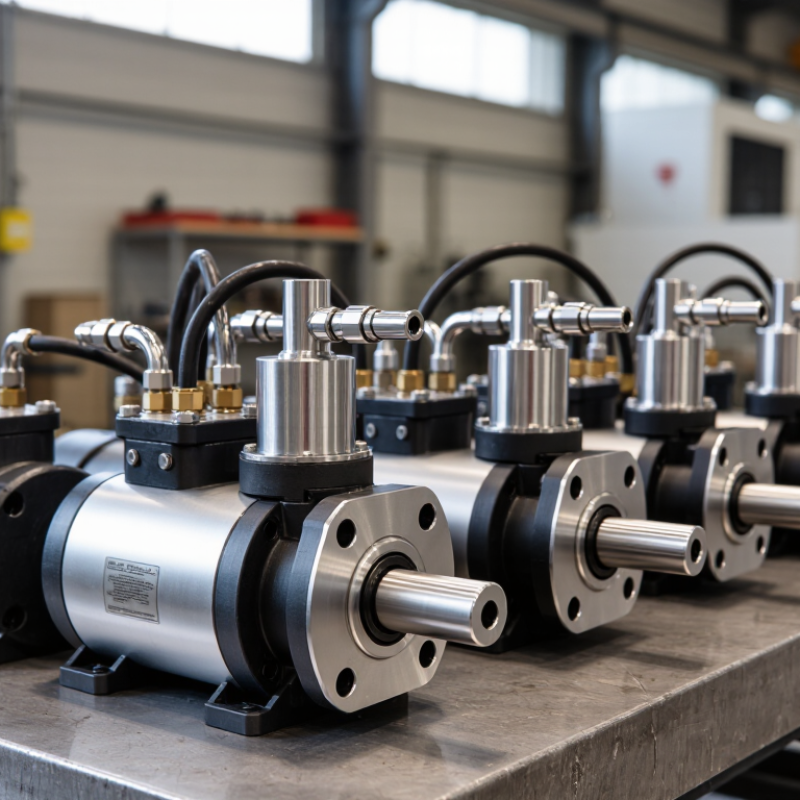
A hydraulic piston pump turns mechanical power into fluid flow under pressure. In an axial design, pistons sit parallel to the drive shaft and move as a cylinder block rotates. A swash plate or bent axis drives their stroke. Many axial pumps offer variable displacement, making flow adjustment practical in mobile equipment and industrial systems. Compact size is a common advantage.
Radial pumps place pistons around a central shaft, moving them outward and inward against a cam or eccentric ring. This layout can deliver high pressure and strong torque at low speeds. It may also require more installation space. Neither design wins in every machine. Operating pressure, speed, fluid cleanliness, and duty cycle all matter. One detail is easy to overlook: a pump that fits the pressure rating may still perform poorly if its inlet supply is restricted.
Tips: Check the pump’s rated speed, inlet conditions, case-drain requirements, and fluid viscosity against the actual system. Look for unusual heat or noise during commissioning. Small signs can point to cavitation or misalignment. Specifications help, but real operating conditions can be less tidy than the datasheet suggests.
Key Ratings: Displacement in cm³/rev, Speed in rpm, and Pressure in bar
2026 Top Hydraulic Piston Pump Manufacturers
Key Ratings: Displacement in cm³/rev, Speed in rpm, and Pressure in bar
Displacement describes the oil volume a pump moves per shaft revolution. A 45 cm³/rev pump running at 1,500 rpm has a theoretical flow of 67.5 L/min. Actual flow is lower because internal leakage and fluid conditions affect volumetric efficiency. Check the stated displacement alongside the flow rating, not by itself. Small details matter.
Speed limits show how fast the shaft can turn under specified conditions. Compare continuous and intermittent ratings, then consider the prime mover and expected duty cycle. A pump operating near its maximum speed may run hotter or wear faster, especially with cold oil at startup. I would verify the supplier’s test conditions; they are not always presented consistently.
Pressure ratings need the same care. Working pressure is not necessarily the same as peak pressure, which may be allowed only briefly. For a machine cycling against a heavy load, repeated pressure spikes can matter more than a single headline figure. Match the pump’s continuous rating to the system’s real operating pressure, and confirm the relief-valve setting. A number on a datasheet is not a field result. Leave a practical margin, then monitor temperature, noise, and leakage after installation.
2026 Top Hydraulic Piston Pump Manufacturers - Key Ratings: Displacement in cm³/rev, Speed in rpm, and Pressure in bar
Anonymous technical comparison by pump configuration. The ranges below are indicative industry-level operating envelopes, not specifications for a particular manufacturer, model, or application.
| Pump Configuration |
Typical Displacement (cm³/rev) |
Typical Operating Speed (rpm) |
Typical Continuous Pressure (bar) |
Common Applications |
| Open-circuit axial piston pump |
10–250 |
1,500–3,600 |
250–350 |
Industrial power units, construction machinery, and mobile equipment hydraulic systems. |
| Closed-circuit axial piston pump |
20–250 |
1,800–4,000 |
350–450 |
Hydrostatic transmissions in off-highway vehicles and mobile machinery. |
| Bent-axis axial piston pump |
10–250 |
1,500–4,000 |
350–450 |
High-power-density mobile drives and systems requiring robust operation at elevated pressure. |
| Variable-displacement swashplate pump |
10–280 |
1,500–3,600 |
250–350 |
Load-sensing circuits, injection-molding equipment, and general industrial hydraulics. |
| Radial piston pump |
1–100 |
500–3,000 |
400–700 |
High-pressure clamping, test systems, presses, and other applications with high pressure demands. |
Efficiency and Fluid Cleanliness: Volumetric Losses and ISO 4406 Codes
A hydraulic piston pump can lose useful flow even when its housing appears sound. Internal leakage increases as clearances wear, especially under high pressure or unsuitable fluid viscosity. The result is lower volumetric efficiency: the pump delivers less flow than its displacement and speed suggest. Small particles matter. Abrasive contamination can score pistons and cylinder blocks, while fine debris may accelerate wear without obvious noise. A clear reservoir is not proof of clean fluid.
ISO 4406 expresses particle counts using three numbers, covering particles at or above 4, 6, and 14 micrometres. For example, a code is a cleanliness classification, not a percentage of clean oil. Pump manufacturers and maintenance teams should compare measured codes with the equipment maker’s specified limits; one target does not suit every system. Use a properly flushed sampling point, a clean bottle, and consistent sampling conditions. Otherwise, the result may describe the sampling method more than the circuit. Record fluid temperature and operating hours alongside particle counts. Filters, seals, and handling practices all affect cleanliness, but replacing a filter alone may not remove contamination trapped in hoses or reservoirs. Efficiency readings also deserve context: warm oil and stable pressure make comparisons more meaningful, though field conditions are rarely perfect.
2026 Manufacturer Profiles: Compare Pressure Ratings, Controls, and Product Range
Comparing hydraulic piston pump manufacturers in 2026 starts with pressure ratings, but the headline figure is only part of the story. Check continuous and intermittent pressure separately, and confirm the conditions behind each rating. A pump listed for high peak pressure may not suit a system running near that level all day. Numbers need context. Look for operating speed, fluid requirements, and temperature limits alongside the rating.
Controls shape how a pump behaves under changing loads. Pressure-compensated, load-sensing, and electronically managed options can support different circuit needs, but each adds setup and service considerations. Ask how adjustment works and what documentation covers commissioning. That matters. Product range also deserves a close look: compare displacement sizes, shaft and mounting options, and available control configurations. For a mobile machine, a compact unit with a suitable control may fit better than a larger pump with a higher maximum rating. A comparison table can make differences visible, though it can also hide gaps in test conditions. I would verify critical specifications directly against technical documents before choosing. Small details are easy to miss.
2026 Hydraulic Piston Pump Manufacturer Profiles
Representative pressure benchmarks by piston-pump design—not manufacturer-specific ratings.
How to read this chart: The bars show representative maximum-pressure benchmarks in bar for common axial-piston pump configurations. Actual continuous and peak limits depend on the specific model, fluid, speed, and operating conditions.
Controls and range: Common control options include pressure compensating, load sensing, and electro-proportional control. Product ranges typically cover open- and closed-circuit designs, with multiple displacement sizes.
How to Select a Pump: Duty Cycle, Service Support, and Lifecycle Cost
2026 Top Hydraulic Piston Pump Manufacturers
How to Select a Pump: Duty Cycle, Service Support, and Lifecycle Cost
Choosing a hydraulic piston pump starts with its real duty cycle, not its catalog headline. Record operating pressure, flow demand, speed, and hours under load. Note pressure spikes, cold starts, and pauses between cycles. These details affect heat, wear, and control response. Small details matter.
Compare the pump’s rated performance with the machine’s actual operating range. A unit running near its limits for long shifts may need more cooling and frequent inspection. Ask how quickly common seals and replacement parts can be supplied, and whether technicians can troubleshoot remotely. A short service delay can stop an entire line. That gets expensive. Still, a tidy duty-cycle spreadsheet may miss harsh starts or seasonal temperature changes; field measurements are worth checking.
Lifecycle cost includes more than the purchase price. Estimate energy use, planned maintenance, downtime, and likely component replacement over the expected service period. Request clear maintenance intervals and repair guidance. If those details are vague, comparing offers becomes difficult. Track oil temperature and noise during commissioning, then revisit the readings after several weeks. It is not a perfect method, but it can reveal problems before they become costly.